全球经济权力转移

Search documents
西方围堵7年没用!中国贸易顺差破1万亿,全球经济主导权开始转移
Sou Hu Cai Jing· 2025-12-20 11:15
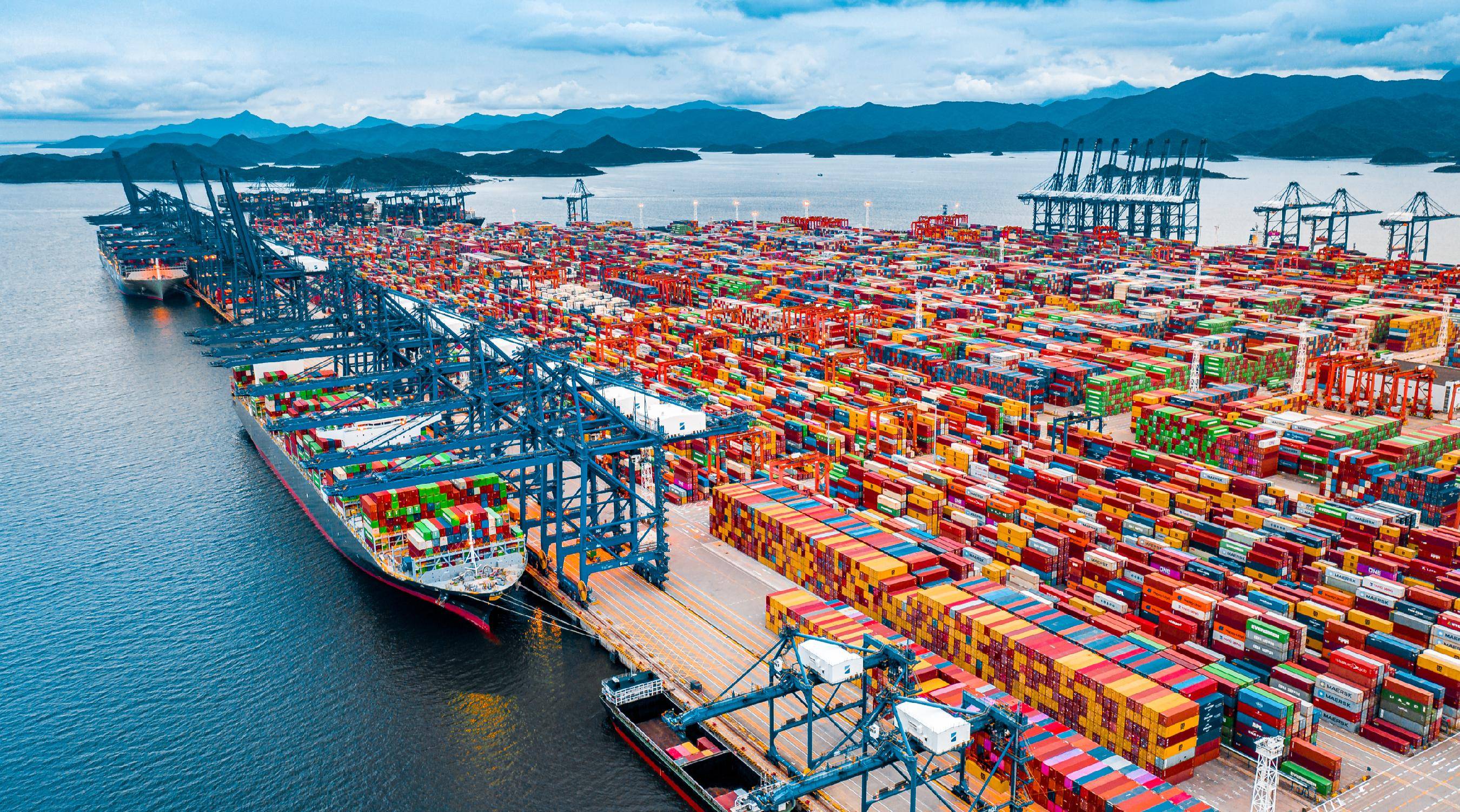
Core Viewpoint - China's trade surplus has reached an unprecedented $1.08 trillion, marking a historic achievement amid ongoing economic warfare initiated by the West [1][31]. Group 1: Trade Surplus Data - In the first 11 months of 2025, China's trade surplus exceeded $1.08 trillion, averaging a net gain of $30 billion per day [1]. - China's trade surplus with the EU was $310 billion, with the US at $250 billion, the UK at $54.3 billion, and Japan at $30 billion [7]. - This surplus is greater than the combined historical highest surpluses of the US, Japan, and Germany by one-third [3]. Group 2: Impact of Western Economic Policies - The trade war, characterized by the US imposing tariffs on hundreds of billions of dollars of Chinese goods, has not diminished China's export growth but rather catalyzed it [5][11]. - The failure of Western strategies to contain China's exports has led to a significant increase in China's trade surplus [11][28]. Group 3: Structural Changes in Exports - The share of private enterprises in China's exports rose to 57.1% by 2025, surpassing foreign-invested enterprises, which dropped to 29.3% [18]. - High-value and high-tech products now account for 82.9% of China's exports, while labor-intensive products have decreased to 15.1% [18]. - The shift from quantity to quality in exports signifies a transition to selling technology and value rather than just products [20]. Group 4: Industry Innovations and Competitiveness - Chinese companies, particularly in the automotive sector, have achieved significant breakthroughs, with exports of electric vehicles soaring [21][23]. - The semiconductor sector also saw a remarkable increase, with exports expected to exceed 1.4 trillion yuan, equivalent to the construction of seven Three Gorges projects [25]. - The technological advancements of private enterprises have made Chinese exports indispensable, countering Western attempts to impose tariffs on lower-end goods [28]. Group 5: Global Economic Power Shift - The $1 trillion surplus signifies a major shift in global economic power, with China becoming a new shaper of trade rules [31][35]. - The reliance of Western economies on Chinese products for achieving carbon neutrality and stabilizing prices highlights the paradox of their containment strategies [37]. - This trade surplus is not merely a statistical achievement but a reflection of China's resilience and innovation in the face of adversity [42][47].

刚回法国,马克龙就喊话中国帮欧洲;警告若贸易失衡持续,将对中国加税
Sou Hu Cai Jing· 2025-12-09 23:53
Group 1 - European industry is at a critical juncture, requiring investment and technology from China, as stated by Macron [2][6] - Macron warns of potential tariffs on Chinese goods if trade imbalances are not addressed, indicating a shift towards a more confrontational stance [3][16] - The narrative of blaming China for Europe's industrial decline is seen as a diversion from internal issues, such as high energy prices and factory relocations [7][12] Group 2 - The call for Chinese investment is not merely a plea for help but a strategic move to regain power and influence in the global market [5][20] - Macron's desire for China to invest in Europe reflects a longing for a past where Western companies dominated the value chain [13][14] - The current situation highlights a shift in power dynamics, with China now holding technological advantages and a complete supply chain [15][41] Group 3 - The interconnected global supply chain means that imposing tariffs on Chinese goods would primarily impact European consumers, leading to inflation [17][18] - The products exported from China are increasingly high-tech and not easily replaceable, complicating the tariff strategy [19][42] - Macron's warnings serve as a negotiation tactic to encourage Chinese investment along specific lines, such as green industries [20][21] Group 4 - Internal divisions within Europe regarding China policy hinder a unified approach, with different countries having varying dependencies on Chinese investment [22][24] - The simplification of complex internal issues into a narrative of "Chinese threat" serves to distract from Europe's structural problems [27][28] - The ongoing power shift in the global economy is causing discomfort in Europe, as it struggles to adapt to a new reality where it is no longer the dominant force [30][32] Group 5 - Future relations between Europe and China are expected to be characterized by competition and cooperation, with potential for both conflict and collaboration [51][52] - The narrative of who will "save" whom is outdated, as both sides are focused on self-improvement rather than reliance on the other [54][60] - Europe's industrial decline will continue if it does not address its internal challenges and instead focuses on external blame [58][61]