
全球胜任力

Search documents
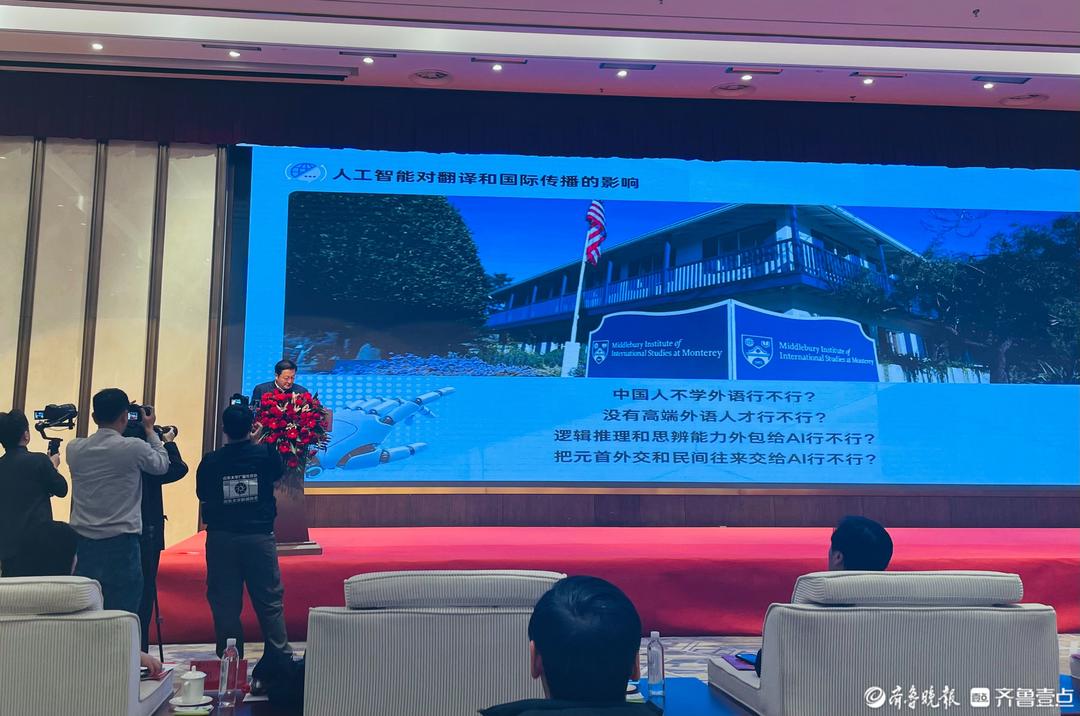
AI时代国际传播人才如何培养?专家:首先要跨越语言和文化鸿沟
Qi Lu Wan Bao· 2025-11-29 05:29
Core Viewpoint - The forum focused on the theme of "International Communication of Chinese Culture in the Era of Intelligent Communication," emphasizing the importance of cultivating globally competent international communicators in the context of language and cultural differences [1]. Group 1: Language and Cultural Challenges - Language and cultural differences are identified as core challenges in international communication, with significant distinctions between Chinese and Western languages affecting cultural expression and acceptance [3]. - The essence of Chinese language is likened to ink painting, emphasizing ambiguity and depth, while Western languages are structured more clearly around verbs [3]. - Specific cultural references and idioms in Chinese political discourse require translators to possess deep cross-cultural understanding [3]. Group 2: Role of AI in Translation - The rapid development of AI translation technology raises questions about the irreplaceable value of human cultural understanding and craftsmanship [4]. - AI should be viewed as a tool rather than a dominant force in translation, highlighting the necessity of human input in conveying cultural nuances [4]. - The example of British sinologist Hawkes, who took ten years to translate "Dream of the Red Chamber," illustrates the importance of craftsmanship in the dissemination of classic literature [4]. Group 3: Qualities of Modern International Communicators - Eight essential qualities for modern international communicators are proposed: topic-setting ability, resource discovery, solid foreign language skills, cultural empathy, new media operation skills, deep cultural literacy, craftsmanship, and a sense of national and global identity [4]. - The emphasis on loving one's country and culture is seen as foundational for effectively telling China's stories to the world [4]. Group 4: Digital Transformation of Culture - The need for the digital transformation of excellent traditional Chinese culture is highlighted, with interdisciplinary dialogue providing valuable insights for journalism and communication education [4]. - Shandong University is pioneering a training model that integrates international communication with digital culture to address the "last mile" communication challenge [4].

哈尔滨工业大学(深圳)成立研修中心育新工科人才
Ke Ji Ri Bao· 2025-07-09 01:02
Core Points - The "New Youth Global Competence Cultivation and Development Bay Area Research Center" has been established at Harbin Institute of Technology (Shenzhen) to cultivate interdisciplinary engineering talents with both hard and soft skills [1][2] - The center aims to build an international standard curriculum system and foster national-level teaching achievement awards, creating a three-in-one international talent training system [1] - The center will enhance collaboration with international organizations, top global universities, and enterprises to create a new international education landscape linked to the AI era [1] Group 1 - The establishment of the research center is seen as a significant step towards deepening communication and cooperation between the university and various stakeholders [1] - Global competence is viewed as a crucial asset for youth development, and universities are encouraged to leverage internationalization strategies to broaden students' global perspectives [1][2] Group 2 - The Shenzhen Municipal Foreign Affairs Office emphasizes the importance of cultivating youth with global competence as a key initiative to support national diplomatic strategies and promote a community with a shared future for mankind [2] - The university plans to transform the consensus reached at the seminar into effective educational practices to contribute to the cultivation of outstanding international talents [2]
2025名校之约|北京外国语大学:“语言+专业+国际”三位一体育人实践 全球胜任力培养的“北外范式”
Yang Shi Wang· 2025-06-27 06:56
Core Viewpoint - Beijing Foreign Studies University (BFSU) is enhancing its educational offerings by introducing innovative programs and a comprehensive training system aimed at cultivating high-level talents to meet national strategic needs [1][7]. Group 1: Educational Programs and Innovations - BFSU offers a diverse range of 101 foreign language programs and 23 non-language majors, with a focus on strategic disciplines such as regional studies and international communication [1][3]. - The university has launched a new triple degree program combining Russian, German, and Big Data Management, reflecting its commitment to interdisciplinary education [1][10]. - BFSU promotes a composite and multilingual talent cultivation model, allowing students to choose a third foreign language and participate in joint degree programs with other top universities [2][3]. Group 2: International Collaboration and Opportunities - BFSU has established partnerships with over 300 universities and research institutions across 80 countries, providing students with opportunities for international study and internships [3][9]. - The university hosts 23 Confucius Institutes globally, enhancing its international presence and offering students various international learning experiences [3][4]. Group 3: Graduate Outcomes and Employment - BFSU boasts a high graduation rate, with over 60% of graduates pursuing further studies, and 72% of those entering QS World University rankings [5][6]. - Graduates are highly sought after by government departments and international organizations, reflecting the university's strong employment outcomes [6][7]. Group 4: Specialized Training in Russian Studies - The Russian Language College at BFSU has developed a comprehensive training system, offering programs in multiple languages and focusing on innovative cross-disciplinary training [8][12]. - The college is launching a new dual degree program in Russian and Big Data Management, aimed at addressing the needs of the "Belt and Road" initiative and the digital economy [10][11].