公共设施化

Search documents
美国家长开始用Robotaxi接送孩子,Robotaxi宿命难逃,特斯拉断腕突围
3 6 Ke· 2026-02-02 04:11
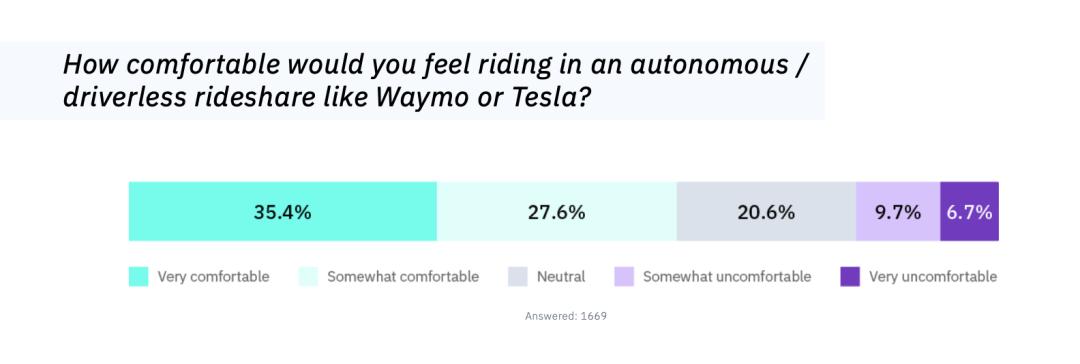
Core Insights - The article discusses the growing acceptance of Robotaxi services, particularly among parents in the U.S. who are increasingly comfortable with using autonomous vehicles to transport their children, viewing them as safer than traditional ride-hailing services [3][5][18]. Group 1: Acceptance and Cultural Shift - A significant cultural shift is observed where parents trust machines more than human drivers, with 63% of respondents feeling comfortable with autonomous vehicles, up from 35% in 2025 [3][4]. - Parents are increasingly using Robotaxi services for child transportation, with 57% of male respondents expressing trust in these services compared to 47% of female respondents [3][4]. - The perception of safety is a major factor driving this acceptance, as parents believe Robotaxis eliminate risks associated with human drivers, such as intoxication or inexperience [5][18]. Group 2: Market Potential and Business Model - The demand for Robotaxi services for child transportation represents a high-frequency, essential market segment that has not been fully integrated, providing a stable order flow for operators [12][13]. - Parents show a high willingness to pay for these services, indicating a lower sensitivity to pricing compared to other ride-hailing options [13][16]. - The average fare for Robotaxi services varies, with Waymo's prices being higher than competitors like Uber and Lyft, yet consumers still perceive it as a premium service [16][17]. Group 3: Regulatory and Operational Challenges - Waymo's policy currently prohibits unaccompanied minors from using its services, but parental demand is pushing the company to reconsider its regulations [7][9]. - The operational challenges of Robotaxi services are highlighted by incidents where service disruptions occurred due to external factors, such as power outages, affecting the reliability of these autonomous systems [38]. Group 4: Future of Transportation Infrastructure - The article posits that Robotaxi services are likely to evolve into a public infrastructure component, similar to public transportation systems, due to their societal implications and the need for regulatory oversight [31][44]. - The integration of Robotaxi into existing urban transport networks could redefine transportation efficiency, making human-driven vehicles less favorable [28][29]. - The potential for Robotaxi to serve as a public utility raises questions about market dynamics, pricing, and service availability in less profitable areas [43][44]. Group 5: Company Strategies and Financial Performance - Tesla is focusing on expanding its Robotaxi fleet while facing financial challenges, including a 3% decline in annual revenue and a 61% drop in quarterly net profit [58][59]. - The company is transitioning from traditional vehicle production to a focus on autonomous driving technology and services, indicating a strategic shift towards becoming an AI and mobility service provider [66][69]. - Tesla's approach contrasts with Waymo's, as it aims to create a private infrastructure for its Robotaxi services, emphasizing the need for a distinct operational model in the autonomous vehicle market [66][70].