自动驾驶技术商业化

Search documents
美国家长开始用Robotaxi接送孩子,Robotaxi宿命难逃,特斯拉断腕突围
3 6 Ke· 2026-02-02 04:11
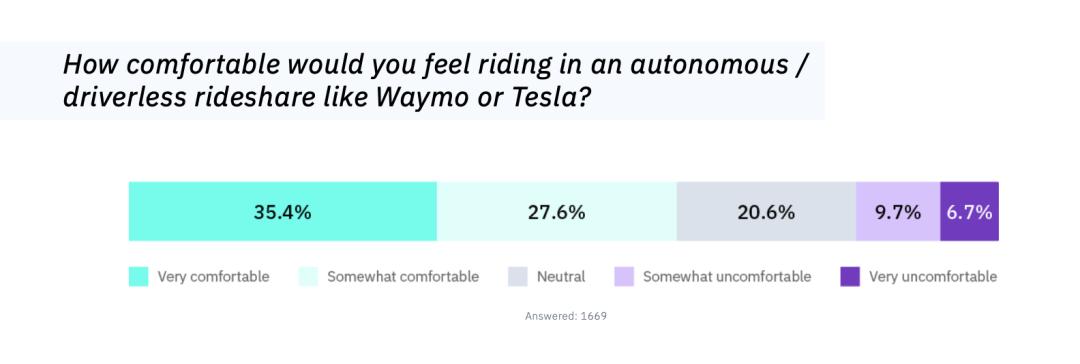
Core Insights - The article discusses the growing acceptance of Robotaxi services, particularly among parents in the U.S. who are increasingly comfortable with using autonomous vehicles to transport their children, viewing them as safer than traditional ride-hailing services [3][5][18]. Group 1: Acceptance and Cultural Shift - A significant cultural shift is observed where parents trust machines more than human drivers, with 63% of respondents feeling comfortable with autonomous vehicles, up from 35% in 2025 [3][4]. - Parents are increasingly using Robotaxi services for child transportation, with 57% of male respondents expressing trust in these services compared to 47% of female respondents [3][4]. - The perception of safety is a major factor driving this acceptance, as parents believe Robotaxis eliminate risks associated with human drivers, such as intoxication or inexperience [5][18]. Group 2: Market Potential and Business Model - The demand for Robotaxi services for child transportation represents a high-frequency, essential market segment that has not been fully integrated, providing a stable order flow for operators [12][13]. - Parents show a high willingness to pay for these services, indicating a lower sensitivity to pricing compared to other ride-hailing options [13][16]. - The average fare for Robotaxi services varies, with Waymo's prices being higher than competitors like Uber and Lyft, yet consumers still perceive it as a premium service [16][17]. Group 3: Regulatory and Operational Challenges - Waymo's policy currently prohibits unaccompanied minors from using its services, but parental demand is pushing the company to reconsider its regulations [7][9]. - The operational challenges of Robotaxi services are highlighted by incidents where service disruptions occurred due to external factors, such as power outages, affecting the reliability of these autonomous systems [38]. Group 4: Future of Transportation Infrastructure - The article posits that Robotaxi services are likely to evolve into a public infrastructure component, similar to public transportation systems, due to their societal implications and the need for regulatory oversight [31][44]. - The integration of Robotaxi into existing urban transport networks could redefine transportation efficiency, making human-driven vehicles less favorable [28][29]. - The potential for Robotaxi to serve as a public utility raises questions about market dynamics, pricing, and service availability in less profitable areas [43][44]. Group 5: Company Strategies and Financial Performance - Tesla is focusing on expanding its Robotaxi fleet while facing financial challenges, including a 3% decline in annual revenue and a 61% drop in quarterly net profit [58][59]. - The company is transitioning from traditional vehicle production to a focus on autonomous driving technology and services, indicating a strategic shift towards becoming an AI and mobility service provider [66][69]. - Tesla's approach contrasts with Waymo's, as it aims to create a private infrastructure for its Robotaxi services, emphasizing the need for a distinct operational model in the autonomous vehicle market [66][70].


港股自动驾驶IPO热潮再起!有企业已拿下10亿订单 专家:服务业也需向“两化”加速升级
Mei Ri Jing Ji Xin Wen· 2025-11-10 12:27
Core Viewpoint - Suzhou Tiantong Weishi Electronic Technology Co., Ltd. (Tiantong Weishi) has officially submitted its main board listing application to the Hong Kong Stock Exchange, aiming to raise funds for advanced autonomous driving algorithm iteration, expansion of overseas vehicle models, and L4-level fleet operations [1][2] Group 1: Company Overview - Tiantong Weishi was established in 2016 and focuses on software-driven intelligent driving solutions, covering L2 to L4 level autonomous driving and integrated cockpit solutions [2] - The company has 144 models with L2 to L2+ level solutions currently in place, with 50% of its revenue expected to come from L4-level autonomous driving solutions by 2024 [2][3] Group 2: Financial Performance - Tiantong Weishi's projected revenues for 2022, 2023, and 2024 are 172 million, 203 million, and 482 million yuan respectively, with corresponding losses of 324 million, 231 million, and 462 million yuan [2] - In the first half of 2025, the company anticipates revenue of 157 million yuan and a loss of 192 million yuan [2] Group 3: Market Trends - The Hong Kong stock market is experiencing a surge in autonomous driving IPOs, with companies like Pony.ai and WeRide successfully listing [1] - The L4-level autonomous driving sector is seeing significant interest, with companies like Xidi Zhijia and Xiangdao Chuxing also submitting listing applications [2] Group 4: Industry Insights - The commercialization of autonomous driving technology is accelerating, with L2-level intelligent driving already achieving large-scale adoption [3] - User acceptance of intelligent driving features is increasing, with highway usage rates exceeding 60% and urban ADAS activation rates rising from approximately 15% to nearly 20% [3] - The transition of smart vehicles from passive tools to intelligent mobile entities raises critical issues regarding safety responsibility, infrastructure, and business model innovation [3] Group 5: Future Outlook - The development of autonomous driving technology is expected to reshape the mobility ecosystem, enhancing safety and efficiency through integration with new urban infrastructure [6] - The insurance sector is evolving alongside autonomous driving, with a projected 41.44% year-on-year increase in premium income for commercial insurance for new energy vehicles by the first half of 2025 [7]
4家内地企业同日在港上市
Zhong Guo Xin Wen Wang· 2025-11-06 06:19
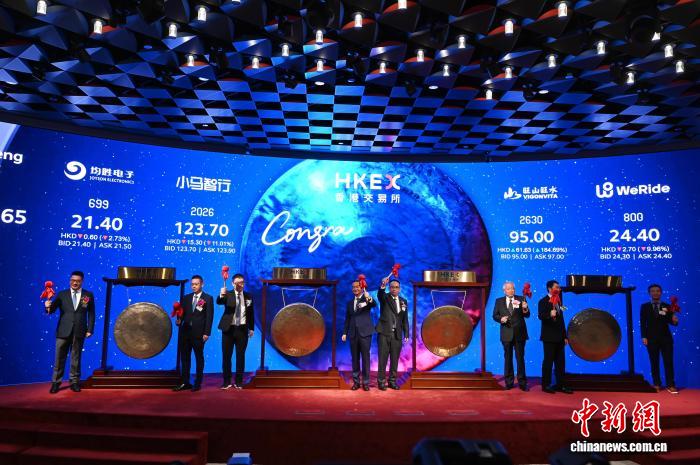
Core Viewpoint - Four mainland companies, including Xiaoma Zhixing, Wenyuan Zhixing, Wangshan Wangshui, and Junsheng Electronics, were listed on the Hong Kong Stock Exchange, marking a significant milestone for the companies and the autonomous driving industry [1][3]. Group 1: Company Listings - Xiaoma Zhixing, Wenyuan Zhixing, Junsheng Electronics, and Wangshan Wangshui all officially listed on the Hong Kong Stock Exchange on November 6 [1][3]. - Wangshan Wangshui, a biopharmaceutical company, saw its stock open nearly 185% higher on its first trading day [1]. Group 2: Industry Significance - The listing is viewed as a new chapter for the autonomous driving industry, with Xiaoma Zhixing's CEO emphasizing the company's position at the forefront of large-scale commercialization of autonomous driving after nearly nine years of development [3]. - Wenyuan Zhixing's CEO expressed the company's commitment to contributing to the development of autonomous driving technology globally, highlighting the listing as a new starting point for leveraging technology to drive business and vice versa [3].
从纳斯达克到港交所 自动驾驶双雄的资本赛跑
Bei Jing Shang Bao· 2025-10-28 13:46
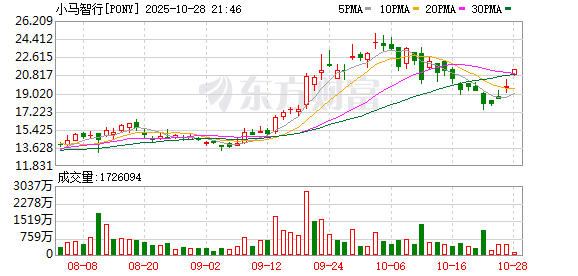
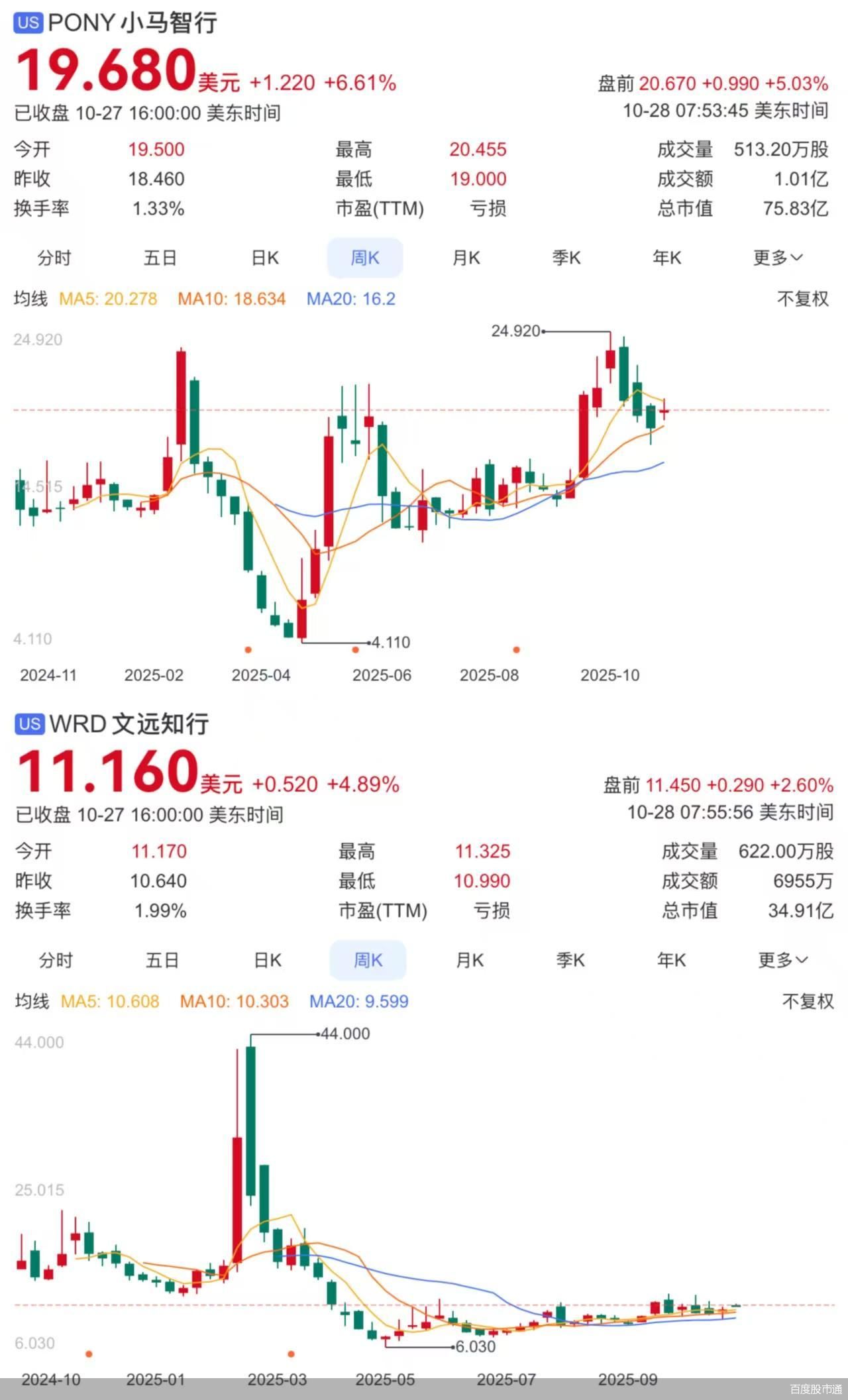
Core Viewpoint - The capital paths of Pony.ai and WeRide are remarkably similar, both launching their Hong Kong IPOs on November 6, 2023, and aiming for a dual listing in the US and Hong Kong despite the ongoing lack of profitability in the autonomous driving sector [2][3]. Group 1: IPO Details - Both companies initiated their Hong Kong IPO processes on October 28, 2023, with plans to list on November 6, 2023 [3]. - As of October 27, 2023, Pony.ai's stock was priced at $19.68 per share, with a market capitalization of $7.583 billion, while WeRide's stock was at $11.16 per share, with a market cap of $3.491 billion [2][4]. - The maximum IPO price for Pony.ai is set at 180 HKD per share, while WeRide's is capped at 35 HKD per share [5]. Group 2: Market Performance and Valuation - WeRide's stock price reached a high of $44 per share in February 2025, while Pony.ai peaked at $24.92 per share in October 2025 [4]. - There are differing opinions on the valuation of WeRide, with some suggesting it is undervalued, while others emphasize that the market prioritizes future growth potential [4][5]. Group 3: Business Operations and Strategies - Both companies are engaged in similar business activities, with WeRide operating Robotaxi services in Riyadh and Pony.ai achieving significant milestones in vehicle production and operations in major Chinese cities [7]. - WeRide has a broader international presence, covering 11 countries and over 30 cities, while Pony.ai has a more concentrated domestic market strategy [7]. Group 4: Financial Performance - Pony.ai reported a revenue of $35.433 million for the first half of 2025, a 43.3% increase year-over-year, but with an adjusted net loss of $74.423 million, a 33% increase in losses [9]. - WeRide's revenue for the same period was approximately $27.865 million, with a significant operational loss of 890 million RMB (about $124 million), reflecting a 27.3% increase in losses [9]. Group 5: Industry Insights - Experts suggest that technology and its practical application are more critical than the timing of an IPO in the autonomous driving sector [9][10]. - The ongoing losses in the industry highlight the challenges of converting revenue growth into profitability, necessitating continuous funding for operations and technological advancements [9][10].
从纳斯达克到港交所,自动驾驶双雄的资本赛跑
Bei Jing Shang Bao· 2025-10-28 13:24
Core Viewpoint - The simultaneous IPOs of Pony.ai and WeRide on the Hong Kong Stock Exchange highlight the competitive yet parallel development paths of these two autonomous driving companies, both of which are facing challenges in achieving profitability despite their market potential [1][5][6]. Group 1: IPO Details - Both companies initiated their Hong Kong IPO processes on October 28, with a planned listing date of November 6 [6]. - As of October 27, Pony.ai's stock was priced at $19.68 with a market capitalization of $7.583 billion, while WeRide's stock was at $11.16 with a market cap of $3.491 billion [1][7]. - The maximum offering price for Pony.ai in Hong Kong is set at 180 HKD per share, while WeRide's is capped at 35 HKD per share [8]. Group 2: Market Position and Valuation - The market is currently skeptical about the profitability of the autonomous driving sector, with both companies still in the red despite their growth in revenue [14][15]. - WeRide's stock price reached a high of $44 in February 2025, while Pony.ai peaked at $24.92 in October 2025, indicating differing market perceptions of their growth potential [7]. - Analysts suggest that the valuation differences may not solely reflect the companies' financials but also their technological advancements and market execution capabilities [8][9]. Group 3: Business Operations - Both companies are aggressively expanding their operations, with WeRide recently launching Robotaxi services in Riyadh, Saudi Arabia, and Pony.ai achieving significant production milestones with its autonomous vehicles [12][13]. - WeRide operates in over 30 cities across 11 countries, while Pony.ai has a strong presence in major Chinese cities and is expanding globally [12][13]. Group 4: Financial Performance - For the first half of 2025, Pony.ai reported revenue of $35.433 million, a 43.3% increase year-over-year, but with an adjusted net loss of $74.423 million, widening by 33% [15]. - WeRide's revenue for the same period was approximately $27.865 million, with a significant operational loss of about $124 million, reflecting a 27.3% increase in losses [15]. Group 5: Industry Insights - Experts emphasize that technological execution and market demand are more critical than the timing of IPOs for success in the autonomous driving sector [14][16]. - The ongoing need for substantial investment in technology and market expansion continues to challenge both companies, necessitating ongoing financing to sustain operations [15][16].
国际资本持续看好,ARK再度增持小马智行逾12万股
Jing Ji Guan Cha Bao· 2025-09-19 03:48
Core Viewpoint - International capital continues to show confidence in Pony.ai, as ARK Invest has increased its holdings significantly in the company, reflecting a strong belief in the commercialization prospects of autonomous driving technology [2][3][4] Group 1: Investment Activity - ARK Invest's flagship fund ARKQ purchased a total of 120,099 shares of Pony.ai on September 17 and 18, following an initial investment of $12.9 million on August 12 [2] - At least 14 other top international institutions have also increased their holdings in Pony.ai during the second quarter, with Baillie Gifford establishing a new position of 7.137 million shares [3] Group 2: Market Potential - ARK predicts that the global Robotaxi market could exceed $10 trillion by 2030, with a fleet size potentially reaching 50 million vehicles [3] - The cost model for the seventh-generation system has decreased by 70%, and the unit economics continue to improve [3] Group 3: Competitive Advantages - Pony.ai has accumulated 500,000 hours of fully autonomous operation, demonstrating safety that is ten times higher than human driving [3] - The company is the only one providing fully autonomous paid services in major Chinese cities such as Beijing, Shanghai, Guangzhou, and Shenzhen, showcasing a significant first-mover advantage [3] Group 4: Industry Outlook - The recent interest from international capital is not only a vote of confidence in Pony.ai but also in the entire Chinese autonomous driving industry [4] - With the production of the seventh-generation Robotaxi and decreasing costs, Pony.ai is approaching a technological maturity point that could handle the most challenging environments [4] - The recent Federal Reserve interest rate cuts have created a favorable environment for technology stock valuations, which may benefit companies focused on disruptive technologies like Pony.ai [4]
文远知行二季度财报亮了:Robotaxi营收飙升836%
Nan Fang Du Shi Bao· 2025-07-31 12:41
Core Viewpoint - WeRide, a leading global autonomous driving technology company, reported a significant revenue growth of 60.8% year-on-year for Q2 2025, driven primarily by its Robotaxi business, which saw an extraordinary increase of 836.7% in revenue [2][5][10]. Group 1: Financial Performance - The company's revenue for the quarter reached 127 million yuan, with Robotaxi revenue contributing 45.9 million yuan, accounting for 36.1% of total revenue, marking a new high since 2021 [2][5]. - Robotaxi has become the main growth engine for the company, with its revenue growth exceeding eight times compared to the previous year [5][10]. Group 2: Global Expansion - WeRide is rapidly expanding its global commercial footprint, holding licenses in six countries, including Saudi Arabia, China, UAE, Singapore, France, and the USA, which positions it uniquely in the market [4][7]. - In the Middle East, the company has tripled its Robotaxi fleet in Abu Dhabi since 2024 and has initiated the first pure unmanned Robotaxi road tests in the region [7]. Group 3: Business Development - Besides Robotaxi, WeRide's other business lines, including smart mobility, smart logistics, and smart sanitation, have also made substantial progress, creating a balanced growth landscape [9]. - The company has launched the first unmanned Robobus operation in Southeast Asia and has received the first road test license for its unmanned logistics vehicle in Guangzhou [9]. Group 4: Technological Advancements - WeRide has introduced a new HPC 3.0 computing platform powered by the latest DRIVE AGX Thor X chip, which has reduced the cost of its autonomous driving suite by 50% [9]. - The company’s Robotaxi equipped with the new chip has achieved 2000 TOPS AI computing power, setting a new benchmark for scalable autonomous driving [9]. Group 5: Strategic Outlook - The strong performance in Q2 indicates a critical moment in WeRide's globalization journey, with the Robotaxi's rapid growth validating the effectiveness of its "synchronous domestic and international expansion + deep cooperation" strategy [10]. - The company is expected to continue leading in the autonomous driving sector, particularly in the Middle East and Southeast Asia markets, as it benefits from cost reductions and regulatory breakthroughs [10].


安全员频繁介入难掩隐患 特斯拉Robotaxi首秀暴露商业化技术缺陷
Zhi Tong Cai Jing· 2025-06-26 02:19
Core Viewpoint - Tesla's autonomous taxi trial in Austin faced significant operational issues, raising concerns about the viability of its autonomous driving strategy and its ambitious goals for full autonomy by mid-2025 [1][2][3] Group 1: Operational Issues - Multiple operational problems were observed during the trial, including lane misjudgment, dangerous stops, and erratic lane changes, which have cast doubt on Tesla's autonomous driving capabilities [1] - Specific incidents included a vehicle changing lanes into oncoming traffic for six seconds, sudden braking without obstacles, and stopping in the middle of a busy intersection, highlighting serious safety concerns [1] Group 2: Safety Measures and Expert Opinions - Tesla's safety team emphasized that the test vehicles were equipped with dual safety mechanisms, including a professional safety monitor in the front seat, which intervened to prevent a collision [2] - Experts have pointed out that the frequency of operational anomalies indicates fundamental flaws in the system's decision-making logic, raising questions about its reliability [2][3] Group 3: Industry Context and Comparisons - The autonomous driving commercialization landscape is challenging, with competitors like Waymo and Cruise facing their own operational hurdles, indicating that Tesla's issues are part of a broader industry struggle [2] - Tesla's trial involved a limited number of modified Model Y vehicles, but the high-profile nature of the event has drawn significant attention, amplifying the scrutiny of its performance [2] Group 4: Regulatory and Future Implications - Federal regulators have initiated an investigation into the trial, and local authorities are working with Tesla to establish communication protocols for autonomous vehicles interacting with law enforcement [3] - The ongoing challenges faced by Tesla in its autonomous driving efforts are critical not only for its market valuation but also for public safety, necessitating a balance between innovation and safety [3]
投诉率居首!如祺出行被东莞交通运输局通报
Qi Lu Wan Bao· 2025-06-18 09:02
Core Insights - The Dongguan Transportation Bureau reported on the complaints regarding ride-hailing services for the second half of 2024, highlighting that the platform "如祺出行" had the highest complaint rate among platforms with over 10,000 daily orders [1][4]. Summary by Category Complaint Rates - Among platforms with over 10,000 daily orders, "如祺出行" had a complaint rate of 0.4 per 10,000 orders, followed by "阳光出行" at 0.3 and "T3出行" at 0.26 [2][3]. - For platforms with 500 to 10,000 daily orders, "哈啰出行" had the highest complaint rate at 2.13, while "小拉出行" led the complaint rate for platforms with fewer than 500 daily orders at 3.47 [2][3]. Types of Complaints - Complaints from passengers primarily involved issues such as overcharging, refusal to accept rides, and poor service attitude [2][3]. - Complaints from drivers mainly concerned platform responsibility disputes, payment issues, and unreasonable dispatch mechanisms [3]. Service Quality Assessment - "如祺出行," "哈啰出行," and "小拉出行" received a 50-point deduction in their service quality assessment for failing to meet the service quality management requirements [4]. Company Overview - "如祺出行" is a pioneer in commercializing autonomous driving technology, backed by investments from GAC Group and Tencent, and was officially launched in Guangzhou in June 2019 [6][7]. - The company went public on the Hong Kong Stock Exchange on July 10, 2024, with a valuation increase from 1 billion to 5.36 billion yuan over several funding rounds [7]. - "如祺出行" reported total revenues of 1.014 billion, 1.368 billion, and 2.161 billion yuan for the years 2021, 2022, and 2023, respectively, reflecting a compound annual growth rate of 46% [7].
这只中概股,昨夜飙涨!
证券时报· 2025-05-06 23:42
Market Performance - The three major U.S. stock indices closed lower, with the Dow Jones Industrial Average down 0.95% at 40,829 points, the S&P 500 down 0.77% at 5,606.91 points, and the Nasdaq Composite down 0.87% at 17,689.66 points [4][5] - Major financial stocks and technology stocks dragged down the market, with Goldman Sachs falling nearly 2%, and other banks like JPMorgan, Citigroup, and Morgan Stanley dropping over 1% [5] Chinese Concept Stocks - Chinese concept stocks performed relatively well, with the Nasdaq Golden Dragon China Index rising by 0.42% [6] - Xiaoma Zhixing (Pony.ai) surged by over 47% following a strategic partnership announcement with Uber to integrate its Robotaxi services into the Uber platform later this year [2][6][8] - Other notable Chinese stocks included WeRide, which rose over 31%, and Bitdeer, which increased by over 6% [8] Gold Market - International gold prices saw a significant increase, with London gold closing up nearly 3%, reaching over $3,400 per ounce [10] - COMEX gold futures also rose by more than 3%, surpassing $3,400 per ounce [10]