公募牌照

Search documents
2%股权的关键一跃!华安证券拟增资控股华富基金
Sou Hu Cai Jing· 2026-01-14 04:31
Core Viewpoint - Huazhong Securities plans to increase its stake in Huafu Fund Management Co., Ltd. by 2%, which will enhance its control over the fund and align its strategic planning with the overall asset management layout of the group [2][8]. Group 1: Stake Acquisition and Governance - The company intends to invest 26.46 million yuan to acquire an additional 2% stake in Huafu Fund, raising its total ownership to 51% [2]. - This acquisition will allow Huazhong Securities to lead the strategic planning and operational decisions of Huafu Fund through its governance structures [8]. - The appointment of Zhang Jun, General Manager of Anhui Jiaokong Capital, as a director will strengthen the synergy among shareholders and enhance resource integration capabilities [2]. Group 2: Fund Management and Product Structure - Huafu Fund, established in 2004, has a registered capital of 250 million yuan and manages 87 public funds with a total scale exceeding 100 billion yuan [3]. - The fund's product structure is primarily focused on fixed-income products, with money market and bond funds accounting for nearly 80% of its total management scale [3][4]. - The fund's management scale includes 38 bond funds, 18 equity funds, and 25 mixed funds, among others [4]. Group 3: Asset Management Strategy - Huazhong Securities' asset management subsidiary, Huazhong Asset Management, focuses on private small-collection businesses and has a management scale exceeding 40 billion yuan [5]. - The company aims to leverage Huafu Fund's public fund license to enhance its wealth management capabilities and respond to regulatory demands for high-quality industry development [8]. - The increase in stake allows for better integration of research resources, such as macro strategies and credit ratings, enhancing the overall asset management strategy [8]. Group 4: Financial Performance and Market Context - In the first half of 2025, Huazhong Securities' total sales of financial products reached 6.217 billion yuan, with a year-on-year growth of 13.80% [6]. - The private fund sales contributed over 60% of the total sales revenue, while public fund sales saw a significant increase of 333.52%, although they still accounted for less than a quarter of total sales [6][7]. - The acquisition of control over Huafu Fund comes at a time when many firms are withdrawing their applications for public fund licenses, positioning Huazhong Securities advantageously in a challenging market environment [9].



券商资管激辩“后公募化”时代发展机遇与挑战—— 牌照并非唯一路径 全业务链条协同是核心禀赋
Zheng Quan Shi Bao· 2025-12-02 18:08
Core Insights - The "19th Shenzhen International Financial Expo and 2025 China Financial Institutions Annual Conference" highlighted opportunities and paths for high-quality development in the securities industry amidst new challenges [1] Group 1: Asset Management Industry Dynamics - The discussion emphasized the importance of public fund licenses for securities asset management, influencing business models and strategic layouts [2] - Companies like Caitong Asset Management have developed a diversified business model with a focus on active management and a dual-license approach, while still aiming to enhance client experience [2] - Huazhong Securities has focused on refining its private fund offerings despite not having a public fund license, achieving positive results through product diversification and investment capability enhancement [2][3] Group 2: Competitive and Cooperative Landscape - The relationship between securities asset management and other financial institutions is evolving from pure competition to a mix of competition and cooperation [4] - Securities asset management is positioned to serve high-net-worth clients and non-bank institutions, leveraging unique product offerings and asset allocation capabilities [4] - The challenges faced by bank wealth management present opportunities for securities asset management to collaborate and expand their client base [4] Group 3: Strategic Development and Value Creation - Securities asset management should leverage its strengths in fixed income, FOF, and derivatives to enhance risk-adjusted returns and improve client experiences [5][6] - The unique "brokerage gene" of securities asset management can be transformed into sustainable productivity, driving internal growth and enhancing service offerings [7] - Effective asset-liability management and a focus on client needs are crucial for the long-term success of securities asset management [8]
公募牌照凉了?头部券商曾经抢破头,如今撤资跑路,只剩两家硬扛
Sou Hu Cai Jing· 2025-10-18 13:25
Core Viewpoint - The withdrawal of Guangfa Asset Management and Guangzheng Asset Management from the public fund management license application process indicates a shift in the industry from a focus on obtaining licenses to emphasizing operational capabilities and differentiation in product offerings [1][12][16] Group 1: License Application and Market Dynamics - Guangzheng Asset Management withdrew from the application process after waiting over two years, similar to Guangfa Asset Management, which manages over 250 billion in assets [1] - The urgency in obtaining licenses is driven by regulatory requirements mandating that certain products must complete public offering transformations by the end of 2025, or face liquidation or conversion to private funds [3][5] - The time-consuming nature of the application process has led firms to seek alternative strategies, such as transferring products to affiliated fund companies that already hold public licenses [5][6] Group 2: Cost-Benefit Analysis of Obtaining Licenses - The costs associated with obtaining a public fund license, including building research teams and compliance systems, can reach millions annually, making it less attractive for firms [8][10] - The competitive landscape for public fund management is saturated, with 164 firms vying for market share, making it difficult for new entrants to achieve significant scale [10] - In contrast, private fund strategies, such as FOF and alternative investments, offer higher profit margins and quicker returns, appealing more to leading firms [10] Group 3: Industry Evolution and Future Outlook - The industry is transitioning from a "license acquisition" mindset to one focused on "capability competition," where firms must demonstrate unique value propositions rather than simply holding licenses [12][14] - Regulatory scrutiny has increased, with a focus on differentiation among firms, as evidenced by feedback received by firms like Guozheng Asset Management [12][16] - The withdrawal from the license application process is seen as a rational decision, allowing firms to concentrate on their core competencies and deliver better products to investors [14][16]
知名券商资管 “撤回”公募牌照申请!
Zhong Guo Ji Jin Bao· 2025-08-07 16:27
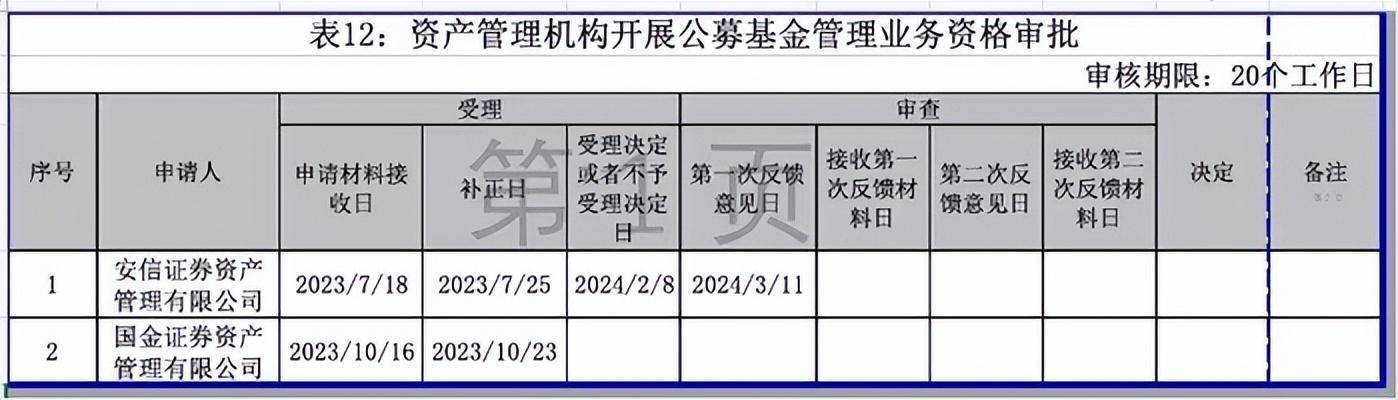
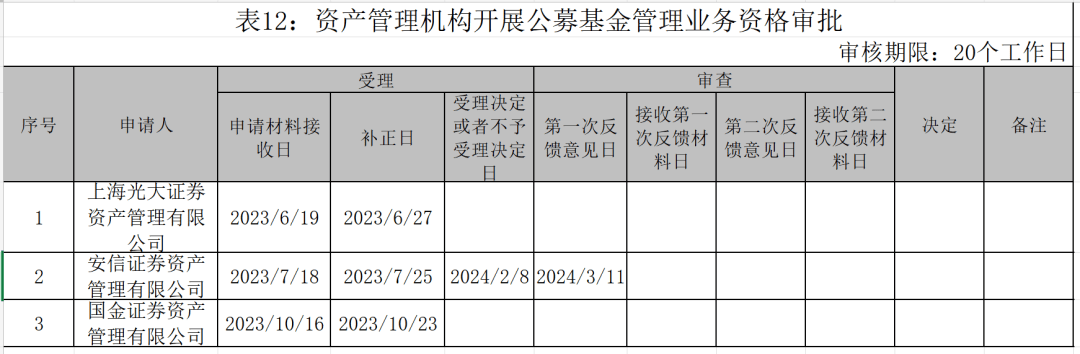
Core Viewpoint - Guangfa Asset Management has withdrawn its application for public fund management qualifications, indicating a tightening trend in public fund license approvals amid the industry's push for high-quality development [2][3]. Group 1: Regulatory Changes and Industry Context - The China Securities Regulatory Commission (CSRC) issued new regulations in May 2022, allowing brokerages to apply for public fund licenses under a "one participation, one control, one license" framework [3]. - Following the introduction of these regulations, at least six brokerage asset management firms applied for public fund licenses, but only two, namely China Merchants Asset Management and Everbright Securities Asset Management, received approval in 2023 [3]. Group 2: Guangfa Asset Management's Status - Guangfa Asset Management submitted its application for public fund management qualifications in January 2023, but has now exited the approval list as of August 1, 2023 [3]. - Currently, only Everbright Asset Management, Anxin Asset Management (now Guozhen Asset Management), and Guojin Asset Management are still in the queue for public fund licenses [3]. Group 3: Transition of Products - The deadline for the transformation of brokerage asset management's public collective products is set for the end of 2025, prompting firms to transfer these products to affiliated fund companies [5]. - Guangfa Securities holds a 54.53% stake in Guangfa Fund and a 22.65% stake in E Fund, having already initiated the transfer of ten public collective products to Guangfa Fund [5]. - As of the second quarter of 2025, Guangfa Asset Management's public collective product scale reached 32.539 billion yuan, with over 90% being money market products [6].

知名券商资管,“撤回”公募牌照申请!
Sou Hu Cai Jing· 2025-08-07 16:24
Core Viewpoint - Guangfa Asset Management has withdrawn its application for public fund management qualifications, indicating a tightening of public fund license approvals in the industry [1][2]. Group 1: Company Actions - Guangfa Asset Management was previously among six brokerage asset management firms that submitted applications for public fund licenses, but it has now exited the approval list [1][5]. - The company submitted its application materials to the China Securities Regulatory Commission (CSRC) in January 2023, but only two firms, China Merchants Asset Management and Everbright Securities Asset Management, received approvals in 2023 [4][5]. Group 2: Industry Context - The public fund industry is experiencing a trend towards high-quality development, leading to a tightening of public fund license approvals [2]. - As of August 1, 2023, only Everbright Asset Management, Anxin Asset Management (now Guozhen Asset Management), and Guojin Asset Management are still in the queue for public fund licenses [5]. Group 3: Regulatory Changes - In May 2022, the CSRC issued new regulations allowing brokerages to achieve "one participation, one control, one license" for public fund licenses, prompting several brokerage asset management firms to apply for licenses [4]. - The transition deadline for brokerage asset management firms to convert their public collective products is set for the end of 2025, with Guangfa Asset Management already beginning to transfer its products to Guangfa Fund [7]. Group 4: Product Management - As of the second quarter of 2025, Guangfa Asset Management's public collective product scale reached 32.539 billion yuan, with over 90% being money market products [8].
倒计时!37家券商这类产品,加速退出历史舞台
券商中国· 2025-06-30 02:55
Core Viewpoint - The transformation of broker-dealer public collective investment products is entering its final phase, with many firms accelerating their disposal plans and shifting management to public fund companies [2][4][5]. Group 1: Current Status of Broker-Dealer Public Collective Products - As of the end of Q1 this year, there are 37 broker-dealer institutions with over 150 public collective investment products, totaling a scale of 354.9 billion yuan, with 11 products exceeding 10 billion yuan in size, all of which are money market funds [3][12]. - Many broker-dealers are transferring their public collective products to affiliated public fund companies, especially when they lack public fund licenses [5][11]. Group 2: Recent Developments - On June 28, Guotai Junan Asset Management announced plans to transfer three public collective products to Anxin Fund Management, while CICC extended the expiration date of two of its products to November 30, 2025, and is working to change the management to CICC Fund [2][6]. - CICC's previous products received approval from the CSRC to change their registration to CICC Fund, indicating a trend towards compliance with regulatory requirements [7]. Group 3: Regulatory Environment and Future Outlook - The regulatory framework established in 2018 requires broker-dealer public collective products to transition to public fund management, with a focus on compliance and quality development in the public fund industry [8][10]. - The pace of obtaining public fund licenses has slowed, with only a few broker-dealers successfully acquiring such licenses, leading others to explore alternative routes for compliance or liquidation of their products [11][15]. - The recent trend shows that regulatory bodies are less inclined to grant extensive extensions for product deadlines, indicating a push for completion of the transformation process [15].

参公大集合改造加速 公募牌照成业务转型关键
Zheng Quan Shi Bao· 2025-06-29 17:55
Core Viewpoint - The pace of disposal for brokerages' public-like collective products has accelerated, with many firms opting to transfer management to public fund companies and register these products as public funds [1][2][4] Group 1: Current Trends - Brokerages are increasingly transferring their public-like collective products to affiliated public fund companies as a mainstream disposal method [2][6] - On June 28, Guotai Junan Asset Management announced plans to transfer three of its public-like collective products to Anxin Fund Management [1][3] - CICC extended the expiration date of its collective products from June 30, 2025, to November 30, 2025, and plans to change the management to CICC Fund [3][7] Group 2: Regulatory Context - The 2018 regulatory guidelines require brokerages to convert public-like collective products to comply with public fund standards, with various pathways for compliance [4][5] - As of now, only about ten brokerages have obtained public fund licenses, making it easier for them to transition their public-like collective products to public funds [4][6] Group 3: Market Dynamics - As of the first quarter of this year, there are 150+ public-like collective products from 37 brokerages, with a total scale of 354.9 billion [7] - Many brokerages have not disclosed specific plans for the conversion of their public-like collective products, merely extending their expiration dates [7][8] - If these products are not converted by the end of this year, they may face liquidation, as regulatory bodies have not granted widespread extensions [8]

兴证资管换帅!刘宇出任董事长
券商中国· 2025-05-22 13:03
Core Viewpoint - The leadership transition at Xingzheng Asset Management is expected to enhance its business layout and competitive strength, with a focus on optimizing operations and expanding its public and private fund offerings [4][5]. Group 1: Leadership Changes - Sun Guoxiong has stepped down as Chairman of Xingzheng Asset Management and will transition to a business inspector role, with Liu Yu taking over as Chairman [1][2]. - Liu Yu has a strong background in finance, having served in various significant roles, including as the Executive Director and President of Xingzheng Investment [2][3]. - The management team has been strengthened with the appointment of Yang Hua as General Manager and Zheng Fangbiao as Vice General Manager, following the departure of Xu Xiang [3][5]. Group 2: Business Development - Xingzheng Asset Management has achieved a management scale exceeding 100 billion yuan, marking a 20% increase from the previous year, reaching a new five-year high [5]. - The company has recently obtained a public fund management license, becoming one of the 14 brokerages with such a qualification in the industry [4][5]. - The launch of its first public fund, focusing on dividend strategies and quantitative stock selection, indicates a strategic move to leverage its new public fund license [5].