
关键矿产价格下限

Search documents
万斯正式向中方下达战书,50多国齐聚华盛顿,把高市早苗高兴坏了
Sou Hu Cai Jing· 2026-02-18 16:47
Core Viewpoint - The U.S. Vice President announced a significant decision to establish a "critical mineral price floor" and impose "adjustment tariffs" in collaboration with allies, aiming to challenge China's dominance in the global mineral market [3][5][6]. Group 1: Meeting Overview - The "critical minerals ministerial meeting" was convened in Washington, attended by representatives from 55 countries, including Germany, Brazil, India, and Japan, indicating a united front against China's market monopoly [3][5]. - The meeting focused on creating a new "critical mineral trade alliance" to ensure that mineral market prices are not controlled by a single country but managed collectively by alliance members [3][5]. Group 2: Strategic Implications - The U.S. government's policy shift reflects a strategic change from the previous administration's "America First" approach to a multilateral strategy in response to China's stronghold in the mineral sector [6][10]. - The establishment of a price floor aims to stabilize mineral prices, which is crucial for the U.S. economy and national security, particularly for industries like high-tech weapons, semiconductors, and electric vehicles [8][14]. Group 3: Japan's Role - Japan plays a critical role in this alliance due to its significant demand for essential minerals like rare earths and lithium, and it has expressed a strong commitment to countering China's influence [10][12]. - The collaboration between the U.S. and Japan in the mineral supply chain has been ongoing since 2025, focusing on joint resource development and risk-sharing [12]. Group 4: Challenges and Responses - The proposed alliance aims to reshape the global supply chain and ensure supply security for the U.S. and its allies, while also providing private financing support for member countries [14][16]. - China's response emphasizes its constructive role in maintaining global supply chain stability, despite facing increased external pressure from the U.S. and its allies [16][19].


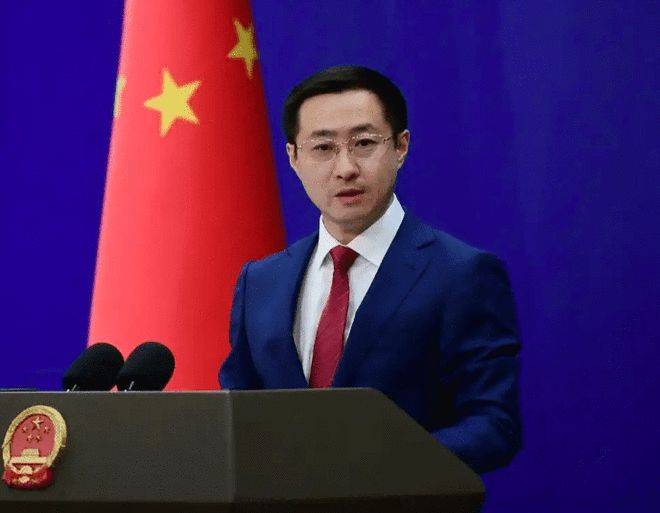
耪厣探报道称美方将启动关键矿产储备计划 中方回应-林剑-外交部-稀土_新闻
Sou Hu Cai Jing· 2026-02-04 13:41
Group 1 - The U.S. plans to initiate a critical mineral reserve program with an initial funding of $12 billion, aiming to reduce dependence on China for resources like rare earths [2] - China's stance remains unchanged regarding the stability and security of the global critical mineral supply chain, emphasizing that all parties have a responsibility to contribute constructively [2][12] - The Trump administration is reportedly abandoning plans to provide minimum price guarantees for U.S. critical mineral projects, acknowledging the lack of congressional funding support and the complexity of setting market prices [2][3] Group 2 - U.S. officials have indicated that mining projects must demonstrate financial independence without government price support, reflecting a shift in strategy [3] - Following the announcement of the policy shift, shares of rare earth companies, including Lynas Rare Earths, experienced significant declines, with Lynas's stock dropping over 10% [6] - The U.S. Department of Energy has denied the accuracy of reports regarding the abandonment of price guarantees, although it did not specify the inaccuracies [5] Group 3 - The U.S. government has not provided price guarantees to any companies since the investment in MP Materials, raising questions about the commitment to this financial tool [7][9] - Critics of price guarantees warn that such mechanisms could expose U.S. taxpayers to significant financial risks, particularly if market prices fall [8] - The abandonment of price guarantees does not preclude the U.S. from exploring other support measures for mineral projects, such as establishing strategic reserves and making equity investments [8]
消息人士:美国正逐步取消关键矿产价格下限
Xin Lang Cai Jing· 2026-01-28 23:51
Core Viewpoint - The Trump administration is retreating from its plan to guarantee minimum prices for key mineral projects in the U.S., reflecting a lack of congressional funding and the complexities of market pricing [1][3]. Group 1: Government Actions - The shift in policy marks a reversal of commitments made to the industry and may differentiate Washington from the G7 discussions on joint price support measures for critical minerals used in electric vehicles, semiconductors, defense systems, and consumer electronics [1][3]. - During a closed-door meeting hosted by a Washington think tank, senior officials from the Trump administration informed mining executives that their projects must demonstrate financial independence without government price support [1][3]. - Audrey Robertson, Assistant Secretary of the Department of Energy, stated to executives, "We are not here to support you," indicating that expectations for government backing should be tempered [1][3]. Group 2: Implications for Future Transactions - This policy change will guide future transactions but will not affect the price floor for MP Materials, which the government agreed to as part of an investment plan last July [1][3]. - Joshua Kroon, Deputy Assistant Secretary for International Trade Administration, also participated in the meeting, reinforcing the message that Washington lacks the capacity to provide price floors [2][4].