
具身智能系统

Search documents
华沿机器人开启招股:获高瓴大摩等近亿美元基石认购,发力人形机器人市场
IPO早知道· 2026-03-23 01:48
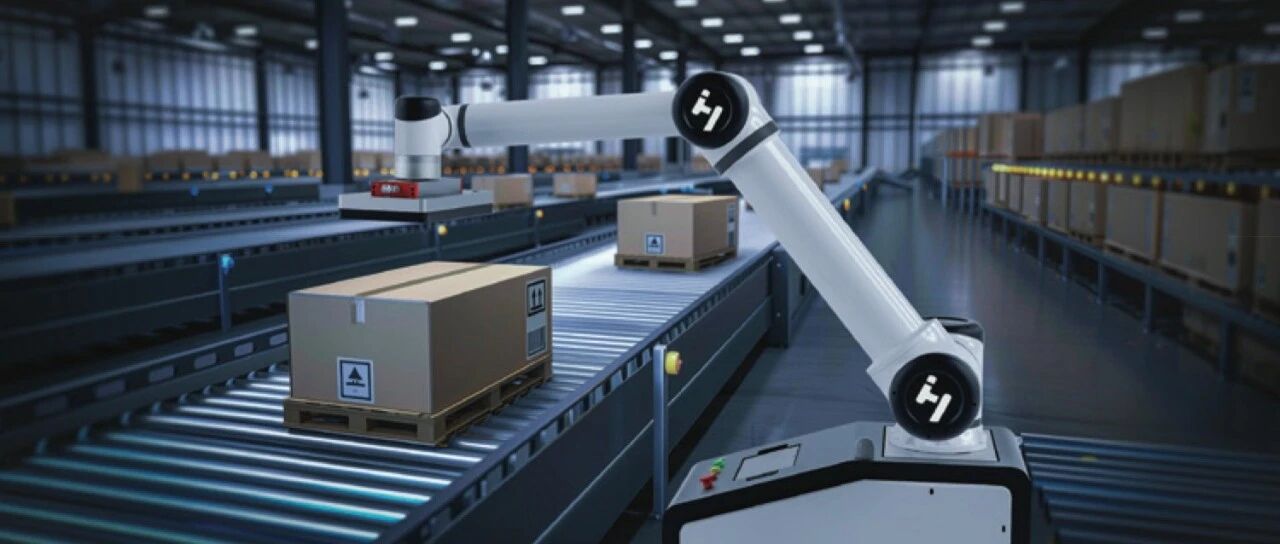
Core Viewpoint - Huayan Robotics is set to launch an IPO, aiming to raise approximately 1.4 billion HKD with a market valuation exceeding 9 billion HKD, leveraging its technological advantages in collaborative robots to expand into humanoid robots [3][5]. Company Overview - Established in 2017, Huayan Robotics focuses on the R&D, production, and sales of collaborative robots and core motion components, catering to various industries including 3C electronics, automotive, semiconductor, medical, metal processing, and logistics [3][4]. - The company has a diverse client base, including leading enterprises in high-end manufacturing, semiconductors, new energy, and medical testing [4]. Financial Performance - Revenue figures for Huayan Robotics from 2022 to 2024 are projected at 109 million CNY, 175 million CNY, and 310 million CNY, reflecting a compound annual growth rate (CAGR) of 68.4% [5]. - The company is expected to achieve profitability in 2024, making it one of the few profitable collaborative robot companies globally [5]. - Huayan Robotics is also recognized as the highest overseas revenue-generating Chinese collaborative robot exporter in 2024, with overseas revenue shares of 26.2%, 26.5%, 50.2%, and 37.9% from 2022 to 2025 [5]. Technological Capabilities - Huayan Robotics possesses integrated hardware and software development capabilities, being the only Chinese collaborative robot manufacturer with significant experience in motors and servo drivers [6]. - The company is uniquely positioned as the only domestic collaborative robot company that independently sells core motion components, serving top clients in the automotive and robotics sectors [6]. - The HRC embodied intelligence control platform developed by Huayan supports integrated collaboration in perception, decision-making, and execution, enhancing product performance and adaptability to changing customer needs [6]. Product Performance - The collaborative robots from Huayan cover payloads ranging from 3 kg to 60 kg, with a maximum repeat positioning accuracy of 0.015 mm and a dynamic performance speed of up to 8.5 m/s under a 50 kg load [7]. Market Opportunities - The technological advantages of Huayan Robotics in collaborative robots can be rapidly transferred to the humanoid robot sector, which is experiencing accelerated growth [9]. - The global market for humanoid robot components is projected to reach 3.5 billion CNY in 2024, with a CAGR of 59.5% from 2024 to 2029 [9]. - The collaborative robot market is also expected to grow significantly, with the global market size increasing from 2.5 billion CNY in 2020 to 7.5 billion CNY in 2024, and further projected to reach 35 billion CNY by 2029 [10].

今年北京石景山力争数字经济核心产业收入达2200亿元
Zhong Guo Xin Wen Wang· 2026-01-13 10:23
Core Viewpoint - Beijing's Shijingshan District aims to strengthen its digital economy and modern finance sectors, targeting a core industry revenue of 220 billion yuan in the digital economy by 2026 [1][2] Group 1: Digital Economy Development - The district plans to establish the first phase of the Super Intelligent Computing AI Innovation Demonstration Park and accelerate the construction of a data foundation system [1] - The core revenue of the digital economy is expected to grow by 18% [2] - The district's unique industry clusters, including AI, sci-fi games, industrial internet, and virtual reality, are projected to generate over 84 billion yuan in total revenue [2] Group 2: Talent and Innovation - The district will focus on attracting technology leaders and innovation teams, enhancing the integration of education, technology, and talent development [1] - Plans include the establishment of at least 20 AI innovation laboratories and the construction of a national primary and secondary school science education experimental area [1] - Collaboration with institutions like Harbin Institute of Technology and Tsinghua University will be pursued to strengthen research and innovation [1] Group 3: Industrial Infrastructure - The district will develop six specialized parks, including an AI industry cluster and a sci-fi game industry cluster, to enhance its modern industrial system [1] - The layout of industrial functional areas will be optimized, expanding from the Shougang Park [1] - The district aims to build the largest humanoid robot data training center in the country, with future industries expected to achieve 8 billion yuan in revenue [2]
倪光南:AI与空间计算融合,让机器人看懂、理解世界
2 1 Shi Ji Jing Ji Bao Dao· 2025-08-10 12:14
Group 1 - The core idea presented by Ni Guangnan is that the integration of AI and spatial computing is a key technology for implementing the national "Artificial Intelligence+" initiative, which is reconstructing the three-dimensional physical world and expanding the bridge for large models to connect with the physical world [1][4] - The robot industry is transitioning from being automated tools to intelligent entities, with the focus on enhancing robots' intelligence to enable them to "see, understand, and act in the world" [1][2] - Visual perception is emphasized as the starting point of intelligence, with a comparison made between the amount of visual information a four-year-old child learns and the total text information learned by a typical large language model [1][5] Group 2 - Ni Guangnan categorizes the development of manufacturing into two stages: traditional industrialization (Industry 4.0) and new industrialization (Industry 5.0), where robots evolve from passive automation tools to autonomous decision-making intelligent entities [2][8] - The proposed integrated intelligent system for robots consists of three components: brain (based on large models), eyes (visual systems using AI and spatial computing), and action (robot operating systems like AgileROS) [3][11] - The future vision includes building an autonomous AI robot ecosystem similar to historical tech alliances, focusing on RISC-V chip architecture and open-source systems [12] Group 3 - The relationship between the digital world and the physical world is shifting from a mapping relationship to a deep integration, with robots transitioning from automation tools to intelligent entities [8][9] - The current state of robots is primarily at levels L1 to L3, with aspirations to elevate their intelligence to L4 and above through advancements in their "brain" and "eyes" [9][10] - The goal is to upgrade robots' operating systems to an integrated intelligent system, allowing them to effectively perceive, understand, and act within their environments [10][12]
