
内存墙问题

Search documents
SOCAMM2,新贵?
半导体芯闻· 2026-03-04 10:23
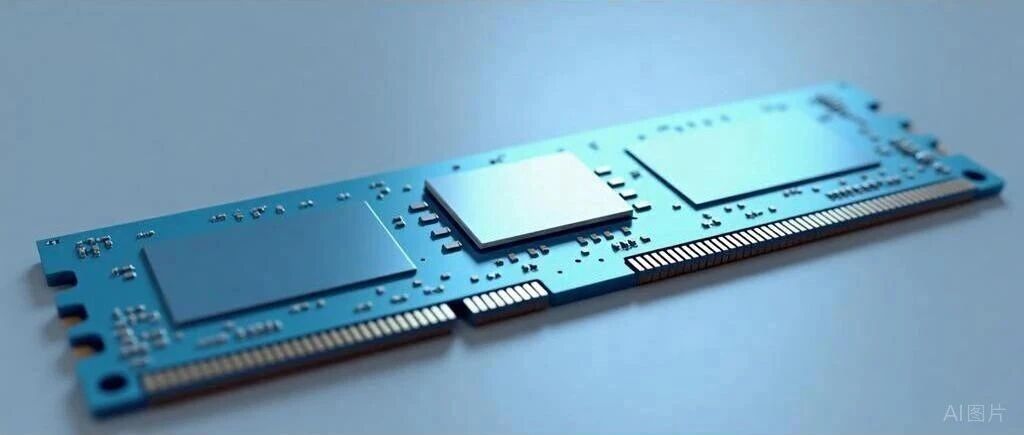
Core Viewpoint - The rapid development of artificial intelligence (AI) infrastructure is struggling to keep pace with model innovation, leading to a critical need for advanced memory architectures like SOCAMM2 to address the increasing complexity of AI workloads [2][4]. Group 1: SOCAMM and SOCAMM2 Development - SOCAMM is a memory standard co-developed by Micron Technology and NVIDIA, designed to provide high bandwidth solutions for applications exceeding HBM capacity, with a modular design that allows for upgrades [4][5]. - The first generation of SOCAMM introduced a new tier in the memory and storage hierarchy to meet the demands of AI servers for higher capacity and bandwidth, quickly adopted as an industry standard by major memory manufacturers [5][7]. - SOCAMM2 aims to enhance bandwidth, capacity, energy efficiency, signal integrity, and thermal performance, achieving a memory capacity increase from 128 GB to 256 GB while reducing power consumption by 66% compared to equivalent RDIMM modules [7][8]. Group 2: Performance and Cost Efficiency - The introduction of SOCAMM2 has resulted in a fourfold performance increase for general server workloads and a sixfold increase for AI workloads, with potential memory configurations per CPU rising from 1 TB to 2 TB [7][8]. - The new memory architecture is expected to significantly reduce the token generation costs for high-parameter foundational models like ChatGPT and Gemini by 3 to 5 times, driven by a projected 115-fold increase in LLM token demand [8][9]. - SOCAMM2 is not only targeted at AI servers but is also attracting interest from high-performance computing (HPC) manufacturers due to its high bandwidth capabilities, indicating a broader application potential [9][10]. Group 3: Industry Impact and Future Outlook - The emergence of SOCAMM2 represents a shift in memory hierarchy and AI server architecture, crucial for enhancing server compute density by tightly integrating CPU, AI accelerators, memory, and network components [9][10]. - As AI is recognized as a key competitive capability globally, companies like NVIDIA and Micron are positioned as leaders in the AI race, focusing on AI acceleration and memory architecture, respectively [10].


中外专家共探高性能计算与AI融合新路径
Huan Qiu Wang Zi Xun· 2025-07-18 08:36
Core Insights - The CoDesign 2025 International Symposium held in Osaka, Japan, focused on the integration of high-performance computing (HPC) and artificial intelligence (AI) [1][2] - The symposium addressed four core areas: algorithms, application systems, system software and middleware, and hardware-software co-design [1] - Key discussions included the future of exascale computing and the role of HPC and AI in advancing scientific research [1] Group 1: Key Presentations and Discussions - Professor Lu Yutong highlighted the challenges of system fragmentation affecting computational efficiency and emphasized the importance of co-design in hardware and software [1] - Shuaiwen Leon Song introduced the Together AI's "AI Accelerated Cloud" platform, showcasing its self-developed inference engine and optimization strategies [1] - Professor Thomas C. Schulthess presented the cloud-native supercomputing platform ALPS developed by CSCS, which supports elastic resource scheduling and the "science as a service" concept [2] Group 2: Research Focus Areas - Professor Xian-He Sun addressed the "memory wall" issue, proposing theories and models to optimize data flow and enhance performance [2] - Experts shared advancements in large model training optimization, supercomputer architecture, scheduling algorithms, memory problem solutions, and data compression tools [2]