
内幕信息交易

Search documents
US Congressman Moves to Ban Staff From Trading on Prediction Markets
Yahoo Finance· 2026-03-26 15:28
Core Insights - A member of Congress has introduced legislation to prohibit congressional staff from trading on prediction markets, reflecting bipartisan concerns about insider information and financial incentives linked to political outcomes [1][2] - The proposed legislation aims to address inadequacies in existing ethics frameworks that do not account for event contracts, highlighting the need for updated regulations [2] Legislative Proposals - The Public Integrity in Financial Prediction Markets Act, introduced by Representative Ritchie Torres, targets federal officials and congressional staff, prohibiting trading based on nonpublic information accessed through official duties [3][4] - Other legislative efforts include the End Prediction Market Corruption Act, which seeks to ban trading on prediction markets for the president, vice president, and members of Congress [5] - The BETS OFF Act aims to ban event trading on sensitive operations, while the bipartisan Event Contract Enforcement Act directs the CFTC to prohibit contracts related to terrorism and illegal activities [5][6] Regulatory Environment - The current legislative landscape is crowded with multiple bills addressing prediction markets, but none are close to a floor vote, complicating the regulatory environment [6] - The Trump administration's permissive stance on prediction markets adds tension to the legislative process, impacting the potential for new regulations [6]
重罚1.77亿,IT内鬼抄私募作业获利超8800万
21世纪经济报道· 2025-11-18 14:04
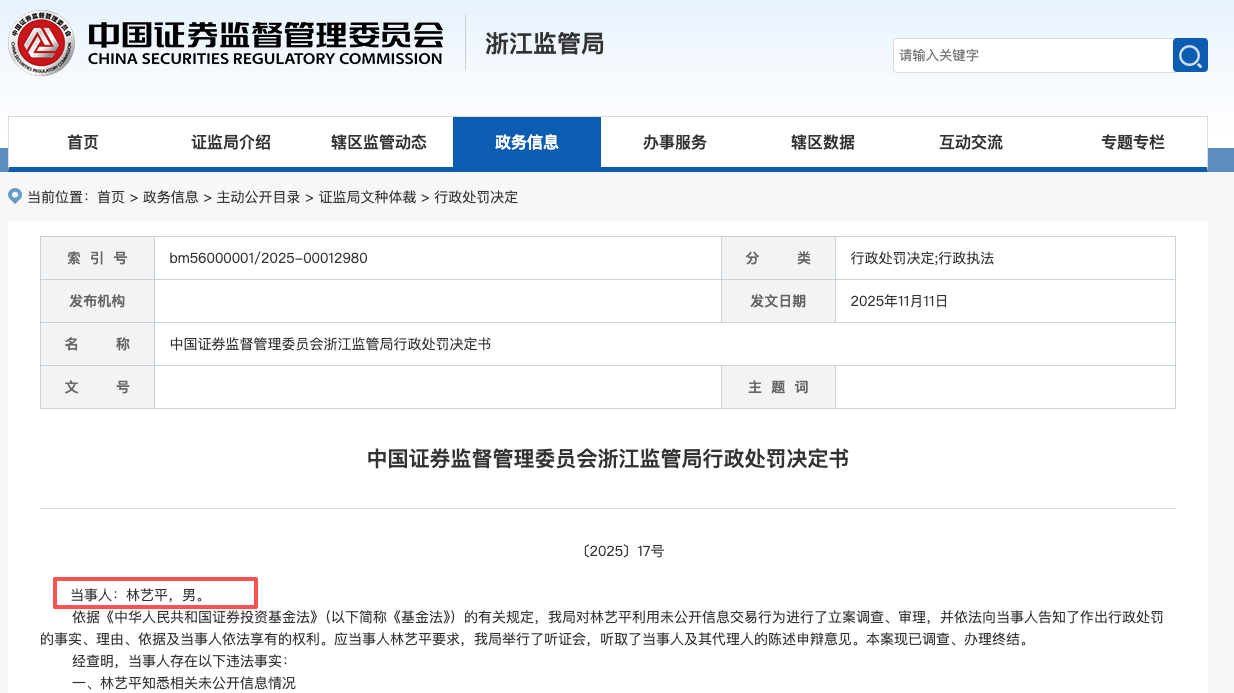
Core Viewpoint - The article discusses a significant case of insider trading involving Lin Yiping, who was fined 177 million yuan for engaging in "mouse warehouse" activities, highlighting systemic vulnerabilities in the management of IT personnel within financial institutions [1][4][12]. Group 1: Case Details - Lin Yiping, an employee at a technology company in Hangzhou, illegally profited over 88 million yuan by exploiting sensitive information from two private equity firms he had access to [1][3]. - The regulatory investigation revealed that Lin executed trades through multiple accounts, attempting to obscure the connection between his activities and the private equity firms [3][4]. - The total illegal gains from his trading activities amounted to 88.57 million yuan, leading to a total penalty exceeding 177 million yuan, including confiscation of illegal profits and fines [4][5]. Group 2: Regulatory Insights - The case underscores the need for stricter compliance measures within private equity firms, particularly regarding the access and management of sensitive information by IT personnel [5][12]. - Regulatory authorities have intensified their scrutiny of "mouse warehouse" activities, particularly targeting IT staff who may misuse their access to confidential data [12][13]. - The penalties imposed reflect a zero-tolerance approach to insider trading, emphasizing that all employees, regardless of their position, are subject to strict regulatory oversight [6][12]. Group 3: Systemic Vulnerabilities - The article identifies systemic flaws in the management of IT roles, where personnel have excessive access to sensitive data, leading to potential misuse [5][12]. - It highlights the importance of implementing strict access controls, data encryption, and real-time monitoring to prevent unauthorized trading activities [10][12]. - The increasing trend of insider trading cases involving non-traditional roles, such as IT and operational staff, indicates a shift in the landscape of financial misconduct [12][13].


重罚1.77亿!私募关联IT员工作案,老鼠仓获利超8800万
2 1 Shi Ji Jing Ji Bao Dao· 2025-11-18 11:48
Core Points - A significant penalty of 177 million yuan has been imposed for a case of "rat trading" involving Lin Yiping, who illegally profited over 88 million yuan through his position [1][3] - The case has drawn attention due to Lin's association with a technology company that shares a common control with two private fund managers [1][2] Summary by Sections Case Details - Lin Yiping was employed at a technology company in Hangzhou, where he was responsible for trading strategy development and risk control [2] - He accessed sensitive, non-public information from two private funds and engaged in trading activities using accounts linked to others, attempting to obscure the connection [3] Regulatory Findings - The investigation revealed that Lin's trading activities were closely aligned with the operations of the private funds, resulting in illegal profits of 88.57 million yuan [3] - The regulatory body constructed a comprehensive evidence chain through IP tracking and transaction analysis, leading to the penalties imposed [3] Industry Insights - Experts highlight systemic vulnerabilities in the management of IT personnel within private funds, suggesting that stricter controls and segregation of duties could prevent such incidents [4][9] - The case reflects a broader trend of IT and support roles being involved in insider trading, prompting calls for enhanced compliance measures across the industry [10][11] Regulatory Response - The regulatory authority's decision to impose a five-year market ban and significant financial penalties is seen as a strong message against insider trading practices [6][10] - The increasing use of technology for monitoring trading behaviors indicates a shift towards more rigorous oversight in the financial sector [7][11]
合合信息:2025年激励计划内幕信息知情人股票交易自查结果公布
Xin Lang Cai Jing· 2025-09-17 10:52
Core Viewpoint - The company has conducted a self-inspection report regarding the trading activities of insiders and incentive recipients related to the 2025 restricted stock incentive plan, confirming no misuse of insider information [1] Group 1 - The company held meetings in 2025 to review and approve the draft of the incentive plan and disclosed it [1] - The self-inspection targeted insiders and incentive recipients, querying trading activities from March 2 to September 1, 2025 [1] - During the inspection period, 8 incentive recipients engaged in trading activities, which were personal investments and did not involve insider information [1] Group 2 - No other inspected individuals were found to have engaged in trading activities [1] - The conclusion of the self-inspection indicates no evidence of insider information leakage or insider trading, with all inspected behaviors complying with regulations [1]
亿道信息: 关于2025年限制性股票激励计划内幕信息知情人及激励对象买卖公司股票情况的自查报告
Zheng Quan Zhi Xing· 2025-09-05 11:12
Core Viewpoint - The company conducted a self-examination regarding insider trading related to its 2025 Restricted Stock Incentive Plan, confirming that no insider trading occurred among the relevant parties during the specified period [1][3]. Group 1: Self-Examination Process - The self-examination covered the period from February 18, 2025, to August 18, 2025, focusing on stock trading activities of insider information personnel and incentive recipients [1]. - The examination was conducted in accordance with the relevant laws and regulations, with verification from the China Securities Depository and Clearing Corporation [1]. Group 2: Trading Activities of Insiders - During the self-examination period, only one entity, Guotai Junan Securities Co., Ltd., was found to have engaged in stock trading, while other insider information personnel did not engage in any trading activities [2]. - A total of 25 incentive recipients were identified to have traded the company's stock, but they acted based on publicly available information and independent judgment [2][3]. Group 3: Conclusion of Self-Examination - The company confirmed that appropriate confidentiality measures were in place during the planning and discussion of the incentive plan, and no insider trading was detected among the relevant parties [3]. - The findings align with the regulations set forth in the Management Measures for Equity Incentives, indicating no violations of insider trading laws [3].