
军事部署

Search documents
美国防部正考虑向中东增派1万人地面部队,包括步兵和装甲车辆,或部署在对伊朗及其石油出口枢纽实施打击的范围内
中国能源报· 2026-03-27 02:13
Group 1 - The U.S. Department of Defense is considering deploying up to 10,000 ground troops to the Middle East, which may include infantry and armored vehicles [1] - The specific deployment location of these troops is unclear, but it is likely to be within striking distance of Iran and its oil export hub, Khark Island [1] - Recent troop movements include the deployment of two Marine Expeditionary Units totaling approximately 5,000 personnel from Japan and California, as well as around 2,000 soldiers from the Army's 82nd Airborne Division to the Middle East [1]


美国防官员已为向伊朗部署地面部队制定详尽方案
财联社· 2026-03-20 19:27
Group 1 - The U.S. Department of Defense officials have developed a detailed plan for deploying ground troops to Iran [1] - President Trump is weighing the decision on whether to deploy ground troops in the region, with unclear conditions under which he would authorize their use [2]

罗马尼亚:允许美军临时部署
中国能源报· 2026-03-12 06:17
Group 1 - The Romanian Parliament approved a plan for the temporary deployment of U.S. military equipment and personnel in Romania [1] - The deployment is expected to last approximately 90 days and will involve around 400 to 500 U.S. military personnel stationed at Mihail Kogălniceanu Air Base and Campia Turzii Air Base [1] - The military equipment involved includes aerial refueling aircraft, surveillance equipment, and satellite communication devices, all of which are defensive in nature and unarmed [1] Group 2 - The deployment is in response to a request from the United States and is related to the current situation in the Middle East [1] - Romanian President Iohannis stated that such cooperation is a routine operation among NATO allies and aims to enhance Romania's national security [1] - The deployment is intended to reassure the public about national security and alleviate any concerns [1]

美国下令外交官撤离以色列,2艘航母已部署中东
Xin Lang Cai Jing· 2026-02-27 10:13
Group 1 - The U.S. State Department ordered the evacuation of non-emergency personnel and their families from the U.S. embassy in Israel on February 27 [1] - The U.S. aircraft carrier "Ford" arrived in Israeli waters on February 27, indicating a significant military presence in the region with both "Ford" and "Lincoln" carriers deployed [1] - Approximately 20 U.S. military refueling aircraft arrived at Ben Gurion Airport in Israel on the evening of February 26 [5] Group 2 - Indirect negotiations between the U.S. and Iran took place in Muscat, Oman, and Geneva, Switzerland, on February 6 and 17, with a third round occurring on February 26 in Geneva, although no agreement was reached [5] - U.S. President Trump acknowledged considering "limited military strikes" against Iran, reflecting ongoing tensions in the region [5]
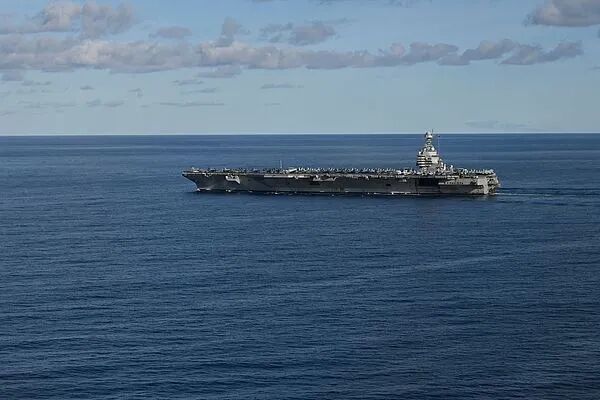
美军最大航母驶向中东 预计很快抵达以色列海域
Zhong Guo Xin Wen Wang· 2026-02-27 02:30
Core Viewpoint - The deployment of the USS Gerald R. Ford aircraft carrier to the Eastern Mediterranean signifies a strategic military move by the U.S. amid rising tensions with Iran, potentially impacting regional stability and military dynamics [1] Group 1: Military Deployment - The USS Gerald R. Ford departed from Souda Bay, Greece, after a four-day resupply, heading towards the Eastern Mediterranean and is expected to reach the vicinity of Israel within 24 hours [1] - The USS Gerald R. Ford, which entered service in 2017, measures 334 meters in length and has a displacement of over 100,000 tons, with a crew of nearly 4,600 personnel [1] Group 2: Historical Context - The last time the U.S. deployed two aircraft carriers in the Middle East was in June 2025, coinciding with military actions against Iranian nuclear facilities [1] - The current military buildup follows the third round of indirect negotiations between the U.S. and Iran, indicating a heightened state of military readiness and pressure from the U.S. on Iran [1] Group 3: Strategic Implications - The USS Gerald R. Ford's deployment is viewed as the final piece in the U.S. military strategy in the region, complementing the presence of the USS Abraham Lincoln carrier strike group to establish a "dual-carrier" presence in the Middle East [1]
施压伊朗,美军最大航母先“垮”了?厕所天天堵,船员心态崩……
Xin Lang Cai Jing· 2026-02-25 08:49
Core Viewpoint - The USS Gerald R. Ford aircraft carrier is facing significant operational challenges, including frequent malfunctions of its vacuum waste system, which has led to low morale among crew members as the carrier prepares for a new round of negotiations between the U.S. and Iran [1][3]. Group 1: Operational Issues - The USS Gerald R. Ford has been reported to have a malfunctioning vacuum waste system, with approximately 650 toilets requiring daily maintenance [1][3]. - Crew members have experienced long wait times for restroom access, sometimes exceeding 45 minutes [1][3]. - The engineering department had previously alerted military leadership about the escalating toilet issues, reporting 205 malfunctions within four days, necessitating 19-hour workdays for maintenance personnel [1][3]. Group 2: Crew Morale and Deployment Duration - The mental health of the crew has deteriorated, with reports of anxiety and depression due to extended deployment periods [2][4]. - The USS Gerald R. Ford has been deployed for about 8 months, exceeding the typical 6-month deployment cycle, with the total deployment potentially reaching 11 months, which could set a record for continuous deployment of U.S. Navy vessels [2][4]. - Many crew members have expressed a desire to leave the Navy after the current mission due to the strain of extended service and the pressures of being stationed near Iran [5]. Group 3: Strategic Context - The USS Gerald R. Ford is positioned as a critical component of U.S. military strategy in the region, particularly in light of upcoming negotiations with Iran and potential military actions [5]. - The U.S. military has amassed significant forces in the Middle East and surrounding areas, indicating a heightened state of readiness [5].
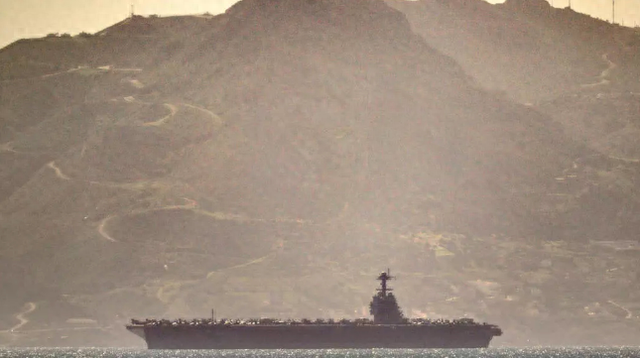
美军增援航母,被目睹驶入地中海
Xin Lang Cai Jing· 2026-02-21 10:03
Core Viewpoint - The deployment of the USS Gerald R. Ford aircraft carrier to the Mediterranean is part of the U.S. military's response to perceived threats from Iran, particularly in light of ongoing discussions regarding Iran's nuclear program [1][3]. Group 1: Military Deployment - The USS Gerald R. Ford, the largest aircraft carrier in the world, was observed entering the Mediterranean Sea on February 20 [1]. - The carrier was photographed passing through the Strait of Gibraltar, a crucial maritime passage connecting the Atlantic Ocean to the Mediterranean [1]. Group 2: Political Context - President Trump has indicated that he is "considering" limited strikes against Iran if negotiations regarding Iran's nuclear program do not yield an agreement [3]. - The USS Abraham Lincoln aircraft carrier has been deployed in the Middle East since the end of January, indicating a sustained U.S. military presence in the region [3].
大量美军在中东地区集结
财联社· 2026-02-19 15:10
Military Deployment - The U.S. military has deployed aircraft, early warning systems, and drones in multiple countries including Jordan, Saudi Arabia, Bahrain, and the UAE [1] - Naval forces including destroyers and littoral combat ships have been positioned near the Red Sea, Persian Gulf, and Strait of Hormuz, with the "Abraham Lincoln" carrier strike group in the North Arabian Sea [1] - The "Ford" carrier strike group is expected to arrive as early as the upcoming weekend [1] Regional Tensions - Experts from the U.S. think tank, the Institute for Science and International Security, have noted that Iran has recently reinforced its military and nuclear facilities based on satellite imagery analysis [1] - Iran and Russia commenced joint naval exercises on February 19 [1] - The commander of the Iranian Islamic Revolutionary Guard Corps Navy stated that the Iranian Navy is prepared to close the Strait of Hormuz upon receiving orders [1]

美国不断向伊朗周边调兵遣将
Xin Lang Cai Jing· 2026-02-19 03:33
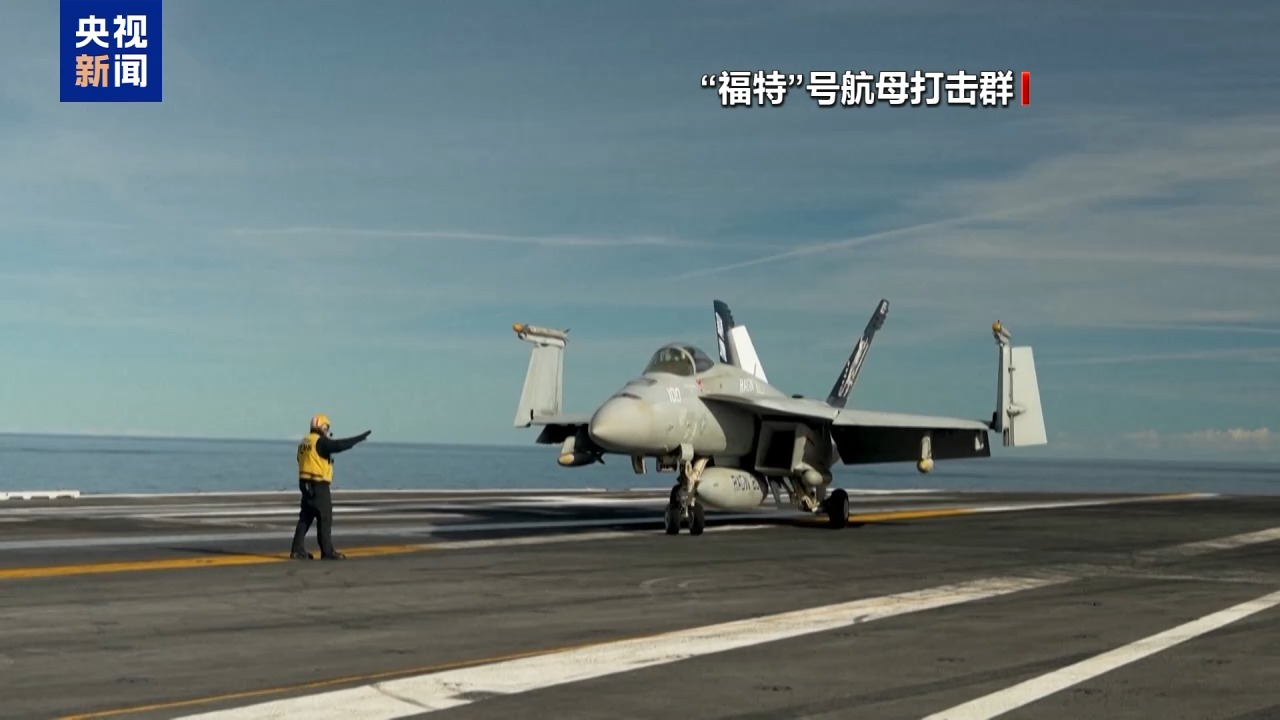
Group 1 - The core viewpoint of the article highlights the ongoing indirect negotiations between the US and Iran, which have shown progress compared to previous rounds, despite existing differences [1] - The US is enhancing its military presence around Iran, with the deployment of the USS Ford aircraft carrier and its escort vessels crossing the Atlantic towards the Strait of Gibraltar, marking the second aircraft carrier strike group sent to the region [1][3] - The USS Lincoln aircraft carrier strike group is currently active in the Middle East, near Oman, while the US has deployed over ten other types of warships, hundreds of aircraft, and multiple air defense systems in the region [5] Group 2 - Israeli sources indicate that there are signs of a potential joint military strike by the US and Israel against Iran in the coming days, with Israel raising its national alert level and preparing its emergency response units [7] - There are no indications that diplomatic negotiations between the US and Iran will yield breakthroughs, while evidence suggests that US military action against Iran may be imminent [9] - Analysts suggest that if the US conducts military operations against Iran, it is likely to be a joint effort with Israel, potentially larger in scale than previous conflicts, posing a significant threat to Iran and having profound implications for the entire region [9]
伊朗和美国在日内瓦举行第二轮核谈判
Xin Lang Cai Jing· 2026-02-17 10:35
Group 1 - The core point of the article is that Iran and the United States are engaged in a second round of nuclear negotiations in Switzerland, aiming to prevent further conflict in the Middle East [1][4]. - The talks, mediated by Oman, began at around 10:30 AM local time and followed a previous round in Muscat that lasted approximately seven hours, with both sides reporting "progress" [1][4]. - Iranian officials have expressed a willingness to discuss their nuclear enrichment activities but will link any concessions to potential easing of U.S. sanctions [2][5]. Group 2 - The U.S. is increasing its military presence in the Middle East, deploying a second aircraft carrier amid warnings of possible strikes against Iran if negotiations fail, which may take several weeks [2][5]. - The Iranian Revolutionary Guard conducted exercises near the strategically important Strait of Hormuz, focusing on responding decisively to security threats [2][5]. - The oil market is closely monitoring the negotiations to assess the potential for disruptions in Gulf supply or the possibility of sanctions relief for Iran, with Brent crude oil prices dropping to $68 per barrel amid these developments [2][5]. Group 3 - The U.S. negotiating team is led by Middle East envoy Steve Wittekov and Jared Kushner, with President Trump indicating that Iran is eager to reach an agreement and that he will indirectly participate in the talks [3][6].