
泥石弹道导弹

Search documents
刚刚!霍尔木兹海峡,突传大消息!以色列,重磅发声!
券商中国· 2026-03-16 01:54
Core Viewpoint - The situation in the Strait of Hormuz is significantly impacting the global energy market, with rising tensions between the U.S., Israel, and Iran leading to military actions and potential disruptions in oil supply [1]. Group 1: U.S. and International Response - The U.S. government plans to announce the formation of a "protective alliance" for the Strait of Hormuz, with some countries agreeing to provide escort for vessels in this critical oil shipping route [3]. - President Trump has threatened NATO allies, stating that failure to assist the U.S. in keeping the Strait open could lead to a "very bad future" for NATO [2]. - Responses from various countries indicate a lack of public commitment to the escort call, with France explicitly stating it will not send vessels, while Japan emphasizes independent decision-making [4][5][6]. Group 2: Military Actions in the Region - Israel has expanded its military operations against Iran, targeting over 200 sites in western and central Iran, with operations expected to continue for at least three more weeks [8]. - Iran has launched its "Mudstone" ballistic missiles against Israeli targets, marking the first use of this missile type in the current conflict, which has a range exceeding 2000 kilometers [9]. - Iranian forces have reportedly destroyed over 80% of U.S. military base strategic radars and key facilities, indicating a significant escalation in military capabilities [10].


伊朗,使用新武器
中国能源报· 2026-03-15 13:16
Group 1 - Iran launched the "Real Commitment-4" military operation on March 15, marking the 54th round of actions in the ongoing conflict with Israel, utilizing various missiles including the "Mudstone" ballistic missile for the first time [3] - The Iranian forces claimed that the strikes accurately hit multiple core strategic targets in Israel, focusing on command and decision centers affecting air operations, military industry, defense infrastructure, and troop assembly areas [3] - The Israeli Defense Forces confirmed that they detected missiles launched from Iran towards Israel, with their defense systems engaged in interception [4] Group 2 - The missile attacks from Iran resulted in at least 2 injuries in central Israel [5] - Fragments of the Iranian missiles struck the U.S. consulate building in Israel [6] - No responses have been reported from the involved parties regarding the missile strikes [7]

伊朗,使用新武器
第一财经· 2026-03-15 12:57
Core Viewpoint - Iran's Islamic Revolutionary Guard Corps has launched its 54th military operation named "Real Commitment-4," marking the first use of the "Mudstone" ballistic missile in the ongoing conflict with Israel [3][4]. Group 1 - The military operation involved the use of various missiles, including "Hezbollah-Shekan," "Qader," "Emad," "Khoramshahr," and "Mudstone" ballistic missiles [3][4]. - The strikes targeted multiple core strategic objectives in Israel, focusing on command and decision centers affecting air operations, military industrial and defense infrastructure, and troop assembly areas [4]. - Israel confirmed that the missile attacks resulted in at least 2 injuries in central Israel [5][7]. Group 2 - The Israel Defense Forces reported monitoring missile launches from Iran towards Israel, indicating that the Israeli defense systems were engaged in interception efforts [6].

美国航母逼近 专家:伊朗军事外交两手尝试“破局”
Xin Lang Cai Jing· 2026-01-27 15:51
Core Viewpoint - The situation in Iran is tense, with military and diplomatic responses to U.S. pressure, indicating a potential for conflict escalation in the region [1][3][5]. Military Response - Iran has declared a "highest state of readiness" and warned that any U.S. military attack would target U.S. bases in the Middle East. Analysts suggest that Iran may use ballistic missiles to strike U.S. targets if attacked [1][5]. - Iran's ballistic missile capabilities are among the most advanced in the region, with ranges covering all U.S. bases in the area. During the 2025 conflict with Israel, Iran successfully launched three types of ballistic missiles, demonstrating its operational capabilities [1]. Diplomatic Efforts - Iran is actively seeking international support, with its foreign minister engaging in discussions with high-level officials from multiple countries to emphasize the importance of regional peace and stability. Iran aims to resolve differences through dialogue [3][5]. - Countries like Saudi Arabia, Qatar, and Oman are involved in diplomatic mediation, while Turkey and Egypt have also called for U.S. restraint [3]. Strategic Communication - Iran has reiterated that it has never sought and will not seek nuclear weapons, aiming to eliminate any justification for military action against it. This statement is part of a broader strategy to gain understanding and support from neighboring countries [5][7]. - The military preparations are intended to minimize potential losses in the event of sudden conflict and to warn provocateurs that military action will have consequences [7]. U.S. Military Considerations - The U.S. is potentially preparing for a rapid strike against Iran, but there are concerns regarding the timing and effectiveness of such an operation. Iran's preparedness could complicate U.S. military objectives [8]. - The U.S. military's ability to ensure the safety of its forces and regional allies is uncertain, especially given Iran's willingness to engage in dialogue regarding nuclear issues, suggesting that the current crisis may be resolvable through negotiation [8].
局势骤紧!美军航母就位 伊朗立巨幅画暗指航母被炸
Xin Hua She· 2026-01-27 11:44
Group 1 - Iran's Foreign Ministry spokesperson Baghaei warned that if war is imposed, Iran will respond in a way that makes aggressors "regret" their actions [1][2] - A large propaganda poster was erected in Tehran showing a U.S. aircraft carrier being attacked, with the caption "The instigator will face the storm," indicating Iran's stance against U.S. military presence [1][2] - The U.S. Navy's Abraham Lincoln carrier strike group has entered the Middle East waters, indicating a potential military buildup in the region, although no immediate military action has been confirmed [1][2] Group 2 - Iran is closely monitoring the situation and is fully prepared for military action, emphasizing that the presence of U.S. warships will not deter its defensive resolve [2] - Iran possesses a significant arsenal of medium and long-range missiles, as well as drones, which could be utilized in military operations [2] - The potential for conflict is heightened by the historical context of a 2025 war scenario between Iran and Israel, where Iran successfully launched advanced ballistic missiles during previous conflicts [2]
国际观察|美国航母“就位” 伊朗如何“破局”
Xin Hua She· 2026-01-27 05:27
Group 1 - The U.S. military has confirmed the deployment of the USS Abraham Lincoln aircraft carrier strike group to the Central Command area, which covers the Middle East [1] - The USS Lincoln strike group is expected to be positioned in the Arabian Sea or the Gulf of Oman within days, although it has not yet reached a location capable of effectively striking Iran [2] - The USS Lincoln can carry approximately 90 aircraft, including F-35 stealth fighters and F/A-18 fighter jets, and its accompanying destroyers are equipped with Tomahawk cruise missiles [2] Group 2 - The U.S. has additional naval assets in the Gulf, including two destroyers and three littoral combat ships stationed in Bahrain, along with F-15E fighter jets deployed to enhance combat readiness [3] - Military analysts suggest that the U.S. has various options for striking Iran, including surface ship and submarine-launched Tomahawk missiles, as well as air-to-ground missiles from aircraft and drones [3] Group 3 - Iran has declared a state of "maximum readiness" in response to U.S. military pressure and has warned that it will target U.S. military bases in the region if attacked [4] - Iran's ballistic missile capabilities are considered among the most advanced in the Middle East, with the ability to cover all U.S. bases in the region [4] Group 4 - Iran is actively seeking international support and has engaged in diplomatic communications with various countries to emphasize the importance of regional peace and stability [5] - The Iranian government is also focused on stabilizing domestic conditions and maintaining unity, promising to improve living standards and curb violence [6] Group 5 - The U.S. administration maintains that diplomacy remains an option, with senior officials indicating an openness to negotiations with Iran [7] - Experts suggest that the U.S. may prefer limited military actions rather than a full-scale war, aiming to apply pressure on Iran to return to the negotiating table [7] Group 6 - Regional countries and the international community have expressed opposition to foreign interference in Iran's internal affairs, calling for de-escalation and dialogue to resolve differences [8]
深夜,特朗普震怒,大跌开始酝酿
凤凰网财经· 2025-06-19 22:46
Group 1 - The article discusses the increasing geopolitical uncertainty due to speculations about potential U.S. military intervention in the Israel-Iran conflict, leading to significant declines in U.S. stock index futures, with the Dow futures dropping by 400 points and Nasdaq futures falling over 1% [1] - Reports indicate that U.S. officials are preparing for possible strikes against Iran, with Trump publicly considering joining Israel in an attack, which could escalate tensions in the oil-rich Middle East [1][2] - Trump is weighing the pros and cons of bombing Iran's Fordow nuclear facility, which is seen as critical to Iran's nuclear capabilities, and has not yet made a final decision [2][3] Group 2 - The White House has stated that Trump will decide within two weeks whether to attack Iran, emphasizing that diplomatic options are still on the table [2] - Any nuclear agreement with Iran must include provisions to prevent uranium enrichment and the acquisition of nuclear weapons, as Iran is reportedly closer than ever to developing a nuclear weapon [3] - Following the discussions about potential military action, international crude oil futures saw a near 3% increase, while U.S. stock futures continued to decline [3] Group 3 - Trump has criticized Federal Reserve Chairman Powell for not lowering interest rates, claiming it has cost the U.S. "thousands of billions" and calling for a reduction of 2.5 percentage points [6][7] - Trump expressed his frustration on social media, labeling Powell as one of the most destructive figures in the government and highlighting the need for the U.S. to follow Europe in rate cuts [7]

“我们的耐心已经耗尽”,特朗普态度大反转!美国会在以伊冲突中直接下场吗?
第一财经· 2025-06-19 09:20
Core Viewpoint - The article discusses the shifting stance of the U.S. under President Trump regarding military action against Iran, highlighting the complexities of U.S.-Iran relations and the ongoing conflict between Israel and Iran [1][3]. Group 1: U.S. Position Changes - President Trump initially expressed a desire to avoid war but has since approved military strike plans against Iran, contingent on Iran's nuclear program decisions [1]. - The U.S. is under pressure from both its "Make America Great Again" supporters, who oppose intervention, and Israel, which demands U.S. support against Iran [3][5]. - The U.S. is increasing military presence in the Middle East to bolster its defensive posture amid the ongoing conflict [3]. Group 2: Israel and Iran Conflict - Israel has conducted multiple airstrikes against Iranian targets, while Iran has retaliated with missile attacks on Israel [3]. - Israeli officials assert that military actions will continue until Iran's nuclear facilities are destroyed, although they currently lack the capability to do so [3][4]. Group 3: Iran's Stance - Iran remains resolute against U.S. military intervention, with its leaders stating that any aggression will have severe consequences [6]. - Despite claims from Trump about Iran's willingness to negotiate, Iranian officials have denied any requests for talks, emphasizing their refusal to negotiate under pressure [6].
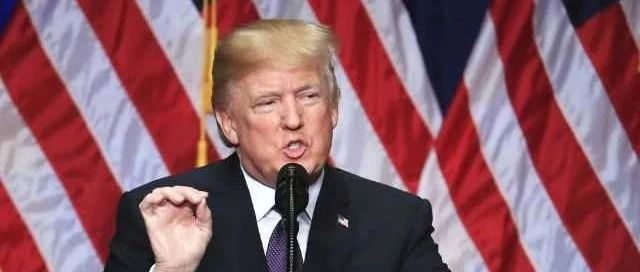
从撇清关系到准备打击,美国会在以伊冲突中直接“下场”吗?
Di Yi Cai Jing· 2025-06-19 08:46
Group 1 - The article discusses the fluctuating stance of the U.S. President Trump regarding military action against Iran, indicating a shift from a non-interventionist approach to a more aggressive posture [1][3] - Following an Israeli airstrike on Iran, Trump expressed a desire for Iran to "unconditionally surrender" and hinted at potential U.S. military involvement [1][3] - The U.S. is reportedly increasing its military presence in the Middle East to bolster its defensive posture amid ongoing conflicts between Israel and Iran [3] Group 2 - Iran's leadership, particularly Supreme Leader Khamenei, has firmly rejected any notion of surrender and warned of severe consequences for U.S. military intervention [5] - Despite Trump's claims of Iran's willingness to negotiate, Iranian officials have denied any requests for talks with the U.S., asserting that they will not negotiate under pressure [5] - The ongoing conflict has led to a series of indirect negotiations between the U.S. and Iran regarding nuclear issues, which have been complicated by military actions [5]
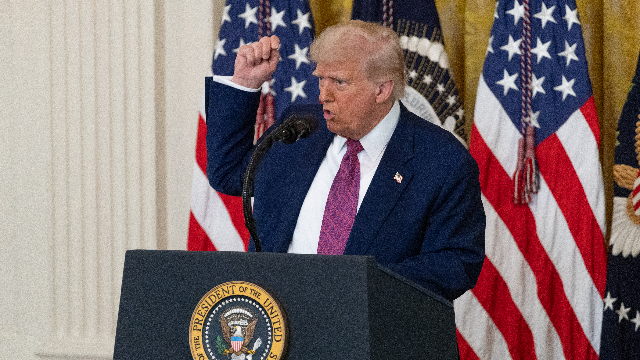
伊以继续相互空袭 外媒称美国仍在观望伊朗是否“弃核”
Zhong Guo Xin Wen Wang· 2025-06-19 08:09
Group 1 - Iran and Israel have continued mutual airstrikes, with Iran's Supreme Leader Khamenei warning that Iran will never yield to Israel and the US [1][2] - Iran's Islamic Revolutionary Guard Corps announced attacks on Israeli intelligence and air force bases, utilizing a missile with a range of 2000 kilometers [1] - The Israeli Defense Forces reported conducting three large-scale attacks on Iran, targeting a centrifuge production facility and several missile-related sites [1] Group 2 - US officials are reportedly preparing for potential attacks on Iran, with President Trump having approved plans but waiting to see if Iran will abandon its nuclear program [2] - European foreign ministers from Germany, France, and the UK are set to meet with Iran's foreign minister in Geneva to discuss the nuclear issue [2] - Iran's Foreign Minister emphasized that Iran has never sought nuclear weapons and will continue to exercise its right to self-defense while remaining committed to diplomacy [2]