
军事施压

Search documents
为施压伊朗,“美军可能夺岛”
第一财经· 2026-03-20 01:11
Core Viewpoint - The article discusses the potential military escalation by the United States in the Middle East, specifically targeting Iran's key oil export hub to compel Iran to open the Strait of Hormuz [1]. Group 1: Military Deployment - The U.S. is deploying approximately 2,200 Marines from the 31st Marine Expeditionary Unit, currently en route to the Middle East from Japan, expected to arrive in about a week [1]. - The U.S. may aim to seize Halke Island as leverage to force Iran to open the Strait of Hormuz [1]. Group 2: Strategic Implications - Retired U.S. Central Command General Frank McKenzie stated that the U.S. could either destroy the oil infrastructure on Halke Island, causing irreparable damage to Iran and the global economy, or occupy it as a bargaining chip [1]. - Other islands near the Strait of Hormuz, such as Qeshm Island, Kish Island, and Hormuz Island, may also be targeted for seizure [1]. Group 3: Economic Impact - Halke Island is Iran's largest oil export base, with 90% of Iran's oil exports originating from there, located about 25 kilometers from the Iranian coast [1]. - The U.S. military conducted strikes on military targets on Halke Island on the 13th [1].


与伊朗新一轮谈判前 美国增兵施压
Xin Lang Cai Jing· 2026-02-17 08:08
Group 1 - The U.S. is significantly increasing its military presence in the Middle East ahead of indirect negotiations with Iran, aiming to apply pressure and prepare for potential military action if talks fail [1][3] - Recent deployments include the repositioning of U.S. military aircraft, such as tankers and fighter jets, from the UK to closer locations in the Middle East, along with the extension of deployment for several U.S. military units originally scheduled to rotate out [1][3] - The U.S. has been transporting military equipment to Jordan, Bahrain, and Saudi Arabia, with recent approvals for U.S. fighter jets to enter Jordanian airspace, indicating a strategic buildup in the region [3] Group 2 - A new round of indirect negotiations between Iran and the U.S. is scheduled for the 17th in Geneva, following previous talks in Muscat, Oman, where both sides have shown no willingness to compromise on core issues [5]
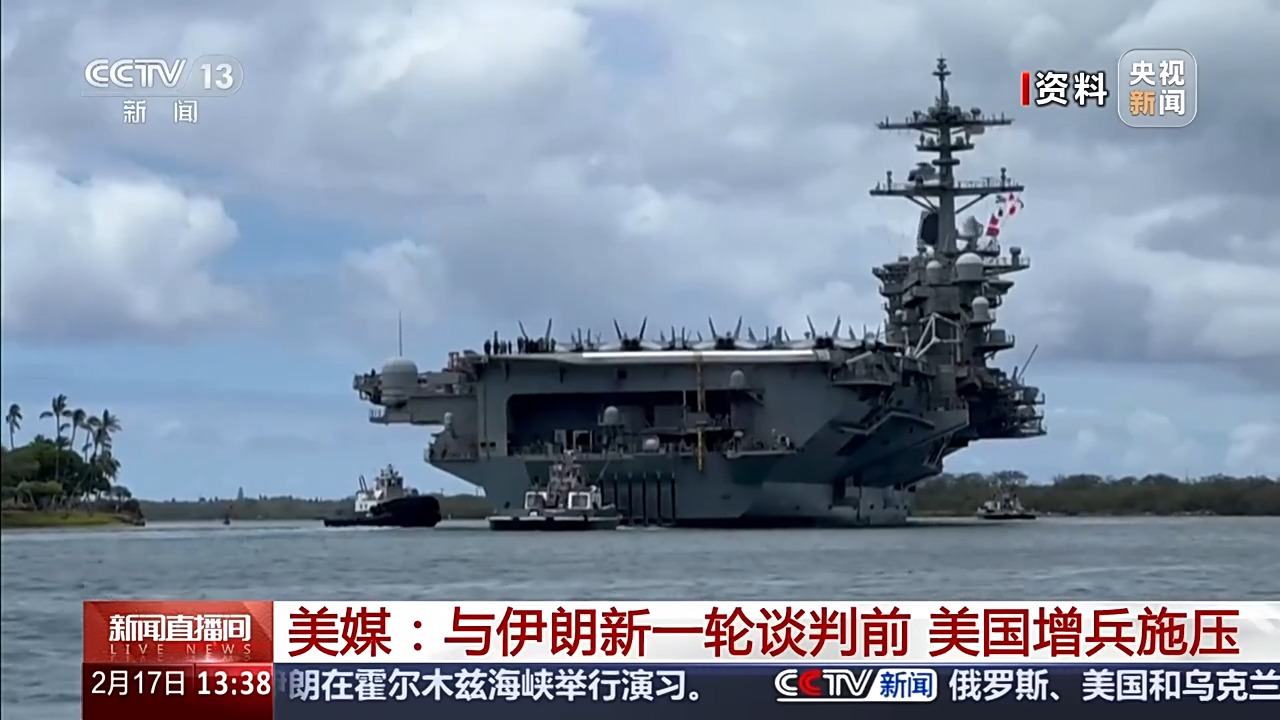
新华国际:美军中东大规模增兵
Xin Lang Cai Jing· 2026-02-17 01:46
Core Viewpoint - The United States is significantly increasing its military presence in the Middle East ahead of new indirect negotiations with Iran, aiming to apply pressure and prepare for potential military action if talks fail [1] Military Deployment - The U.S. is redeploying military aircraft, including tankers and fighter jets, from the UK to closer locations in the Middle East [1] - Recent weeks have seen dozens of U.S. military transport aircraft delivering equipment to Jordan, Bahrain, and Saudi Arabia [1] - As of January 25, 12 F-15 fighter jets have been stationed at the Muwaffaq Salti Air Base in Jordan [1] Naval Forces - The U.S. is deploying an aircraft carrier strike group to the region, with reports of a second carrier strike group being sent as well [1] - The Iranian Revolutionary Guard Corps conducted military exercises in the Strait of Hormuz, focusing on readiness and response to potential threats [1] Diplomatic Context - Indirect negotiations between the U.S. and Iran are scheduled for Geneva on the 17th, following previous talks in Muscat, Oman [1] - Both parties appear to remain firm on their core disagreements, with President Trump indicating that Iran is interested in reaching an agreement [1]
美媒:与伊朗新一轮谈判前 美国继续增兵中东
Xin Hua She· 2026-02-16 23:50
Group 1 - The core viewpoint of the article highlights the U.S. military buildup in the Middle East as a strategy to pressure Iran ahead of indirect negotiations, with preparations for potential military action if talks fail [1] - The U.S. is redeploying military aircraft, including tankers and fighter jets, from the UK to closer locations in the Middle East, while also extending the deployment of several U.S. military units originally scheduled to rotate out [1] - Recent weeks have seen dozens of U.S. military transport aircraft delivering equipment to Jordan, Bahrain, and Saudi Arabia, with F-15 fighter jets deployed at the Muwaffaq Salti Air Base in Jordan since January 25 [1] Group 2 - The U.S. is increasing its military presence in the region by deploying an aircraft carrier strike group and is reportedly sending a second carrier strike group to the Middle East, indicating a readiness for military intervention [1] - Indirect negotiations between Iran and the U.S. are scheduled to take place in Geneva, Switzerland, with both sides showing no willingness to compromise on core issues [1]
特朗普证实:将派出第二艘航母
Xin Lang Cai Jing· 2026-02-14 01:56
Group 1 - The core viewpoint of the article is that President Trump confirmed the deployment of a second aircraft carrier strike group to the Middle East to pressure Iran into reaching an agreement with the United States [1] - Trump stated that if an agreement with Iran is not reached, the second aircraft carrier will be necessary, indicating a potential for military action if negotiations fail [1] - The U.S. has already deployed one aircraft carrier strike group in the Middle East and is prepared to increase its military presence if needed [1] Group 2 - The "Gerald R. Ford" aircraft carrier, which participated in an attack on Venezuela in January, has been ordered to move from the Caribbean to the Middle East, with deployment expected to take at least one week [1] - The last time the U.S. deployed two aircraft carrier strike groups in the Middle East was in April 2025, when the "Harry Truman" and "Carl Vinson" strike groups conducted large-scale airstrikes against Houthi forces in Yemen [1] - The U.S. is intensifying pressure on Iran, with the deployment of the "Abraham Lincoln" aircraft carrier strike group and threats of military intervention [1]
特朗普:美军将向中东地区派出第二艘航母
证券时报· 2026-02-14 00:28
Core Viewpoint - The article discusses the deployment of a second U.S. aircraft carrier strike group to the Middle East as a means to pressure Iran into reaching an agreement with the U.S. [1][2] Group 1: Military Deployment - President Trump confirmed the deployment of a second aircraft carrier strike group to the Middle East, emphasizing its necessity if negotiations with Iran fail [1][2] - The U.S. has already deployed the "Abraham Lincoln" carrier strike group in the region, indicating a readiness for military intervention if talks do not succeed [4] - The "Gerald R. Ford" carrier strike group, which participated in operations against Venezuela, has been ordered to move from the Caribbean to the Middle East, with deployment expected to take at least one week [4] Group 2: Negotiation Pressure - Trump stated that if an agreement with Iran is reached, the U.S. military presence would be reduced quickly, highlighting the dual nature of the military deployment as both a pressure tactic and a potential deterrent [2] - The U.S. has a history of deploying dual carrier strike groups in the region, with the last occurrence in April 2025, when significant military actions were taken against Houthi forces in Yemen [4]
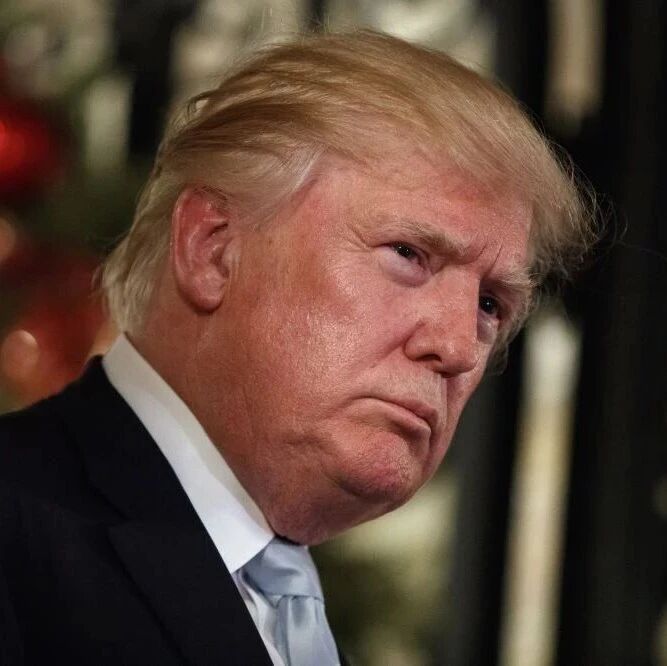
特朗普证实,将在中东部署双航母施压伊朗
Xin Lang Cai Jing· 2026-02-13 23:52
Core Viewpoint - The U.S. military is deploying a second aircraft carrier strike group to the Middle East to pressure Iran into reaching an agreement with the U.S. [1] Group 1: Military Deployment - President Trump confirmed the deployment of a second aircraft carrier strike group to the Middle East, indicating its necessity if negotiations with Iran fail [1] - The U.S. has already deployed one aircraft carrier strike group in the region and is prepared to increase its military presence if needed [1] - The "Gerald R. Ford" aircraft carrier, involved in operations against Venezuela, has been ordered to move from the Caribbean to the Middle East, with deployment expected to take at least one week [1] Group 2: Negotiation Pressure - Trump emphasized that if an agreement with Iran is reached, the U.S. aircraft carriers would leave the region quickly [1] - The U.S. has been consistently applying pressure on Iran, with military intervention threats being a part of the strategy [1] - The last instance of the U.S. deploying two aircraft carriers in the Middle East occurred in April 2025, when significant airstrikes were conducted against Houthi forces in Yemen [1]
特朗普证实美军第二艘航母将派往中东
Xin Hua She· 2026-02-13 23:35
Core Viewpoint - The U.S. military is deploying a second aircraft carrier strike group to the Middle East to pressure Iran into reaching an agreement with the U.S. [1] Group 1: Military Deployment - President Trump confirmed the deployment of a second aircraft carrier strike group to the Middle East, indicating its necessity if negotiations with Iran fail [1] - The U.S. has already deployed one aircraft carrier strike group in the Middle East and is prepared to increase its military presence if needed [1] - The "Gerald R. Ford" aircraft carrier, involved in operations against Venezuela, has been ordered to move from the Caribbean to the Middle East, with deployment expected to take at least one week [1] Group 2: Negotiation Pressure - Trump reiterated that if an agreement with Iran is reached, the U.S. aircraft carriers would "leave quickly" [1] - The U.S. has been consistently applying pressure on Iran, including the deployment of the "Abraham Lincoln" carrier strike group, signaling potential military intervention [1] - The last instance of the U.S. deploying "dual carriers" in the Middle East occurred in April 2025, when significant airstrikes were launched against Houthi forces in Yemen [1]
世界密切关注美伊谈判结果,伊朗外长:会谈是“积极的”,“是一个良好开端”
Huan Qiu Shi Bao· 2026-02-06 22:49
Group 1 - The core viewpoint of the article highlights the high-risk negotiations between the US and Iran, which took place in Muscat, Oman, marking the first talks since the US bombing of Iranian nuclear facilities last June [1][3] - The US aims to expand the negotiation topics beyond Iran's nuclear program to include its ballistic missile program and support for regional proxy forces, which Iran firmly rejects, asserting that these are non-negotiable aspects of its defense capabilities [3][4] - The talks are seen as a critical opportunity for Iran to prevent further military action from the US, with both sides expressing a lack of trust and significant differences in their core demands [9][10] Group 2 - The negotiations were conducted indirectly, with Iran presenting a preliminary plan to Oman, which was then relayed to the US, indicating a structured approach to the discussions [3][5] - There are concerns within Iran about potential military strikes from the US and Israel during the negotiations, reflecting a historical context of previous conflicts and military actions [4][6] - The geopolitical landscape includes involvement from other regional players like Turkey, Saudi Arabia, and Qatar, who are advocating for a peaceful resolution to avoid regional war, while Israel prepares for possible military action against Iran [6][7] Group 3 - The US has issued security alerts for its citizens in Iran, indicating a heightened state of military readiness and the potential for conflict, with experts estimating a 75% chance of military confrontation in the near future [9][10] - Economic pressures on Iran, exacerbated by US actions leading to a dollar shortage, have resulted in significant domestic unrest, further complicating the negotiation dynamics [9][10] - The article notes that both the US and Iran are preparing for potential military actions, yet neither side appears eager to initiate conflict, highlighting the complex interplay of military readiness and diplomatic efforts [10]
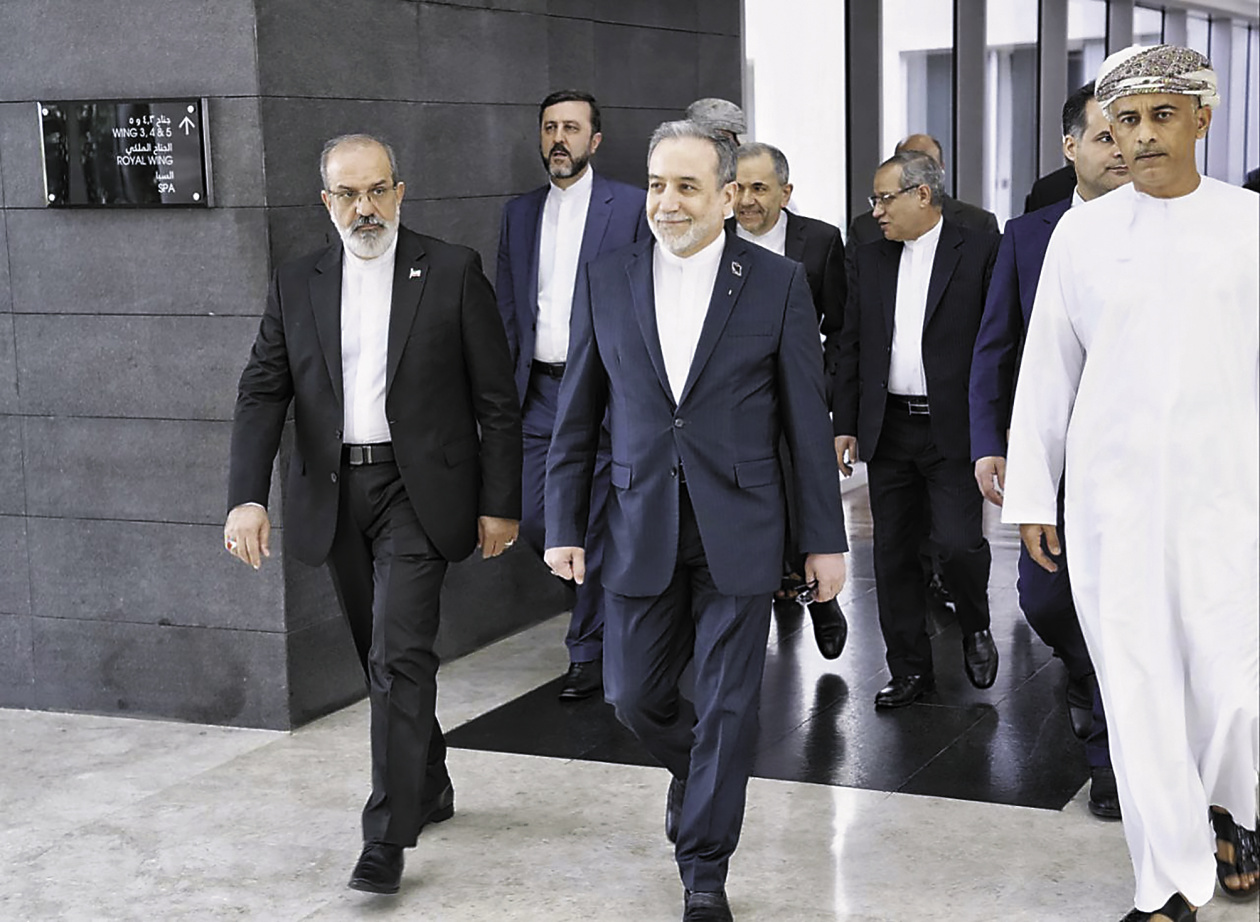
特朗普:伊朗正同美国谈判 伊朗总统:战争不符合双方利益
Xin Lang Cai Jing· 2026-02-01 04:54
Group 1 - The core viewpoint of the articles indicates that diplomatic negotiations between the U.S. and Iran are being prioritized, with both sides expressing a willingness to engage in talks despite previous conflicts [1][2] - U.S. President Trump mentioned that negotiations with Iran are ongoing, and he is hopeful for progress, while also reflecting on the consequences of failed talks in the past, specifically the bombing of Iranian nuclear facilities [1] - Iranian President Pezeshkian emphasized that war is not in the interest of Iran, the U.S., or the region, and reiterated the importance of resolving disputes through diplomatic means [1] Group 2 - The U.S. has been increasing military pressure on Iran by deploying naval forces, including aircraft carriers, in the Middle East, which raises concerns about potential military intervention [2] - Since the U.S. unilaterally withdrew from the Iran nuclear deal in 2018, it has reimposed and added several sanctions against Iran, leading to a series of indirect negotiations that have faced interruptions due to escalating conflicts [2] - The sixth round of negotiations, originally scheduled for June 15, 2025, was canceled following an Israeli attack on Iran, which subsequently led to U.S. bombings of Iranian nuclear facilities and a halt in negotiations [2]