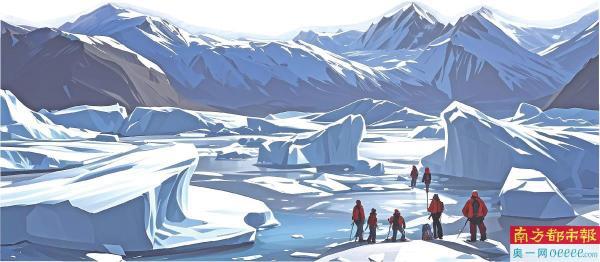
冰川消融

Search documents
科学家警告:“本世纪末全球一半的冰川或将消失”
Yang Shi Xin Wen· 2025-12-30 02:38
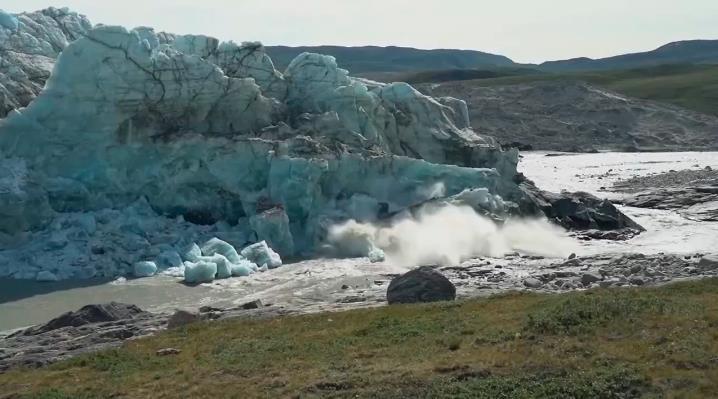
Core Insights - The alarming reports in 2025 indicate that climate change is rapidly melting glaciers, threatening global water resources, cultural heritage, and regional ecological balance [1][6]. Group 1: Glacier Melting and Climate Change - The Russell Glacier in Greenland has collapsed, signaling the acceleration of global glacier melting [3]. - Research suggests that by the middle of this century, up to 2,000 to 4,000 glaciers may face the risk of disappearing, with the rate of glacier loss being more than double compared to the early 21st century [6]. - Since 2000, global mountain glaciers have lost over 7 trillion tons of ice, with the fastest melting occurring in Alaska and the most significant relative shrinkage in smaller glaciers like those in the Alps [6]. Group 2: Societal and Cultural Importance of Glaciers - The value of glaciers extends beyond water resources and sea-level rise; they hold significant social and cultural importance, particularly for local tourism and heritage [8]. - Even glaciers previously thought to be stable, such as Argentina's Moreno Glacier, are now showing signs of rapid retreat [8][10]. Group 3: Research and Preservation Efforts - An international team is conducting critical missions to rescue ice cores from high-altitude regions, as these cores serve as vital climate data records [12]. - The "Ice Memory Foundation" is working to protect ice core samples from contamination due to rising temperatures, which threaten the integrity of these climate archives [13]. - Scientists are extracting ice cores over 100 meters deep to transfer them to Antarctica for permanent preservation, highlighting the urgent need for global action to stabilize temperatures and protect these natural heritage sites [14].

极地行走二十年 雪山少年已成冰川守护者
Xin Lang Cai Jing· 2025-12-29 09:57
Core Insights - The article highlights the personal journey of a young Chinese explorer who has transitioned from mountain climbing to scientific exploration, emphasizing the impact of climate change on glaciers and the environment [1][4]. Group 1: Personal Journey and Exploration - The explorer began climbing at a young age, with significant achievements including summiting multiple peaks and participating in scientific research related to glaciers [2][3]. - The experience of climbing Mount Everest three times marked different life stages, evolving from personal ambition to collective scientific goals [2][3]. Group 2: Climate Change Awareness - The melting of glaciers is presented as a pressing issue that affects billions of lives, particularly in coastal cities, highlighting the urgency of climate action [4]. - Personal experiences, such as nearly drowning in a glacier lake, have deepened the explorer's understanding of climate change and its immediate dangers [3][4]. Group 3: Call to Action - The explorer advocates for a shift in how young people engage with nature, suggesting that travel should be about connecting with the environment rather than mere consumption [5]. - The narrative encourages more youth to witness the effects of climate change firsthand, framing it as an essential educational experience [5].
气候变暖或致全球冰川年均减少2000到4000处
Yang Shi Xin Wen· 2025-12-17 10:43
Core Insights - A study published in the journal "Nature Climate Change" indicates that if climate warming is not effectively addressed, the global glacier loss will accelerate from an average of 1,000 glaciers per year to between 2,000 and 4,000 glaciers per year by the 2040s [1] Group 1: Glacier Melting Projections - If global average temperatures rise by 1.5 degrees Celsius compared to pre-industrial levels, a peak in glacier melting is expected around 2041, with an average annual loss of 2,000 glaciers, leading to a reduction of over half in the total number of glaciers by the end of the century, down to approximately 96,000 [1] - Should the temperature increase reach 2.7 degrees Celsius, the peak melting period will occur between 2040 and 2060, with an average annual loss of about 3,000 glaciers, resulting in only about 44,000 glaciers remaining by the century's end, which is one-fifth of the current number [1] - At a projected 4 degrees Celsius increase, the peak melting is anticipated around 2055, with an average annual loss of 4,000 glaciers, leaving only about 18,000 glaciers by the end of the century, which is approximately 9% of the current total [1] Group 2: Impacts of Glacier Loss - The study emphasizes that while the melting of smaller glaciers may not significantly impact sea level rise compared to larger glaciers, the effects on local populations and economies reliant on glaciers are substantial [4] - Glacier landscapes attract a significant number of tourists annually and support many ski resorts, indicating that glacier loss could harm the winter tourism economy [4] - Glaciers also hold deep historical, cultural, and symbolic significance in various regions, and even small glaciers provide essential meltwater for local communities [4] Group 3: Climate Change Goals and Challenges - The Paris Agreement aims to limit the global average temperature rise to within 2 degrees Celsius above pre-industrial levels, striving for a maximum of 1.5 degrees Celsius [4] - However, achieving this goal faces challenges, as indicated by a report from "Earth System Science Data," which states that at the current rate of 4.2 billion tons of CO2 emissions per year, there is a 50% chance of reaching the 1.5 degrees Celsius threshold by February 2028 [4]
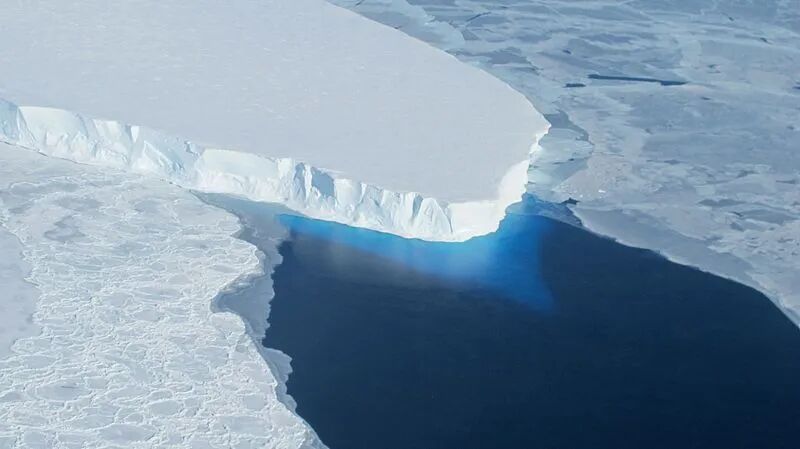
研究显示气候变暖或致全球冰川年均减少2000到4000处
Yang Shi Xin Wen· 2025-12-16 21:43
Group 1 - The research indicates that if climate change is not effectively addressed, the global glacier loss will accelerate from an average of 1,000 glaciers per year to between 2,000 and 4,000 glaciers per year by the 2040s [1] - If the global average temperature rises by 1.5 degrees Celsius compared to pre-industrial levels, a peak in glacier melting is expected around 2041, with an average annual loss of 2,000 glaciers, leading to a reduction of over half in the total number of glaciers by the end of the century [2] - Should the temperature increase reach 2.7 degrees Celsius, the peak glacier loss will occur between 2040 and 2060, with an average annual loss of about 3,000 glaciers, resulting in only approximately 44,000 glaciers remaining by the century's end [2] Group 2 - The study emphasizes the focus on the number of glaciers rather than just their size and area, noting that while smaller glaciers may not significantly impact sea level rise compared to larger ones, their loss is still critical for local populations dependent on them [4] - The melting of glaciers poses a threat to winter tourism economies, as many tourist attractions and ski resorts rely on glacier landscapes, which also hold historical and cultural significance [7] - The goals set by the Paris Agreement to limit global temperature rise to within 2 degrees Celsius, and ideally to 1.5 degrees Celsius, are increasingly challenged, with a significant probability of reaching the 1.5 degrees Celsius threshold by early 2028 if current carbon dioxide emission trends continue [7]
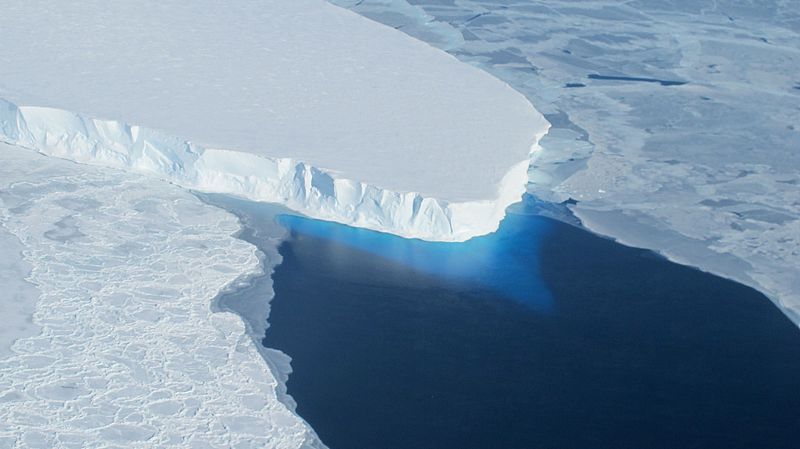
【特稿】研究:气候变暖或导致全球冰川年均减少2000到4000处
Xin Hua She· 2025-12-16 09:32
Core Insights - A recent study published in *Nature Climate Change* indicates that if climate change is not effectively addressed, global glaciers could see an annual reduction of 2,000 to 4,000 by the 2040s, accelerating from the current average of 1,000 per year [1][2] Group 1: Glacier Reduction Projections - If global average temperatures rise by 1.5 degrees Celsius above pre-industrial levels, a peak in glacier melting is expected around 2041, with an average annual loss of 2,000 glaciers, leading to a total of approximately 96,000 glaciers remaining by the end of the century, more than a 50% reduction from current levels [1] - Should temperatures increase by 2.7 degrees Celsius, glacier loss will peak between 2040 and 2060, averaging about 3,000 glaciers lost annually, resulting in only about 44,000 glaciers remaining by the century's end, which is one-fifth of the current number [1] - At a projected 4 degrees Celsius increase, the peak glacier loss is anticipated around 2055, with an average of 4,000 glaciers disappearing each year, leaving only about 18,000 glaciers, or 9% of the current total, by the end of the century [1] Group 2: Implications of Glacier Loss - The study emphasizes that while the focus is often on the volume and area of glaciers, the number of glaciers is crucial, particularly for local populations and economies dependent on them [2] - Glacier melting could adversely affect winter tourism economies, as many ski resorts rely on glacier landscapes that attract tourists [2] - Glaciers also hold significant historical, cultural, and symbolic value in various regions, and even small glaciers provide essential meltwater for local communities [2]
受全球变暖等因素影响,格陵兰岛正在缩小且向西北漂移
Huan Qiu Shi Bao· 2025-11-06 02:04
Core Insights - A recent study indicates that Greenland is shrinking in size and drifting slowly northwest due to global warming and other factors [1][3] Group 1: Research Findings - The study, conducted by researchers from the Technical University of Denmark and published in the journal "Geophysical Research Letters," analyzed data from 58 global navigation satellite system monitoring stations around Greenland [3] - Greenland is drifting northwest at a rate of approximately 2 centimeters per year, with some areas experiencing uplift while others are sinking [3] - The horizontal crustal movement in Greenland is influenced by three geological forces: tectonic plate interactions, reduced pressure on the bedrock due to glacial melting, and long-term rebound from the last ice age [3] Group 2: Climate Impact - The movement of Greenland highlights how climate change-induced glacial melting is reshaping the surface and affecting geological foundations [3] - Greenland's ice sheet is one of the world's largest freshwater resources, with enough water to potentially raise global sea levels by 7.4 meters [3] - According to the Copernicus Climate Change Service, a 1-centimeter rise in sea level puts approximately 6 million people at risk of coastal flooding globally [3]
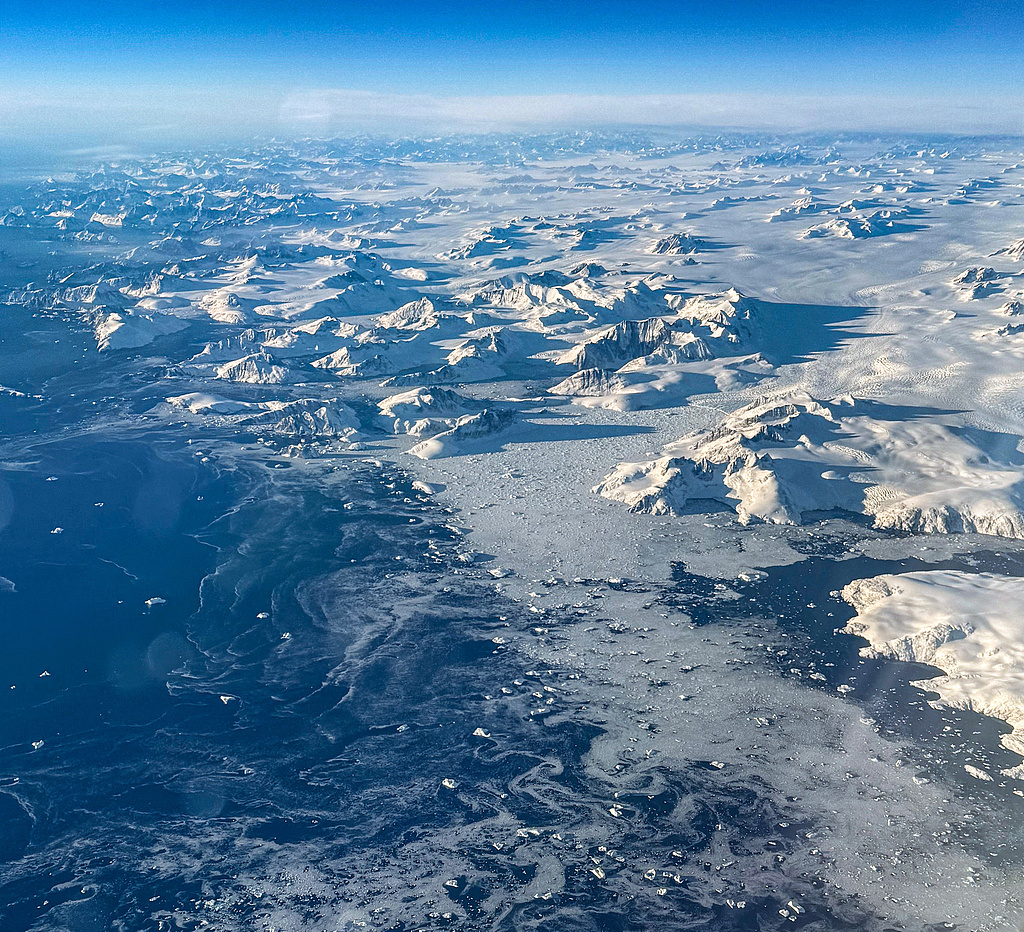
丹麦新研究:受全球变暖等因素影响,格陵兰岛正在缩小且向西北漂移
Huan Qiu Shi Bao· 2025-11-04 22:53
Core Insights - A recent study indicates that Greenland is shrinking in size and drifting slowly northwest due to global warming and other factors [1][3] Group 1: Research Findings - The study, conducted by researchers from the Technical University of Denmark and published in the journal "Geophysical Research Letters," analyzed data from 58 global navigation satellite system monitoring stations around Greenland [3] - Greenland is drifting northwest at a rate of approximately 2 centimeters per year, with some areas experiencing uplift while others are sinking [3] - The horizontal crustal movement in Greenland is influenced by three geological forces: tectonic plate interactions, reduced pressure on the bedrock due to glacier melting, and long-term rebound from the last ice age [3] Group 2: Climate Impact - The movement of Greenland highlights how climate change-induced glacier melting is reshaping the surface and affecting geological foundations [3] - Greenland's ice sheet is one of the world's largest freshwater resources, with enough water to potentially raise global sea levels by 7.4 meters [3] - According to the Copernicus Climate Change Service, a 1-centimeter rise in sea level puts approximately 6 million people at risk of coastal flooding globally [3]
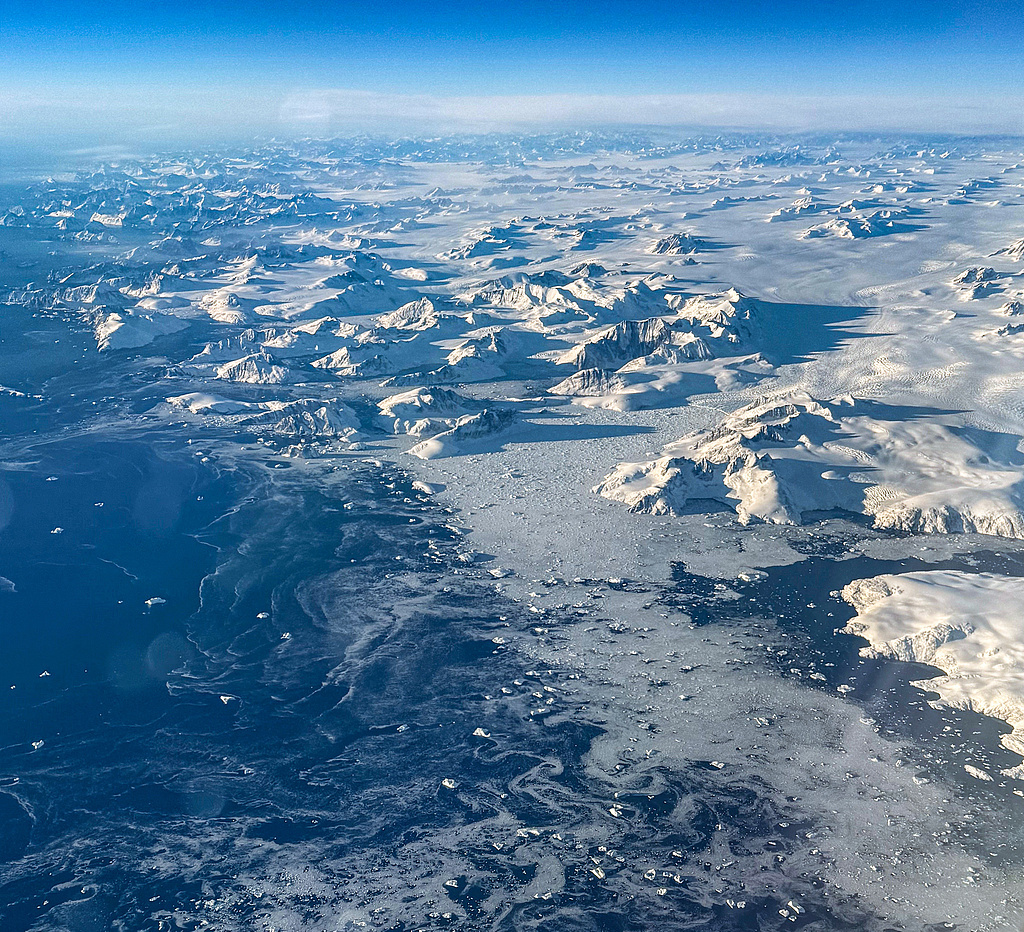
瑞士过去十年冰川总体冰量缩减四分之一
Xin Hua She· 2025-10-01 15:01
Core Viewpoint - The overall ice volume of Swiss glaciers has decreased by one-quarter over the past decade, with over 1,000 small glaciers completely disappearing [1] Group 1: Glacier Volume Reduction - In 2025, Swiss glaciers are expected to lose approximately 3% of their volume, marking the fourth-largest reduction since measurements began [1] - The years with the largest reductions prior to 2025 were 2022, 2023, and 2003 [1] Group 2: Impact of Weather Conditions - The combination of a lack of snowfall in winter and heatwaves in June and August has led to significant glacier melting [1] - Snow reserves were depleted by early July, causing glaciers to start melting unusually early [1] Group 3: Specific Glacier Loss - Glaciers below 3,000 meters in elevation are experiencing particularly severe losses, with thickness reductions exceeding two meters in some cases, and at least one meter in others [1] Group 4: Potential Risks - Continuous glacier melting may lead to mountain instability, potentially triggering events similar to the recent collapse of the Birch Glacier, which resulted in a mudslide that destroyed much of the nearby village of Bratten [1]
冰川消融 美国阿拉斯加州出现新岛
Huan Qiu Wang Zi Xun· 2025-09-19 08:41
Core Insights - A new island has formed in Glacier Bay National Park, Alaska, due to the melting of the Alsek Glacier, with an area of approximately 5 square kilometers and a height of over 300 meters [1][1][1] Group 1: Environmental Changes - The Alsek Glacier's melting has led to the expansion of Alsek Lake, resulting in the emergence of the new island [1][1] - Over 1,000 glaciers are monitored within Glacier Bay National Park and Preserve, indicating significant glacial activity in the region [1][1] Group 2: Scientific Observation - Mauri Pelto, a glaciologist from Nichols College, observed the island's formation through satellite imagery between mid-July and early August of this year [1][1] - The occurrence of new island formation due to glacier melting is rare, despite the ongoing melting of multiple glaciers in Alaska [1][1]
冰川要“拍照存档”:60年7000条消失
Nan Fang Du Shi Bao· 2025-05-06 23:10
Core Points - The article discusses the first aerial survey of marine glaciers in Tibet, initiated by the Ministry of Natural Resources and the China Geological Survey, aimed at understanding the development and melting patterns of these glaciers [2][3][4] - The survey is conducted at the Renlongba Glacier, a significant marine glacier in Tibet, which is easily accessible and serves as a valuable resource for ecological research and geological exploration [3][4] - A comprehensive monitoring technology system integrating satellite remote sensing, helicopter aerial surveys, and ground investigations has been established to assess the glacier's extent, thickness, and changes [4][7] - The article highlights the rapid retreat of glaciers in China, with a reported overall reduction of approximately 26% in glacier area from the 1960s to 2020, and a significant acceleration in melting observed in recent years [8][10] - The glaciers in the Asian water tower region have experienced a 20% reduction in ice storage over the past 50 years, with projections indicating further significant losses by the end of the century under various climate scenarios [11][13] Group 1 - The first aerial survey of marine glaciers in Tibet aims to gather foundational data for natural resource management [2][4] - The Renlongba Glacier is chosen for its accessibility and ecological significance, allowing researchers to conduct detailed studies [3][4] - The survey employs a multi-faceted monitoring approach to accurately assess glacier conditions and changes [4][7] Group 2 - China's glaciers have shrunk by about 18% over the past 50 years, with a notable increase in melting rates in the last decade [8][10] - The Asian water tower glaciers are crucial for major rivers in Asia and have seen a 20% decrease in ice storage, with projections of further declines [11][13] - The melting glaciers pose risks of glacial lake outburst floods and other hazards, with significant implications for surrounding ecosystems and communities [14][15]