《巴黎协定》

Search documents
美国正式“退群”,联合国表态!
中国能源报· 2026-01-27 02:54
Core Viewpoint - The article discusses the United States' formal withdrawal from the Paris Agreement, highlighting the implications and reactions from the United Nations regarding climate commitments [1][3]. Group 1: U.S. Withdrawal from the Paris Agreement - On January 20, 2025, President Trump signed an executive order declaring the U.S. withdrawal from the Paris Agreement, with the exit officially taking effect on January 27, 2026 [1]. - The U.N. Secretary-General's spokesperson emphasized that all countries must fulfill their obligations to combat climate change and opposed any attempts to evade these commitments [3]. Group 2: Historical Context - The Paris Agreement was established during the 2015 U.N. Climate Change Conference as a significant global effort to address climate change [3]. - The U.S. initially announced its intention to withdraw from the agreement in June 2017, with the formal exit occurring on November 4, 2020, which faced widespread criticism domestically and internationally [3]. - President Biden signed an executive order on his first day in office, January 20, 2021, to rejoin the Paris Agreement, with the U.S. officially rejoining on February 19, 2021 [3].

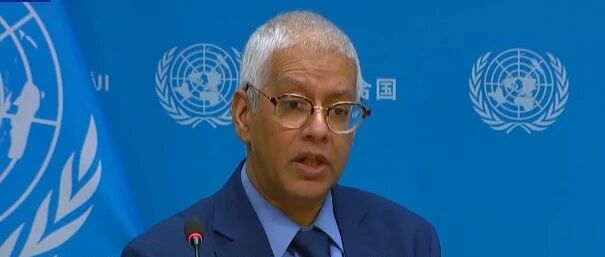
美正式退出《巴黎协定》 联合国:反对任何逃避气候承诺的做法
Yang Shi Xin Wen· 2026-01-27 02:41
Core Points - The United States will officially withdraw from the Paris Agreement on January 27, 2026, following President Trump's executive order on January 20, 2025 [1][3] - The United Nations emphasizes the importance of all countries fulfilling their obligations to combat climate change and opposes any attempts to evade these commitments [3] Group 1 - The Paris Agreement was established as a significant outcome of the 2015 United Nations Climate Change Conference to address climate change globally [3] - The U.S. previously announced its withdrawal from the Paris Agreement in June 2017, with the formal exit occurring on November 4, 2020, which faced widespread criticism domestically and internationally [3] - President Biden signed an executive order to rejoin the Paris Agreement on January 20, 2021, and the U.S. officially rejoined on February 19, 2021 [3]
《巴黎协定》十周年 中国“双碳”转型初见成效
Yang Shi Wang· 2025-12-28 11:17
Core Insights - The report titled "Climate Change Response Report (2025)" emphasizes the theme "Paris Agreement: A Decade Later" and analyzes global governance, green transformation, regional practices, and technological innovation in the context of climate change [1][3] - The report highlights the significant milestone of the 10th anniversary of the Paris Agreement and the 5th anniversary of China's "dual carbon" goals, while noting the increasing complexity and uncertainty in the global economic and political landscape [3] Group 1: Global Climate Trends - The report indicates that by 2024, the global average temperature is projected to rise above 1.5°C compared to pre-industrial levels for the first time, with a 70% probability of exceeding this threshold in the next five years according to the World Meteorological Organization [3] - The absence of the U.S. government’s negotiation delegation at the climate convention has negatively impacted global climate governance, highlighting China's growing role in this arena [3] Group 2: China's Climate Actions - The report assesses the green and low-carbon development levels of 337 cities in China, revealing an average comprehensive index score of 80 in 2024, up from 76.7 in 2023, indicating initial success in the "dual carbon" transition [3] - Despite the progress, the report identifies urgent issues such as significant shortcomings in northern regions and high transformation risks in small and medium-sized cities [3]

独家专访中国气候变化事务特使刘振民:全球推进气候合作B计划
2 1 Shi Ji Jing Ji Bao Dao· 2025-12-27 01:49
Group 1 - The announcement of the U.S. withdrawal from the Paris Agreement has prompted countries to develop a "Plan B" to continue global energy transition and climate change efforts [1] - Liu Zhenmin emphasized that international cooperation can still progress despite the U.S. absence, particularly in addressing funding challenges for climate change initiatives [2] - The U.S. exit from the Paris Agreement has led to a revival of support for traditional energy companies, while subsidies for renewable energy firms have ceased, impacting the operations of domestic renewable energy companies [2] Group 2 - The inconsistency in U.S. energy policy has affected its energy transition process and international obligations, but Liu Zhenmin believes that changes in a single country's energy policy will not hinder the global energy transition momentum [3] - The next decade will see energy transition as a key area for global economic cooperation and investment opportunities, with developed countries needing to fulfill their obligations to assist developing nations [3]
【特稿】研究:气候变暖或导致全球冰川年均减少2000到4000处
Xin Hua She· 2025-12-16 09:32
Core Insights - A recent study published in *Nature Climate Change* indicates that if climate change is not effectively addressed, global glaciers could see an annual reduction of 2,000 to 4,000 by the 2040s, accelerating from the current average of 1,000 per year [1][2] Group 1: Glacier Reduction Projections - If global average temperatures rise by 1.5 degrees Celsius above pre-industrial levels, a peak in glacier melting is expected around 2041, with an average annual loss of 2,000 glaciers, leading to a total of approximately 96,000 glaciers remaining by the end of the century, more than a 50% reduction from current levels [1] - Should temperatures increase by 2.7 degrees Celsius, glacier loss will peak between 2040 and 2060, averaging about 3,000 glaciers lost annually, resulting in only about 44,000 glaciers remaining by the century's end, which is one-fifth of the current number [1] - At a projected 4 degrees Celsius increase, the peak glacier loss is anticipated around 2055, with an average of 4,000 glaciers disappearing each year, leaving only about 18,000 glaciers, or 9% of the current total, by the end of the century [1] Group 2: Implications of Glacier Loss - The study emphasizes that while the focus is often on the volume and area of glaciers, the number of glaciers is crucial, particularly for local populations and economies dependent on them [2] - Glacier melting could adversely affect winter tourism economies, as many ski resorts rely on glacier landscapes that attract tourists [2] - Glaciers also hold significant historical, cultural, and symbolic value in various regions, and even small glaciers provide essential meltwater for local communities [2]
刘振民:望美国重返《巴黎协定》,须关注单边措施对能源转型危害
Xin Lang Cai Jing· 2025-12-15 03:19
Core Insights - The 30th United Nations Climate Change Conference (COP30) concluded in Belém, Brazil, marking the 10th anniversary of the Paris Agreement and held in a critical climate crisis area, under significant political pressure and global expectations [1][21][22] - The absence of the U.S. federal government at COP30, following its second withdrawal from the Paris Agreement, has raised concerns about the future of global climate governance and has become a major topic of discussion [2][22] Group 1: U.S. Absence and Its Implications - The U.S. absence is seen as a structural variable affecting negotiations, particularly in funding commitments and political coordination among developed countries [2][22][27] - The lack of U.S. representation has made it difficult for developed nations to coordinate climate funding for developing countries, leading to challenges in achieving financial commitments [27] - Despite the absence of the federal government, many state governments, businesses, and academic representatives from the U.S. attended, indicating a division in U.S. domestic opinion on climate change [28][29] Group 2: Energy Transition and Fossil Fuel Debate - The conference focused on advancing the COP28 UAE consensus, with China advocating for the continuation of this framework rather than introducing new fossil fuel exit roadmaps [32][34] - China has set ambitious targets for reducing greenhouse gas emissions, aiming for a 7%-10% reduction from peak levels by 2035, alongside a significant increase in non-fossil energy consumption [11][35] - The transition from fossil fuels to renewable energy is recognized as a complex challenge, requiring significant technological and infrastructural adjustments [36] Group 3: Trade Tensions and Funding Challenges - Trade issues were a significant focus at COP30, with many developing countries uniting against unilateral measures proposed by developed nations, particularly the EU's Carbon Border Adjustment Mechanism (CBAM) [37][38] - Funding remains a critical challenge, with developing countries urgently needing financial support to address climate change, as mandated by the Paris Agreement [40] - The COP30 outcomes included a commitment to double adaptation funding by 2025 and at least triple it by 2035, emphasizing the need for developed countries to fulfill their financial obligations [41][42]
法国纪念《巴黎协定》达成十周年
Zhong Guo Xin Wen Wang· 2025-12-13 16:38
Group 1 - The core message emphasizes the need for the international community to double efforts in addressing climate change, as highlighted by French President Macron on the 10th anniversary of the Paris Agreement [1] - Macron reflects on the historical commitment made by 195 parties to limit global temperature rise to below 2 degrees Celsius above pre-industrial levels, with efforts to limit it to 1.5 degrees Celsius [1] - France has outlined six key principles for addressing climate change, including respecting and protecting science, ending reliance on imported fossil fuels, aiding industry decarbonization, maintaining development goals, adapting to climate impacts, and promoting global efforts [1] Group 2 - The French Ministry of Ecological Transition hosted a commemorative event for the 10th anniversary of the Paris Agreement, attended by officials, scholars, and representatives from NGOs [2] - The event included speeches from key figures such as the Prime Minister and the Minister of Ecological Transition, as well as roundtable discussions reviewing achievements and future actions in combating climate change [2] - The Paris Agreement, reached during COP21 on December 12, 2015, is a legally binding climate accord that outlines global actions to address climate change post-2020 [2]
专访|刘振民:望美国重返《巴黎协定》,须关注单边措施对能源转型危害
Sou Hu Cai Jing· 2025-11-24 01:39
Core Viewpoint - The 30th United Nations Climate Change Conference (COP30) concluded in Belem, Brazil, amidst significant political pressure and global expectations, focusing on key issues such as funding, energy transition, trade, and international cooperation [1][3]. Group 1: U.S. Absence and Its Impact - The absence of the U.S. federal government at COP30 marked a historic moment, raising concerns about the future of global climate governance [3][6]. - The lack of U.S. representation has created challenges in funding negotiations and political coordination among developed countries, particularly affecting financial commitments to developing nations [7][20]. - Despite the absence of federal representatives, many local government and business leaders from the U.S. attended, indicating a division in U.S. domestic opinion on climate change [8][9]. Group 2: Energy Transition and NDCs - The conference emphasized the importance of energy transition, with over 120 countries submitting new Nationally Determined Contributions (NDCs) ahead of the 2035 deadline [12][15]. - China advocates for maintaining the UAE consensus on energy transition, opposing new, separate roadmaps that do not consider renewable energy development [13][14]. - China's ambitious targets include a reduction of greenhouse gas emissions by 7%-10% from peak levels by 2035 and increasing non-fossil energy consumption to over 30% [15][16]. Group 3: Trade Issues and Funding Challenges - Development countries united in opposition to unilateral trade measures proposed by developed nations, particularly the EU's Carbon Border Adjustment Mechanism (CBAM) [17][18]. - Funding remains a critical issue, with developing countries urgently needing financial support to address climate change, as mandated by the Paris Agreement [20]. - The COP30 outcomes included a commitment to double adaptation funding by 2025 and at least triple it by 2035, urging developed nations to fulfill their financial obligations [20][21].
G20峰会联合宣言力挺《巴黎协定》,多国集体回应顶住美方施压
Zhong Guo Xin Wen Wang· 2025-11-23 01:55
Core Points - The G20 summit in Johannesburg, South Africa, opened on November 22, with consensus reached on key agenda items and the adoption of the Johannesburg Summit Declaration [1][4] - The declaration was passed on the opening day, marking the first time this has occurred, and is seen as a collective response to the absence of U.S. President Trump, who opposed signing the declaration [4][5] - The declaration emphasizes multilateral cooperation to address global challenges, including climate change and support for developing countries, contrasting sharply with U.S. policies under Trump [5][6] Group 1 - The summit declaration contains 122 points, highlighting the need for multilateral cooperation and support for developing nations to promote inclusive growth and sustainable development [5] - The declaration reiterates commitments to the Paris Agreement and climate change action, which Trump previously dismissed as a "hoax" [5][6] - South African President Ramaphosa stated that the 19 participating countries reached an "overwhelming consensus" to sign the declaration [5] Group 2 - Australian Prime Minister Albanese described the declaration as a positive signal of global cooperation and a reflection of commitments made by world leaders regarding climate action [7] - Albanese emphasized that the declaration is not a denial of Trump's policies but rather a reflection of the existing commitments to the Paris Agreement and climate change [7]

COP30难过“落实关”
Guo Ji Jin Rong Bao· 2025-11-22 11:05
Core Points - The COP30 conference in Brazil is a critical moment for global climate action, focusing on climate financing, emissions reduction, and resilience against climate change [1][3][4] - The conference aims to address the complex disagreements among wealthy nations, oil-producing countries, and vulnerable nations regarding climate financing and fossil fuel dependency [5][12][16] Climate Financing - A key topic of discussion is the financial support that wealthy nations should provide to poorer countries to combat climate change, with a previous agreement to provide $300 billion annually by 2035 and a larger goal of raising $1.3 trillion from various sources [5][12] - The conference seeks to establish a roadmap to increase climate financing to $1.3 trillion by 2035, highlighting the need for a balanced approach to adaptation resources and emission reductions [12][13] Fossil Fuel Dependency - The issue of fossil fuels remains contentious, with calls for a phased elimination of oil, coal, and natural gas, as recognized in the COP28 agreement [6][12] - The conference aims to create a fair and orderly transition from fossil fuels to renewable energy, emphasizing the necessity of addressing misinformation that undermines this transition [14][15] Global Participation - The absence of a formal U.S. delegation at COP30 marks a significant shift, with concerns raised about the implications for global climate leadership [7][8][10] - Despite the U.S. absence, many state and local representatives, as well as environmental organizations, participated in the conference, indicating ongoing engagement at various levels [8][9] China's Role - China is emerging as a key leader in global climate action, committing to ambitious Nationally Determined Contributions (NDCs) that align with the Paris Agreement goals [10][11] - China's NDC targets include a significant reduction in greenhouse gas emissions and ambitious renewable energy development goals, showcasing its commitment to climate action [10][11] Conference Challenges - The conference faced challenges, including a fire incident that delayed discussions and highlighted the complexities of reaching consensus among diverse negotiating groups [15][16] - The Brazilian president emphasized the need for a serious approach to energy transition, allowing countries to determine their timelines and capabilities for climate action [16][17]