
减少食物浪费

Search documents
一餐饭温暖一座城
Xin Lang Cai Jing· 2025-12-24 16:47
Core Viewpoint - The "Food Bank" initiative in Shenzhen's Futian District has gained significant attention for its role in reducing food waste and providing support to vulnerable groups, with approximately 500,000 food items distributed over three years, benefiting around 500,000 individuals [1][2]. Group 1: Project Overview - The "Food Bank" project was launched on May 31, 2022, and operates through 22 service terminals in Futian District, facilitating the distribution of food donations [2]. - The project has saved approximately 195 tons of food and reduced carbon emissions by about 390 tons [2]. - The food is sourced primarily from donations by caring enterprises and supermarkets, with strict safety standards for all donated items [2]. Group 2: Target Beneficiaries - Special groups such as low-income individuals, disabled persons, children in difficult situations, and elderly people can access the food bank after being verified by local public service offices [3]. - The food bank operates a "no-contact" model, allowing beneficiaries to receive assistance without the stigma often associated with traditional aid methods [3]. Group 3: Community Impact - The initiative serves as an educational tool for the general public, promoting awareness about food waste and environmental conservation [4]. - Businesses participating in the program can fulfill their social responsibilities while reducing waste and processing costs, creating a win-win situation [4]. - The project not only addresses immediate food needs but also fosters a culture of saving resources and mutual assistance within the community [4][5].
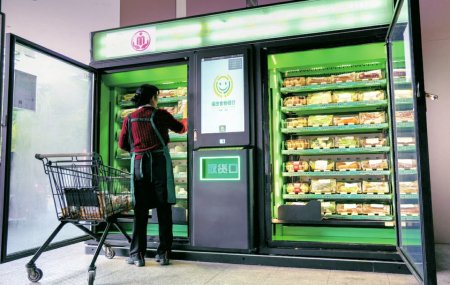
24小时“食物银行”让温暖不打烊
Xin Lang Cai Jing· 2025-12-23 19:08
Core Idea - The "Food Bank" initiative in Shenzhen's Futian District has gained popularity, providing food assistance to approximately 500,000 individuals over the past three years, significantly reducing food waste and carbon emissions [3][5][6]. Group 1: Project Overview - The "Food Bank" is not a financial institution but a network of smart food storage cabinets that allow individuals to access donated food [3][5]. - Since its launch on May 31, 2022, the project has received around 500,000 food donations, saving approximately 195 tons of food and reducing carbon emissions by 390 tons [5][6]. - The initiative aims to reduce food waste and assist vulnerable groups by redistributing surplus food that is still safe for consumption [5][6]. Group 2: Operational Mechanism - Food donations come primarily from charitable enterprises and supermarkets, with strict safety standards in place for all donated items [5][6]. - A standardized process ensures food safety and traceability from donation to distribution, with staff sorting, testing, and packaging food daily [5][6]. - Special groups such as low-income individuals, disabled persons, and others can access food through an online reservation system, ensuring privacy and reducing the stigma associated with receiving aid [6][7]. Group 3: Community Impact - The "Food Bank" serves as a practical support system for those in temporary hardship, while also educating the public on food conservation and low-carbon living [8][9]. - It provides a platform for businesses to fulfill their social responsibilities by donating food that would otherwise be wasted, creating a win-win situation for all parties involved [8][9]. - The initiative promotes a culture of mutual assistance and environmental awareness, addressing the global issue of food waste in a dignified manner [8][9].

英媒:拒绝浪费,自带餐盒开启“微行动”
Huan Qiu Shi Bao· 2025-12-09 22:43
Core Viewpoint - The article emphasizes the importance of reducing food waste and highlights a personal initiative of carrying a takeout box to promote this change, reflecting a broader movement towards sustainability and mindful consumption [1][2][3] Group 1: Food Waste Statistics - According to the United Nations, over 1.05 billion tons of food are wasted globally each year, underscoring the scale of the issue [1] Group 2: Personal Initiative and Social Influence - The individual in the article has adopted the habit of carrying a takeout box, which began as a personal commitment to reduce food waste and has since influenced friends to do the same [2][3] - This initiative has fostered conversations and connections with others, turning a personal action into a collective movement among peers [3] Group 3: Cultural and Familial Background - The individual grew up in a household that valued frugality and resourcefulness, which shaped their attitude towards food and waste [2] - The contrast between childhood values and adult social behaviors highlights the societal pressures that can lead to food waste [2]
多措并举,减少食物浪费
Ren Min Ri Bao· 2025-09-11 22:02
Core Insights - The United Nations' "Food Waste Index Report 2024" indicates that approximately 19% of food is wasted globally, which could provide 1.3 meals per day for every person in hunger-affected regions [1] Singapore - Singapore wastes an average of 750,000 tons of food annually, accounting for 11% of the country's total waste, with a recycling rate of less than 20% for discarded food [2] - Initiatives like the "Food Rescue Plan" and "Affordable Neighborhood Happy Hour" aim to redistribute nearly 2 tons of imperfect fresh produce monthly to families in need [1][2] - Supermarkets in Singapore sell imperfect and near-expiry food at reduced prices, promoting the sale of such items since 2011 [1] Germany - Each consumer in Germany discards about 74.5 kg of food annually, with 35% being fresh fruits and vegetables [3] - The German government has launched the "Don't Waste" app to help consumers make informed purchasing decisions and reduce food waste [3] - Major supermarket chains are adopting automated ordering systems to prevent overstocking and are actively promoting the sale of less visually appealing food [4] Chile - Chile celebrates "International Day of Awareness of Food Loss and Waste" annually, with about one-third of food being wasted [5] - The Chilean government promotes a culture of responsible consumption and encourages food suppliers to donate unsellable but edible food [5] - Companies like Cascada Foods are innovating by converting food waste into high-value products, while retail giant Sencosud donates over 780 tons of surplus food in the first half of 2024 [5]
爆改设计就能多卖5%临期食品,日本全家想用一张标签减少3000吨浪费
FBIF食品饮料创新· 2025-04-25 00:21
作者:橙子 编辑: Panda 只靠一张贴纸,减少3000吨的食物浪费?近期,全家便利店给自己定下了这样一个"小目标"。 目前,全家"泪目贴纸"的使用范围,主要是饭团、便当、三明治等即食商品。全家总部建议,各门店在 产品保质期前四小时贴上标签,并提供约20%的折扣。 从3月11日开始,日本各地的全家门店,陆续上线了一款画风清奇的折扣标签:"涙目シール"(泪目贴 纸)。 图片来源:Adver Times 走近全家的临期货架,你可能会看到这样的场景:醒目的黄色背景上,红色的折扣数字旁,"たすけて ください"(请救救我)的日文下,一只饭团泪眼汪汪。 在本次全国推广之前,全家已经做过小范围的测试——2024年10月30日到11月26日,他们在东京 都、神奈川县的6家门店,进行了一项对比实验。实验结果证明,相比中规中矩的原版标签, "泪目贴 纸"让临期食品的购买率高了5% 。[1] 这个数据给了全家信心。据全家统计,旗下所有门店每年产生约6万吨食物垃圾,如果全面铺开泪目贴 纸, 预计每年可减少约3000吨浪费 。[1] 为什么一张小小的标签,可以提高临期食品的购买率?为了减少食物浪费,标签还可以有哪些创新的玩 法? 给 ...