减银化技术

Search documents
白银疯涨后,是继续追高还是及时止盈?
Sou Hu Cai Jing· 2026-01-24 07:13
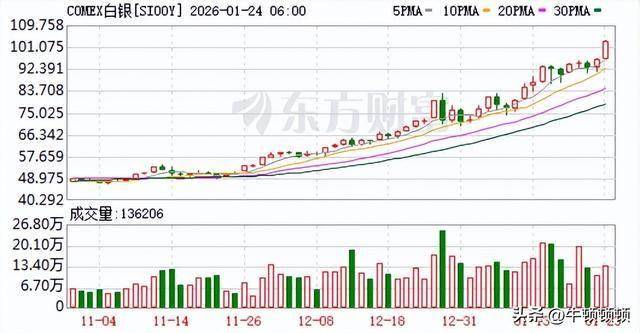
Core Viewpoint - The recent surge in silver prices, driven by supply constraints and increasing industrial demand, appears to be fueled by speculative trading rather than sustainable fundamentals, raising concerns about a potential market correction [1][18][27]. Supply and Demand Dynamics - Global silver production has decreased for five consecutive years, with an expected output of only 25,400 tons in 2026 [3]. - Approximately 72% of silver is produced as a byproduct of copper, lead, and zinc mining, limiting the ability to increase silver production independently [3]. - The demand for silver in the photovoltaic industry accounts for 55% of industrial silver usage, with significant quantities required for electric vehicles and AI servers [3][15]. Market Sentiment and Speculation - The current market is characterized by heightened risk appetite, with funds flowing into precious metals due to factors like the Federal Reserve's interest rate cuts and geopolitical risks [8]. - The silver futures market has shown signs of "short squeezing," where large funds push prices higher, forcing short sellers to cover their positions at elevated prices [13][21]. - The Relative Strength Index (RSI) for silver has reached 93.86, indicating extreme overbought conditions, which historically precedes market corrections [13][23]. Regulatory Environment - Regulatory bodies have tightened risk controls multiple times, indicating concerns over market volatility and potential bubbles [9][23]. - The National Investment Fund's silver LOF fund has issued numerous risk warnings, highlighting the speculative nature of recent price movements [9][19]. Industrial Impact - Rising silver prices have led some photovoltaic companies to reduce their silver usage, indicating that high prices can suppress demand [15]. - The silver consumption in the photovoltaic sector is projected to decrease by 17% as companies seek to mitigate costs [15][16]. Investment Considerations - Investors are cautioned against entering the market without substantial capital, as significant initial investments are required to participate meaningfully [11][24]. - The narrative of easy profits in silver trading may mislead retail investors, who could end up as "exit liquidity" for larger players [21][25].