出口税政策

Search documents
印尼将于明年对煤炭征收1%至5%出口税
Xin Hua Cai Jing· 2025-12-16 00:36
Group 1 - The Indonesian government plans to impose an export tax of 1% to 5% on coal starting in 2026 to increase national revenue and optimize the tax structure without undermining the international competitiveness of Indonesian coal [1] - Indonesia, as a significant exporter of thermal coal, has previously enjoyed tax exemptions on coal exports, but due to changing economic conditions and increased fiscal pressure, the government has decided to reinstate export taxes [1] - The tax rate will be determined based on the calorific value and category of coal, with an expected additional tax revenue of approximately 20 trillion Indonesian Rupiah (around 1.2 billion USD) in 2026, which will help alleviate fiscal pressure and support the development of clean energy and downstream industries [1] Group 2 - The Indonesian government is also advancing stricter foreign exchange management regulations, which are expected to take effect on January 1, 2026, requiring natural resource exporters to deposit all foreign exchange earnings into state-owned banks for at least one year [1] - The new regulations will allow a maximum of 50% of foreign exchange earnings to be converted into Indonesian Rupiah, aimed at increasing the retention of foreign exchange within the domestic banking system, enhancing dollar supply, and stabilizing the exchange rate of the Indonesian Rupiah [1]
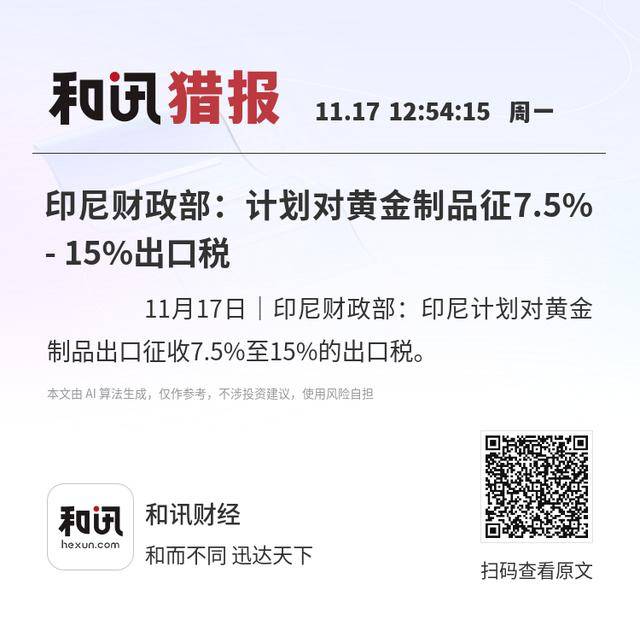
印尼财政部:计划对黄金制品征7.5% - 15%出口税
Sou Hu Cai Jing· 2025-11-17 05:47
Core Viewpoint - Indonesia plans to impose an export tax ranging from 7.5% to 15% on gold products, indicating a significant shift in its trade policy regarding precious metals [1] Group 1: Export Tax Details - The export tax on gold products will be set between 7.5% and 15%, which may impact the profitability of gold exporters [1] - This new tax structure is part of Indonesia's broader strategy to regulate its natural resources and increase state revenue [1] Group 2: Implications for the Industry - The introduction of this export tax could lead to increased costs for gold producers, potentially affecting their competitiveness in the global market [1] - Investors in the gold sector may need to reassess their strategies in light of these new tax regulations, as they could influence market dynamics and pricing [1]

“中国已订购至少10船”!美国农民错失时机……
中国基金报· 2025-09-24 11:53
Group 1 - Chinese buyers have ordered at least 10 shipments of soybeans from Argentina to build reserves for the fourth quarter [2] - Argentina has temporarily canceled export taxes on grains and their by-products, including soybeans, to enhance competitiveness in the global market [2] - Each shipment of soybeans is approximately 65,000 tons, with shipments scheduled for November [2] Group 2 - Reports indicate that Chinese buyers have actually reserved 15 shipments of soybeans [2] - Ongoing trade negotiations between the U.S. and China have led to a stagnation in U.S. soybean exports, with South American suppliers filling the gap [2] - The current sales season is already more than halfway through, resulting in missed opportunities for U.S. farmers to sell soybeans to China [2]