
贸易谈判

Search documents
访华刚定下,不到24小时,美王牌被废,英媒:中国发现了美国弱点
Sou Hu Cai Jing· 2026-02-25 12:02
Core Viewpoint - The U.S. Supreme Court ruled that Trump's $160 billion tariffs were illegal, undermining his leverage ahead of his visit to China, and highlighting the limitations of U.S. trade policy under the International Emergency Economic Powers Act (IEEPA) [2][4][6]. Group 1: Legal and Economic Implications - The Supreme Court's ruling stated that the tariffs imposed under IEEPA exceeded legal authority and must be immediately stopped and abolished [4][6]. - The tariffs collected under IEEPA amounted to approximately $1,335 billion by December last year, increasing to about $1,600 billion by February 20 this year [6][8]. - The ruling raises questions about potential refunds and interest payments to affected parties, complicating the U.S. government's financial position [8][10]. Group 2: Impact on U.S.-China Relations - Trump's reliance on tariffs as a negotiation tool has been significantly weakened, as the legal basis for such actions has been challenged [10][12]. - The new trade measures Trump signed before his visit are limited to a maximum tax rate of 15% and can only last for 150 days without Congressional approval, indicating a shift in strategy [10][12]. - Chinese companies view the U.S. market as a stable revenue source, with many American firms operating in China showing no plans to withdraw, contrary to the administration's aggressive stance [12][14]. Group 3: Domestic Political Dynamics - The ruling reflects the internal conflicts within the U.S. political system, where even Trump's appointees in the Supreme Court can challenge his policies [14][16]. - The agricultural sector is particularly sensitive to trade relations with China, as reduced orders can directly impact U.S. farmers and create political pressure on Washington [16][18]. - The U.S. debt and trade deficit situation complicates negotiations, as any changes in Chinese investment behavior could lead to significant market volatility [16][18]. Group 4: Future Negotiation Landscape - China has made it clear that it expects the U.S. to remove all unreasonable tariffs to restore normal trade relations, emphasizing the need for mutual respect in negotiations [20][22]. - The changing global environment, with European nations focusing on economic cooperation rather than confrontation, diminishes the effectiveness of U.S. pressure tactics [22][24]. - The Taiwan issue remains a critical point, with China asserting that it cannot be used as a bargaining chip, which could jeopardize the significance of Trump's visit if not handled carefully [24][26].

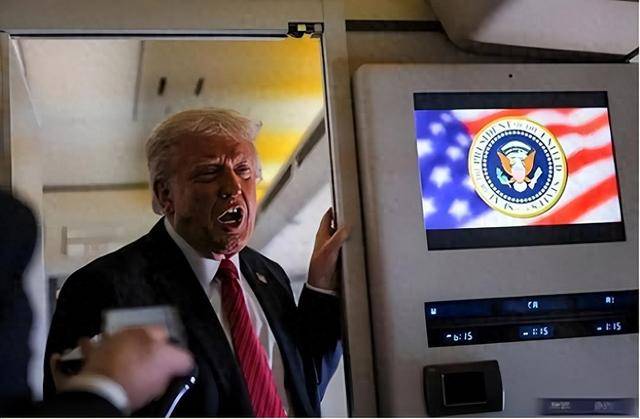
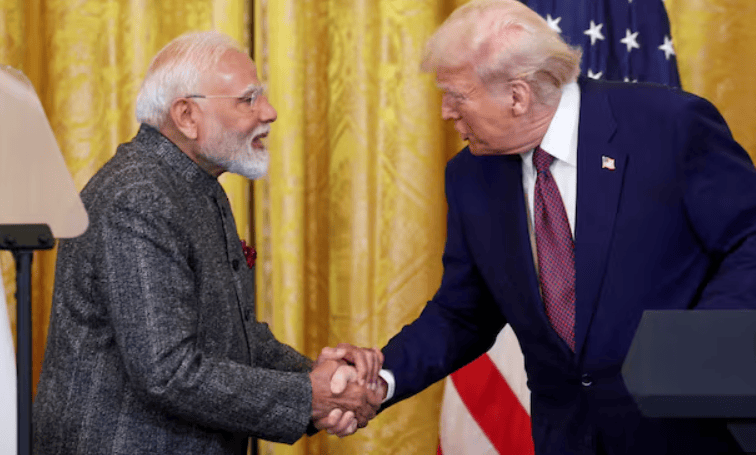
特朗普宣布对全球征收15%关税后,印度紧急叫停贸易代表团访美
Sou Hu Cai Jing· 2026-02-23 10:46
Core Viewpoint - The U.S. Supreme Court's ruling invalidating President Trump's unilateral imposition of punitive tariffs has prompted major trading nations, including India, to reassess their trade negotiations with the U.S. [1][3] Group 1: Impact on Trade Negotiations - India has postponed its planned visit to Washington to finalize a bilateral temporary trade agreement, reflecting a shift to a more cautious stance [1][3] - The previously established negotiation framework between India and the U.S. is now considered obsolete due to the recent developments, necessitating a reevaluation of strategies by both parties [3] - The Supreme Court's decision has weakened Trump's leverage in trade negotiations, allowing countries that have not rushed into agreements to gain a more favorable position [3][4] Group 2: Responses from Other Countries - South Korea and Japan, which had committed significant investments to the U.S. in exchange for reduced tariffs, are now reconsidering their agreements in light of the Supreme Court ruling [4][5] - Japan had initially pledged $550 billion in investments to lower tariffs on automotive products, but the future of these commitments is now uncertain [5] - South Korea's investment commitment of $350 billion is also under scrutiny, as the government is cautious about fully denying the agreements made [5] Group 3: Expert Opinions - Trade experts suggest that the recent changes in the U.S. tariff policy will fundamentally alter the landscape of future trade negotiations, with countries now more cautious and focused on adapting their strategies [4][5]
农产品日报-20260213
Guo Tou Qi Huo· 2026-02-13 13:16
Report Investment Ratings - **Buy**: Soybean, soybean meal, soybean oil, palm oil, rapeseed meal, rapeseed oil, corn, live pigs, eggs [1] Core Views - The soybean market is expected to be optimistic, with the price of auctioned soybeans on the policy side rising and the spill - over effect of strong foreign soybean prices [2]. - The soybean, palm, and rapeseed oil markets show a pattern of strong meal and weak oil before the holiday, with a reduction in positions. The price of US soybeans is likely to rise, while the Malaysian palm oil price is weak in the short - term. The price of US soybean oil is likely to be supported, and the price of rapeseed oil is suppressed by policies [3]. - The domestic bean market rebounds with reduced positions, and the US soybean is in a relatively high - level volatile and strong pattern. The USDA February report is neutral to slightly bearish, but the expectation of China's purchase of US soybeans boosts US soybean exports. The import of Canadian rapeseed is also boosted [5]. - The prices at Beigang ports and Northeast purchasing enterprises for corn are flat. The number of vehicles at Shandong corn deep - processing enterprises decreases normally. The US corn is in a weak and volatile state, and the Dalian corn futures may fluctuate more after the Spring Festival [6]. - The live pig market is weakly falling with reduced positions. The price stabilizes slightly due to pre - holiday stocking demand, but there may be large supply pressure after the Spring Festival [7]. - The egg market rebounds with reduced pre - holiday funds. The opening price after the Spring Festival should be noted, and there may be a long - buying opportunity after the basis of the first - half - year contract narrows [8]. Sector - by - Sector Summaries Soybean - The soybean market has increased positions and risen strongly. The spot market is lightly traded. The strong auction price and the spill - over effect of foreign soybean prices support the market. The pressure on the US soybean supply - demand balance sheet in the 26/27 season is expected to decrease [2]. Soybean Oil, Palm Oil and Rapeseed Oil - Before the holiday, the oil market shows a pattern of strong meal and weak oil with reduced positions. The US soybean price is likely to rise. The Malaysian palm oil price is short - term weak, and the US soybean oil price is likely to be supported. The rapeseed oil price is suppressed by policies [3]. Soybean and Bean Meal, Rapeseed Meal - The domestic bean market rebounds with reduced positions. The US soybean is in a relatively high - level volatile and strong pattern. The USDA February report is neutral to slightly bearish, but the expectation of China's purchase of US soybeans boosts US soybean exports. The import of Canadian rapeseed is also boosted [5]. Corn - The prices at Beigang ports and Northeast purchasing enterprises for corn are flat. The number of vehicles at Shandong corn deep - processing enterprises decreases normally. The US corn is in a weak and volatile state, and the Dalian corn futures may fluctuate more after the Spring Festival [6]. Live Pigs - The live pig market is weakly falling with reduced positions. The price stabilizes slightly due to pre - holiday stocking demand, but there may be large supply pressure after the Spring Festival [7]. Eggs - The egg market rebounds with reduced pre - holiday funds. The opening price after the Spring Festival should be noted, and there may be a long - buying opportunity after the basis of the first - half - year contract narrows [8]
农产品日报-20260211
Guo Tou Qi Huo· 2026-02-11 13:22
Report Industry Investment Ratings - **Buy Rating (★★★)**: Soybean No.1, Soybean Meal, Soybean Oil, Palm Oil, Rapeseed Meal, Rapeseed Oil, Corn [1] - **Neutral Rating (★☆☆)**: Live Hogs, Eggs [1] Core Views - The 26/27 US soybean supply-demand balance sheet pressure is expected to decrease year-on-year, mainly through the development of biodiesel and trade negotiations to boost demand, which may encourage supply expansion, increase in area year-on-year, maintain high yields, and likely lead to inventory reduction, thus boosting CBOT soybean prices [2][3] - The US Department of Agriculture's February report on soybeans is overall neutral to slightly bearish, but the bearish logic has been mostly priced in, and the mention of China considering buying more US soybeans is expected to boost US soybean exports [5] - The Malaysian palm oil report is bullish, with production lower than expected, exports higher than expected, and inventory showing a month-on-month decline [3] - The US biodiesel policy in 2026 is favorable, with a strong RIN price and improved biodiesel enterprise profits, which is likely to support the price of US soybean oil [3] - The news of Canada's rapeseed resuming normal imports to China and the appearance of China's further procurement of rapeseed shipments are suppressing the price of rapeseed oil [3] - The corn market is expected to have little fundamental change before the Spring Festival, and the short-term Dalian corn futures may have greater fluctuations after the festival [6] - The live hog market needs to be wary of the large supply pressure after the Spring Festival, and pay close attention to the price difference structure of fat hogs [7] - The egg market is expected to see a decline in industry inventory in the first half of 2026, and there may be opportunities to go long at low prices after the basis of the first-half contracts narrows after the Spring Festival [8] Summary by Commodity Soybean No.1 - The futures market has significantly increased positions, and the market sentiment is optimistic. Pay attention to the movement of funds before the festival. The current spot market trading is light. The recent policy-side soybean auction prices are strong, which has boosted the market. The US Department of Agriculture has raised Brazil's soybean production, and the US soybean supply-demand has not been adjusted, with a bearish report. However, US soybeans still rose, supported by optimistic export expectations and soybean oil [2] Soybean Meal & Rapeseed Meal - The USDA February report shows that US soybean data has not been adjusted compared to January. Globally, the soybean production forecast is 428 million tons, an increase of 1.025 million tons from the previous year and 2.5 million tons from the January forecast. The report is overall neutral to slightly bearish, but the bearish logic has been mostly priced in, and the mention of China considering buying more US soybeans is expected to boost US soybean exports. Rapeseed meal is boosted by the news of China-Canada cooperation [5] Soybean Oil & Palm Oil & Rapeseed Oil - Near the holiday, the soybean, palm, and rapeseed oil futures markets are reducing positions, and prices are fluctuating. The US soybean supply-demand report is bearish, but US soybeans still rose. The 26/27 US soybean supply-demand balance sheet pressure is expected to decrease, which is likely to boost CBOT soybean prices. The Malaysian palm oil report is bullish, with high production and high exports. The US biodiesel policy is favorable, which is likely to support the price of US soybean oil. The news of Canada's rapeseed resuming normal imports to China and the appearance of China's further procurement of rapeseed shipments are suppressing the price of rapeseed oil [3] Corn - The main corn contract 02605 has increased positions by nearly 200,000 lots and risen by 1.58%. The US Department of Agriculture's February report on corn has little adjustment, and the market reaction is flat. The fundamental situation may not change much before the Spring Festival, and the short-term Dalian corn futures may have greater fluctuations after the festival [6] Live Hogs - Live hog futures are rebounding with reduced positions, while the spot price continues to decline slightly. The industry's出栏 weight is still high, and there is a need to be wary of large supply pressure after the Spring Festival [7] Eggs - The spot price of eggs is stable, and the futures market shows a pattern of near-term strength and long-term weakness. After the Spring Festival, pay attention to the opening price of eggs. Due to the low replenishment in the second half of 2025, the industry's inventory is expected to continue to decline in the first half of 2026, and there may be opportunities to go long at low prices after the basis of the first-half contracts narrows [8]
特朗普私下“琢磨”退出美墨加协定,北美贸易战云密布
Jin Shi Shu Ju· 2026-02-11 12:40
Group 1 - The potential withdrawal of the US from the North American Free Trade Agreement (NAFTA) adds uncertainty to the ongoing negotiations among the US, Canada, and Mexico [1][2] - The USMCA is set for a mandatory review on July 1, which has evolved into a contentious negotiation, with Trump demanding additional concessions from Canada and Mexico [2][3] - If an agreement is reached, the USMCA could be extended for another 16 years; otherwise, it may lead to annual reviews until 2036, with any country able to announce an exit six months in advance [2][4] Group 2 - Trump's administration is under pressure to negotiate better terms, with a focus on stricter rules for key industrial products and worker protections [2][3] - The potential exit from the USMCA could lead to higher tariffs on Mexican and Canadian exports, causing economic pain and potentially hindering US export growth [4][5] - The unpredictability of Trump's trade policies has left global leaders uncertain, particularly regarding the integration of supply chains among the three countries [5]
国投期货农产品日报-20260210
Guo Tou Qi Huo· 2026-02-10 13:46
1. Report Industry Investment Ratings - Soybeans: ☆☆☆, indicating a relatively balanced short - term trend with poor operability on the current market, suggesting waiting and seeing [1] - Soybean Meal: ★☆☆, indicating a bullish bias, with a driving force for price increase but poor operability on the market [1] - Soybean Oil: ★★☆, suggesting a clear upward trend and the market is in a fermenting stage [1] - Palm Oil: ★★★, representing a clearer upward trend and a relatively appropriate current investment opportunity [1] - Rapeseed Meal: ★★☆, indicating a clear upward trend and the market is in a fermenting stage [1] - Rapeseed Oil: ☆☆☆, indicating a relatively balanced short - term trend with poor operability on the current market, suggesting waiting and seeing [1] - Corn: ★☆☆, indicating a bullish bias, with a driving force for price increase but poor operability on the market [1] - Live Pigs: ★☆☆, indicating a bearish bias, with a driving force for price decrease but poor operability on the market [1] - Eggs: ★★★, representing a clearer upward trend and a relatively appropriate current investment opportunity [1] 2. Core Views of the Report - The report analyzes the market trends of various agricultural products including soybeans, soybean meal, soybean oil, palm oil, rapeseed meal, rapeseed oil, corn, live pigs, and eggs. It provides investment ratings for each product and elaborates on the influencing factors such as supply - demand relationships, policies, and market expectations. It also reminds investors to pay attention to risks, especially around holidays and during important data release periods [1][2][3] 3. Summary by Related Catalogs Soybeans - The futures market has significantly increased its positions, with an optimistic market expectation. Attention should be paid to the movement of pre - holiday funds. The spot market has light trading. Policy - end soybean auctions have had strong transaction prices, and the strong price of external soybeans has an overflow effect on domestic soybeans. The 26/27 US soybean supply - demand balance sheet pressure is expected to decrease year - on - year, which is conducive to raising the CBOT soybean price [2] Soybean Meal and Rapeseed Meal - After the phone call between the leaders of China and the US, there are expectations of increased US soybean purchases. In the short term, the continuous soybean meal may continue to fluctuate narrowly at the bottom. The weekly soybean crushing volume in China is high, and the soybean meal inventory has exceeded 900,000 tons. The 2 - month USDA supply - demand report is about to be released. For rapeseed meal, the export situation of Canadian rapeseed is relatively good, and the domestic inventory is relatively low. The short - term trends of US soybeans and continuous soybean meal are differentiated [3] Soybean Oil, Palm Oil, and Rapeseed Oil - As the holiday approaches, the prices of soybean, palm, and rapeseed oil on the market have declined with reduced positions. The Malaysian palm oil report is bullish, with production lower than expected, export higher than expected, and inventory showing a month - on - month decline but still at a high level. The US biodiesel policy is positive for soybean oil prices. The news of the resumption of normal rapeseed imports from Canada and further procurement of rapeseed shipments in China have suppressed rapeseed oil prices [4] Corn - The national corn sales progress has reached 61%. The closing prices of Beigang Jinzhou Port and Bayuquan Port are flat compared to the previous day. The Spring Festival stocking of downstream enterprises is basically over, and the trading is light. The number of remaining vehicles at Shandong corn deep - processing enterprises in the morning has decreased. The short - term Dalian corn futures are mainly in a weak - oscillating state [5] Live Pigs - The spot price of live pigs continues to decline, and the slaughter volume has increased significantly recently. However, due to the high - speed slaughtering, the price has continuously dropped. The industry's average slaughter weight is still high, and the inventory is higher than the same period last year. There is a need to be vigilant about the post - holiday supply pressure. In the long - term, the pig price is expected to hit a low point in the first half of next year [6] Eggs - Some egg contracts have a large intraday decline and hit a new low. The overall market has increased its positions by nearly 10,000 lots. The spot price is stable today. The chicken - chick replenishment volume in January has improved month - on - month but still decreased year - on - year. The egg price in the first half of 2026 still has upward - repair momentum. The futures market has already reflected the expected short - term weakness of the spot. The subsequent trading strategy is to wait for the spot low around the Spring Festival and then configure long positions in the first - half - year 2026 egg futures contracts [7]
美印贸易谈判终现转机
Xin Lang Cai Jing· 2026-02-03 22:56
Core Viewpoint - The recent trade agreement between the United States and India marks a significant turning point in their long-standing trade negotiations, which have been fraught with tensions over tariffs and trade barriers since 2025 [3][4]. Group 1: Trade Agreement Details - The agreement includes a reduction of the "reciprocal tariff" imposed by the U.S. on Indian goods from 25% to 18%, while India will lower its tariffs and non-tariff barriers to zero [3]. - India has committed to significantly increasing its procurement of U.S. products, including over $500 billion worth of energy, technology, agricultural products, and coal [3]. Group 2: Historical Context and Negotiation Dynamics - Since 2025, U.S.-India trade talks have been overshadowed by U.S. threats to raise tariffs, leading to a breakdown in negotiations and heightened tensions [4][5]. - The U.S. initially imposed a 25% "reciprocal tariff" on Indian goods in July 2025, which was further exacerbated by additional tariffs related to India's oil imports from Russia, resulting in a total tariff rate of 50% on Indian exports to the U.S. [5][6]. Group 3: Economic Impact on India - The high tariffs have significantly impacted India's labor-intensive industries, such as textiles and jewelry, which employ millions and have faced substantial losses due to missed export opportunities [5][6]. - Indian exporters have been forced to establish subsidiaries in the U.S. to circumvent tariffs, and some have relocated production to countries with lower tax rates, such as the UAE [6]. Group 4: Future Considerations - The Indian government, under Prime Minister Modi, is under pressure to deliver economic benefits to the public ahead of the 2026 elections, necessitating a satisfactory agreement with the U.S. [7]. - Both countries must prepare for the finalization of the agreement and consider how the new trade dynamics will influence their respective economies moving forward [7].

中国期货每日简报-20260122
Zhong Xin Qi Huo· 2026-01-22 01:23
Report Industry Investment Rating - Not provided in the content Core Viewpoints - On January 21, most equity index futures and CGB futures traded higher, while commodities showed mixed performance. Lithium carbonate, tin, and gold led the rises, while glass, sodium hydroxide, and coking coal led the declines [11][12][13] - The U.S. Trade Representative hopes to launch a new round of trade negotiations with China [40][41] - Shanghai plans to gradually include qualified non - ferrous metal futures and options varieties in the scope of opening - up to strengthen the international influence of non - ferrous metal bulk commodities [42][43][45] Summary by Directory 1. China Futures 1.1 Overview - On January 21, in equity index futures, IC rose 1.9% and IH rose 1.7%; in CGB futures, TL rose 0.75% and TS dropped 0.01%. In commodity futures, lithium carbonate rose 7.3% with open interest increasing 3.0% month - on - month, tin gained 5.8% with open interest decreasing 3.6% month - on - month, and gold advanced 3.7% with open interest increasing 11.5% month - on - month. The top three decliners were glass (down 2.3% with open interest increasing 2.6% month - on - month), sodium hydroxide (down 2.0% with open interest increasing 2.7% month - on - month), and coking coal (down 1.8% with open interest decreasing 3.2% month - on - month) [11][12][13] 1.2 Daily Raise - **Gold**: On January 21, gold rose 3.7% to 1,092.30 yuan/g. Driven by Greenland - related tensions and tariff threats on the 20th, both domestic and international gold prices surged, with COMEX gold briefly breaking through $4,750. Poland's plan to buy 150 tons of gold also supported the price. The Shanghai Futures Exchange will adjust gold futures' price limit ranges and trading margin requirements from January 22. Short - term, watch the U.S. Supreme Court's ruling on Trump's tariff case, Greenland - related developments, and the new Federal Reserve Chair nomination [17][19][22] - **Platinum**: On January 21, platinum rose 2.5% to 628.50 yuan/g. Heavy rainfall in South Africa may impact supply, and geopolitical tensions and trade frictions have flared up. The nomination of the new Federal Reserve Chair and U.S. tariffs on platinum and palladium are also factors. Short - term, platinum prices may fluctuate. In the future, supply risks from South Africa remain, and demand is in a structural expansion phase [25][26][28] 1.3 Daily Drop - **Silver**: On January 21, silver dropped 0.1% to 23,131 yuan/kg. After hitting record highs intraday, silver prices retreated, and short - term high - level volatility risks increased. Besides the boost from the 20th's events, downward pressures such as high volatility, low short - term lease rates, and tariff suspension on critical minerals are building up. The Shanghai Futures Exchange will adjust silver futures' price limit ranges and trading margin requirements from January 22 [34][35][36] 2. China News 2.1 Macro News - The U.S. Trade Representative Greer stated that the U.S. hopes to launch another potential round of trade negotiations with China. The Chinese Foreign Ministry spokesperson suggested referring the question to the competent Chinese authorities [40][41] 2.2 Industry News - Shanghai issued an action plan to strengthen futures - spot market linkage and enhance the competitiveness of non - ferrous metal bulk commodities. It aims to expand the high - level institutional opening - up of the non - ferrous metal futures market, gradually include qualified varieties in the scope of opening - up, and improve relevant business rules. It also encourages exploration of cross - border delivery mechanism innovation to strengthen the international influence of non - ferrous metal bulk commodities and the "Shanghai Price" [42][43][45]
新永安国际证券晨会纪要-20260121
Xin Yong An Guo Ji Zheng Quan· 2026-01-21 03:29
Core Insights - The report highlights the significant fluctuations in the Japanese bond market, with calls from the Japanese Finance Minister for investors to remain calm amid a sell-off that has affected U.S. bonds as well [8][12] - China has introduced a series of policy measures aimed at boosting investment and consumption, including a special guarantee plan worth 500 billion RMB (approximately 72 billion USD) to encourage private enterprises to borrow and expand their businesses [8][12] Market Performance - The Shanghai Composite Index closed at 4113.65 points, down 0.01%, while the Shenzhen Component fell by 0.97% and the ChiNext Index dropped by 1.79% [1][5] - The Hang Seng Index ended at 26487.51 points, down 0.29%, with the Hang Seng Technology Index declining by 1.16% and the Hang Seng China Enterprises Index falling by 0.43% [1][5] - U.S. markets also experienced declines, with the Dow Jones Industrial Average down 1.76% at 48488.59 points, the S&P 500 down 2.06% at 6796.86 points, and the Nasdaq down 2.39% [1][5] Company Developments - China’s leading PCB equipment manufacturer, Dazhu CNC, reported a 144% year-on-year increase in net profit for the first ten months of the previous year, with revenues rising by 64.4% [10] - Junlebao Dairy, a comprehensive dairy company in China, submitted its listing application to the Hong Kong Stock Exchange, reporting a nearly 30% increase in net profit for the first nine months of the previous year [10] - Muyuan Foods, a major pig farming and pork production company in China, is reportedly planning to raise up to 11.7 billion HKD (approximately 1.5 billion USD) through a Hong Kong IPO [10] - Shanghai Shangmi Technology is expected to launch an IPO in February, aiming to raise around 12 billion HKD (approximately 1.5 billion USD) [10] Economic Indicators - China's GDP growth for the fourth quarter was reported at 4.5%, with a year-to-date growth of 5.0% [16] - The retail sales of consumer goods in China for December showed a year-on-year increase of 0.9%, while industrial value-added output rose by 5.2% [16]
美推迟上调部分进口家具产品关税
Shang Wu Bu Wang Zhan· 2026-01-09 06:47
Core Viewpoint - The U.S. government has postponed the increase of tariffs on certain imported furniture items from January 1, 2026, to January 1, 2027, to facilitate ongoing trade negotiations and ensure economic security and supply chain stability [1] Group 1: Tariff Changes - The announcement affects tariffs on upholstered chairs, cabinets, and bathroom cabinets [1] - The postponement is not a delay in imposing tariffs but rather a delay in increasing existing tariffs [1] Group 2: Impact on Exports - Wooden products exported to the U.S. will still be subject to existing tariffs of 10% and 25% under Section 232 [1]