分工协作

Search documents
“斜杠企业”未必都是好企业
Xin Lang Cai Jing· 2026-01-05 16:39
Core Viewpoint - The concept of "slash enterprises," akin to "slash youth," reflects companies that operate across multiple unrelated fields, which may not guarantee long-term success due to the inherent complexities and differences in various industries [1][3] Group 1: Business Strategy - Companies often pursue a "slash" model to capture new growth opportunities and mitigate risks from intensified competition in single sectors, but this approach can lead to increased organizational and management costs [1][3] - Successful companies like Bosch, ASML, and Fanuc focus on core competencies, achieving excellence in their respective fields rather than diversifying into unrelated areas [2] Group 2: Industry Examples - Gree Electric, Fuyao Glass, and CATL exemplify firms that concentrate their resources on specific products, achieving global leadership in their niches through efficiency and technological advancement [2] - Apple, Boeing, and Airbus illustrate the importance of deep social division of labor, relying on specialized suppliers for components while focusing on design and assembly [2] Group 3: Modern Challenges - The attempt to cover the entire supply chain with a few "slash enterprises" reflects a flawed understanding of division of labor, particularly in fast-evolving sectors like AI and biotechnology [3] - The AI computing industry highlights the value of collaboration and specialization, where companies focus on their strengths and work together through standardized interfaces to enhance overall system efficiency [3] Group 4: Recommendations - Companies should return to a capability-driven approach, concentrating on core businesses to build sustainable competitive advantages, while industries should embrace openness and collaboration to foster resilience [3] - Encouraging the development of "hidden champions" and specialized enterprises can enhance overall competitiveness by forming a network based on comparative advantages [3]
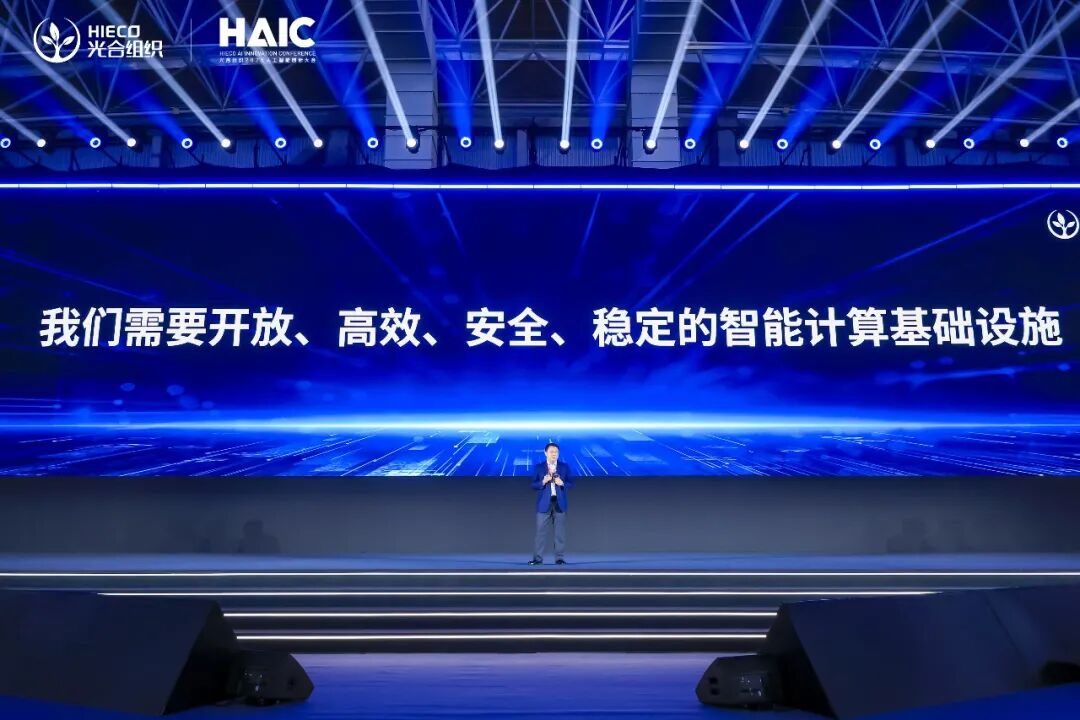
光合组织:全力托举伙伴,共筑AI计算新生态
Feng Huang Wang· 2025-12-20 14:27
Core Insights - The article emphasizes the shift in the AI computing industry from chaotic competition to collaborative ecosystems, as highlighted by the "refusal of internal competition" advocated by the director of the National Advanced Computing Industry Innovation Center, Li Jun [2][3] - This transition is crucial as AI becomes a central battleground in global technological competition, addressing the urgent need for self-controlled computing power ecosystems [2][3] Industry Challenges - AI computing power demand is increasing at an annual rate of over 40%, yet the industry faces severe internal competition characterized by long supply chains and homogenized competition among companies [2][3] - Many companies pursue a "large and comprehensive" approach but struggle to achieve excellence, leading to a distorted bidding environment where "the more one loses, the more likely they are to win" [2][3] Structural Issues - The internal competition stems from structural contradictions in the global computing power landscape, where the urgent need for self-controlled computing power is hindered by incompatibility among different vendors' chips and systems [3] - Small and medium enterprises face barriers to entry in AI projects due to high costs and equipment incompatibility, necessitating a unified interface standard and collaboration mechanisms [3] Proposed Solutions - Li Jun proposed five measures to support partner growth, focusing on collaboration among core enterprises and manufacturers to develop high-end processors and a full-stack product matrix [3][4] - The measures include building joint laboratories, sharing resources, and enhancing market access through regional AI innovation centers, creating a closed-loop ecosystem from technology development to market implementation [3][4] Early Achievements - The HAIC2025 conference showcased over 50 innovative results from the cooperative ecosystem, demonstrating the collaborative innovation capabilities of the open ecosystem [4] - Companies like Yike and Haiguang have successfully explored new markets through deep collaboration, validating the commercial value of division of labor [4] Ecosystem Value - The organization has over 6,000 partners and 28 physical ecosystem adaptation centers, creating a closed-loop industry ecosystem centered on self-control [5] - This ecosystem allows each enterprise to find precise positioning, fostering a positive cycle of core technology breakthroughs and industry scale [5] Strategic Shift - The exploration by the organization represents a reconstruction of the AI computing industry's development model, advocating for resource sharing and collaborative mechanisms to enable domestic computing power to iterate and optimize in real scenarios [6] - The call for a shift from "zero-sum competition" to "positive-sum competition" is essential for building a robust foundation for computing power in the AI industry [6]