
空调制造

Search documents
2025年中国模块机组市场深度回调,存量竞争下品牌格局加速分化
Xin Lang Cai Jing· 2026-02-24 11:11
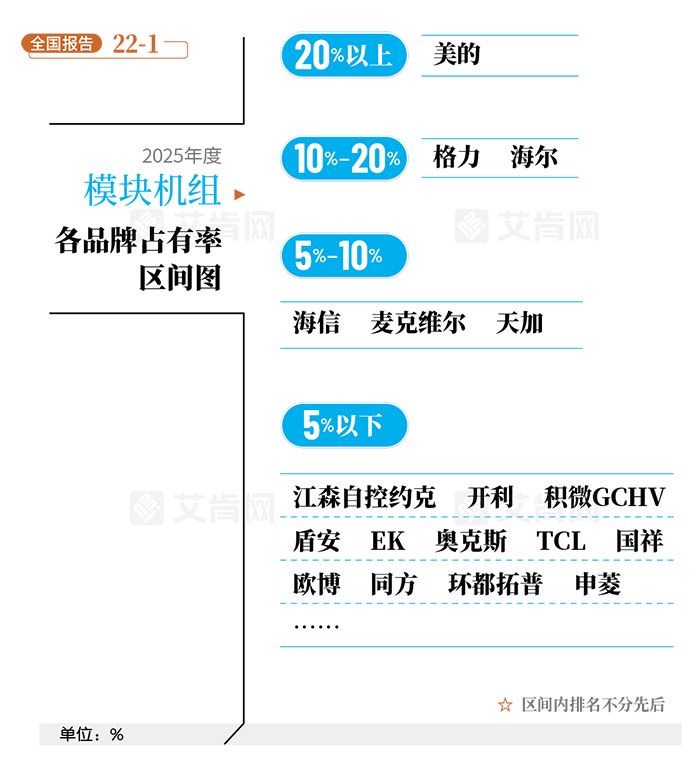
Core Insights - The report by Aiken Network indicates a significant downturn in the Chinese central air conditioning modular unit market, with a year-on-year sales decline of 15.6%, which is less severe than the overall central air conditioning industry [1][5] - The market share of modular units within the central air conditioning products remains stable at approximately 6.6%, marking a transition from growth expansion to a phase of stock competition [1][5] - Intense price competition is observed, particularly in small to medium-sized projects and standardized products, leading to reduced profit margins across the industry [1][5] Market Dynamics - The slowdown in new project investments and increased delays are impacting traditional advantages in large modular units, yet the demand for upgrades and renovations driven by carbon neutrality goals provides market support [1][5] - Specific segments such as data center backup cooling, regional energy stations, and modern agricultural temperature control still present competitive advantages for modular units due to their cost and flexibility requirements [1][5] Product Trends - Products using R410A and R32 refrigerants have become mainstream, while leading brands are beginning to promote models using R290, which has a lower Global Warming Potential (GWP), as part of their technological differentiation strategy [6][10] Brand Performance - The market share distribution for modular units in 2025 shows Midea leading with over 20% share, followed by Gree and Haier with 10%-20%, and brands like Hisense, Macwell, and Tianka holding 5%-10% [2][7] - Brands with less than 5% market share include York, Carrier, and others, indicating a highly competitive landscape where companies leverage localized strategies and niche technologies for breakthroughs [2][7] Regional Distribution - The modular unit market is highly concentrated in economically developed regions, with East China holding 28.4% and North China 26.3%, together accounting for over half of the market share [3][8] - Southwest, Central, and South China regions represent the third tier of the market with shares of 14.4%, 12.6%, and 12.5% respectively, while Northwest and Northeast regions combined account for less than 6% [3][8] Future Outlook - As the market enters a phase of stock competition, brand differentiation will intensify, with a focus on environmental technology, tailored solutions for specific scenarios, and deep regional operational capabilities becoming critical for companies to stand out [5][10]





(新春走基层)海外订单催热“淡季”生产线 广州南沙制造业春节赶工忙
Xin Lang Cai Jing· 2026-02-19 05:36
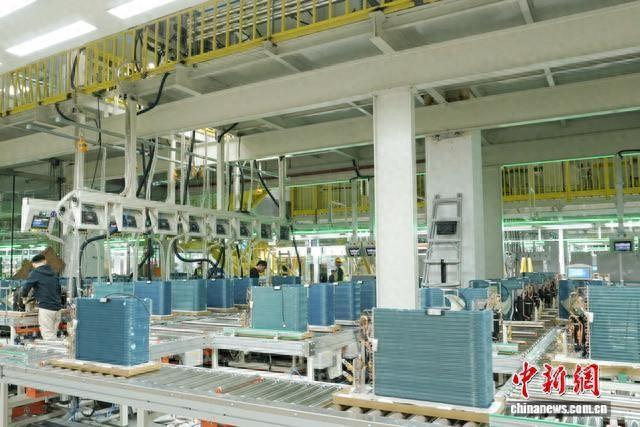
Core Insights - The air conditioning manufacturing project in Nansha District, Guangzhou, is experiencing a busy period during the Spring Festival, with full production lines to meet overseas summer orders [2][4] - The project has a total investment of 1.6 billion yuan and an annual production capacity of 8 million units, positioning it as a significant player in the Guangdong-Hong Kong-Macao Greater Bay Area's smart home appliance industry [2] - The company is capitalizing on the global supply chain restructuring, achieving significant year-on-year growth in overseas orders from January to February, indicating a strong start to the year [2] Company Operations - The air conditioning manufacturing facility is operating at full capacity during the traditionally slow winter season to fulfill orders for Southeast Asia, the Middle East, and Africa, where demand for energy-efficient air conditioners is high [2][4] - Employees are engaged in fulfilling overseas orders, with some even relocating their families to the area to work together during this busy period, reflecting a strong sense of community and commitment [4] Logistics and Trade Environment - The proximity to Nansha Port allows the company to significantly reduce logistics costs, which is crucial for capturing overseas markets [4] - Nansha District has implemented various innovative measures to enhance cross-border trade facilitation, improving logistics efficiency for exports, including air conditioning units [4]
中国去年毕业了130万工程师,美国呢?13万……
创业邦· 2026-02-12 10:30
Core Viewpoint - The article highlights the significant disparity in engineering graduate output between China and the United States, emphasizing the implications for future technological and industrial capabilities. It argues that while the U.S. relies on AI to compensate for a declining engineering workforce, this approach may lead to a detrimental "middle layer vacuum" in engineering expertise, ultimately undermining the country's industrial foundation [5][10][52]. Group 1: Engineering Graduate Statistics - In 2022, China graduated approximately 1.3 million engineers, while the U.S. produced only about 130,000 to 145,000 engineering bachelor's degrees annually [5][10]. - If broader categories like STEM are included, China's annual graduate numbers could reach up to 5 million [10]. - The U.S. has seen a loss of over 10,000 STEM PhDs in just one year, indicating a significant talent drain [12][28]. Group 2: U.S. Engineering Workforce Challenges - The U.S. engineering sector is experiencing a shift towards less practical roles, with many graduates opting for finance or tech sectors instead of traditional engineering jobs [22][20]. - The article notes that a significant portion of U.S. engineering graduates transition to coding or finance, leaving a shortage of essential engineering skills [22][20]. - The cultural perception of engineering jobs in the U.S. has deteriorated, making them less appealing to new graduates [20][22]. Group 3: AI as a Solution and Its Limitations - The article discusses the reliance on AI as a potential solution to the engineering workforce shortage, suggesting that AI could replace many basic engineering tasks [36][39]. - However, it raises concerns about the "apprenticeship paradox," arguing that essential hands-on experience is critical for developing engineering intuition, which AI cannot replicate [47][50]. - The potential over-reliance on AI could create a significant gap in practical engineering knowledge, leading to a future workforce lacking essential skills [50][56]. Group 4: Implications for China - The article posits that China's large pool of engineers serves as a strategic advantage, providing a robust foundation for its manufacturing and technological sectors [52][53]. - It emphasizes that despite criticisms of China's education system, the sheer volume of engineers contributes to its industrial strength [52][55]. - The article concludes that genuine industrial success relies on a combination of practical experience and the ability to leverage AI effectively, highlighting the importance of hands-on training for future engineers [55][56].

奥克斯中央空调,将提价6%-10%
财联社· 2026-02-05 08:35
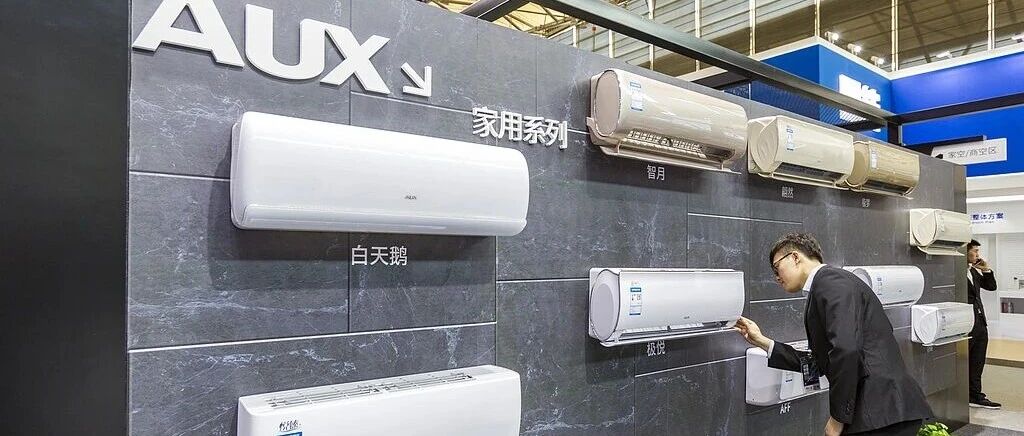
Core Viewpoint - AUX Electric has announced a price adjustment for its central air conditioning products due to significant increases in raw material costs, with price hikes ranging from 6% to 10% effective March 1, 2026 [1]. Group 1: Price Adjustment Announcement - AUX Electric issued a notice regarding price adjustments for 2026, citing a substantial rise in the costs of key raw materials since early 2025 [1]. - The company reported a 40% increase in copper prices, a 20% increase in aluminum prices, and an 80% increase in refrigerant prices, leading to a surge in procurement costs and operational pressure [1]. - Orders placed before February 28, 2026, will still be honored at the original prices, providing a temporary relief for customers [1].
铜价波动藏风险家电企业下好套保先手棋
Zhong Guo Zheng Quan Bao· 2026-02-03 20:27
Core Viewpoint - Recent fluctuations in copper prices indicate a complex interplay between industrial and financial attributes, with short-term price movements influenced more by financial factors than by supply-demand fundamentals [1][2]. Supply and Demand Dynamics - Copper prices have recently experienced volatility, with a notable drop of over 9% to 98,500 yuan/ton on February 2, following a peak of 110,000 yuan/ton on January 30 [1]. - The domestic air conditioning industry consumes approximately 850,000 tons of copper annually, highlighting the metal's critical role in manufacturing [1][3]. - Major copper suppliers face limited short-term production increases, with declining ore grades impacting output, particularly in Chile's Mantoverde mine and Southern Copper [2]. Industry Performance - Despite rising copper prices, leading air conditioning companies have reported revenue growth. For instance, Midea Group achieved a revenue of 363.06 billion yuan in the first three quarters of 2025, a year-on-year increase of 13.82% [3]. - Haier Smart Home reported a revenue of 234.05 billion yuan during the same period, with a net profit increase of 14.68% [4]. Risk Management Strategies - Companies are increasingly engaging in commodity hedging to mitigate the impact of raw material price fluctuations. Midea Group has initiated hedging activities to counteract raw material price volatility [4][5]. - Haier Smart Home plans to conduct hedging for copper, aluminum, and other raw materials, with a contract value not exceeding 5.46 billion yuan [6]. - Research indicates that appliance manufacturers can offset rising raw material costs through price increases, with a 3%-5% price hike potentially covering the impact of copper prices at 105,000 yuan/ton [6].
喜报||格力中央空调赋能某项目节能改造,投建方获批460万元“设备更新”国补资金!
Xin Lang Cai Jing· 2026-02-03 12:47
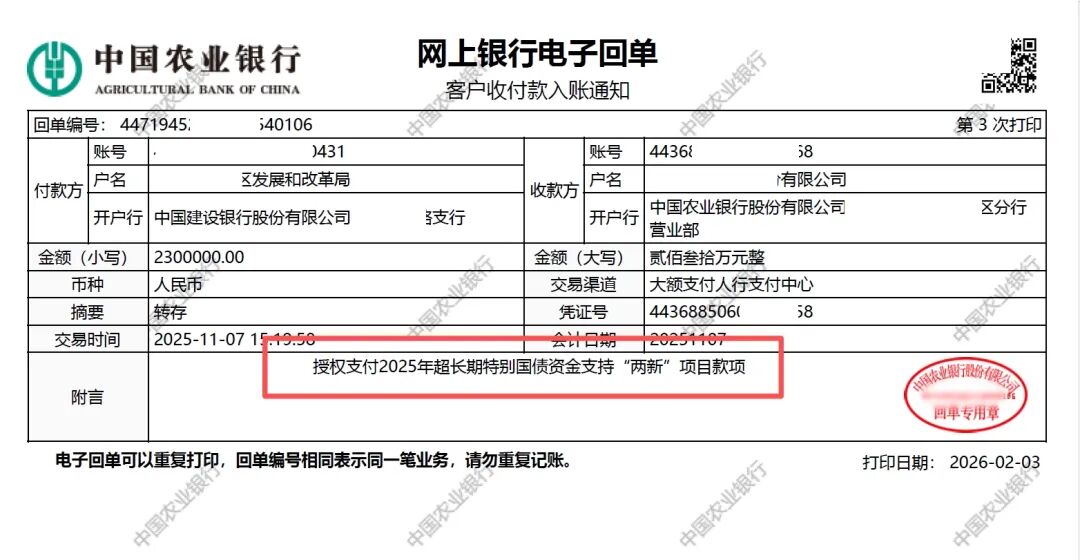
Core Viewpoint - Gree Central Air Conditioning has successfully enabled an energy-saving renovation project that received a government subsidy of 4.6 million yuan, which is 20% of the total investment, under the national "2025 Large-Scale Equipment Update and Consumer Goods Replacement" funding program [1][22]. Group 1: Project Details - The project involves the installation of 10 Gree chillers, including permanent magnet synchronous variable frequency centrifugal chillers, permanent magnet synchronous variable frequency screw chillers, water source heat pump units, and the Gree Taishan high-efficiency machine room control system [1][22]. - After the renovation, the comprehensive energy efficiency ratio (EER) of the chiller room is expected to be greater than or equal to 5.0, with an annual energy saving of 921.3 tons of standard coal [1][22]. Group 2: Government Support and Policy - The national government has allocated 200 billion yuan in long-term special bonds to support large-scale equipment updates, including 16 categories of energy-using equipment, with a maximum subsidy of 20% of the total investment for central air conditioning energy-saving renovations [22][24]. - Gree Central Air Conditioning provides standardized application materials and professional guidance to help partners fully utilize policy benefits and promote energy-saving renovation projects [24]. Group 3: Comprehensive Energy-Saving Services - Gree offers a four-step comprehensive renovation service tailored to address air conditioning operational challenges in different buildings, focusing on water systems, multi-connected units, and air-source heat pump stations [25]. - The company conducts energy efficiency assessments through a systematic approach that includes visual inspections, measurements, and analyses to produce diagnostic reports and evaluate energy-saving potential [27][31]. Group 4: Future Commitment - Gree aims to continue leveraging technological innovation and systematic services to support energy-saving upgrades across various sectors, contributing to green transformation and high-quality economic development in China [42].
奥克斯取得热回收式热泵装置及控制方法专利
Jin Rong Jie· 2026-02-03 02:14
Group 1 - The core point of the article is that Aux Air Conditioning Co., Ltd. has obtained a patent for a "heat recovery heat pump device and its control method," with the patent number CN119393924B and an application date of December 2024 [1] - Aux Air Conditioning Co., Ltd. was established in 2016 and is located in Ningbo City, primarily engaged in other manufacturing industries [1] - The registered capital of Aux Air Conditioning Co., Ltd. is approximately 2.43 billion RMB [1] Group 2 - The company has made investments in 4 enterprises and has participated in 808 bidding projects [1] - Aux Air Conditioning Co., Ltd. holds 13 trademark registrations and has 5,000 patent records [1] - The company possesses 9 administrative licenses [1]
哈空调:公司没有应披露而未披露的事项
Zheng Quan Ri Bao Wang· 2026-02-02 12:41
Group 1 - The company, Hacondition (600202), stated on February 2 that it has no undisclosed matters that should have been disclosed [1]

杨德龙:2026年全球经济形势与投资机遇变化
Xin Lang Ji Jin· 2026-02-01 10:02
Group 1: Economic Trends and Currency Dynamics - The Federal Reserve is expected to continue its interest rate cut cycle into 2026, potentially lowering rates by at least two times, which may lead to a further decline in the US dollar index from around 110 to 97 [1] - The trend of "de-dollarization" is gaining momentum as more countries diversify their reserves away from the US dollar, influenced by the US's use of its currency for sanctions and its high national debt of $38 trillion [2] - The US 10-year Treasury yield has risen to 4.5%, reflecting increased risk premiums, while China's 10-year Treasury yield stands at approximately 1.6% [2] Group 2: Commodity Markets and Resource Management - The US has been stockpiling copper, reaching 400,000 tons, which has contributed to rising copper prices, impacting manufacturing sectors in China [3] - The US's actions in Venezuela, particularly regarding oil resources, highlight its aggressive resource acquisition strategy, which may further destabilize international relations [3] Group 3: Domestic Economic Policies and Growth - China's GDP growth reached 5% last year, but retail sales growth has slowed, indicating a need to boost domestic demand through increased income and investment [3] - The focus of China's economic policy is shifting towards enhancing domestic consumption and reducing overcapacity in traditional industries [3] Group 4: Investment Opportunities in Technology - The 14th Five-Year Plan emphasizes support for technology innovation sectors such as robotics, semiconductors, and quantum technology, which are expected to perform well in 2026 [4] - The capital market is witnessing a shift as residents are moving savings towards the stock market, with a significant amount of deposits maturing and seeking higher returns [5] Group 5: Market Dynamics and Consumer Behavior - The current bull market is expected to positively impact consumer spending, stabilize the housing market, and support the growth of technology firms, potentially leading to the emergence of new industry leaders [6] - The number of new stock accounts opened exceeded 27 million last year, indicating a growing participation in the capital market, which may help offset wealth losses from declining property prices [6]
哈尔滨空调股份有限公司关于控股股东增持股份进展公告
Xin Lang Cai Jing· 2026-01-27 19:59
Core Viewpoint - The announcement details the progress of the share buyback plan by Harbin Air Conditioning Co., Ltd.'s controlling shareholder, Harbin Industrial Investment Group Co., Ltd., which has not yet commenced as of the announcement date [2]. Group 1: Buyback Plan Overview - The controlling shareholder plans to increase its stake in the company by purchasing between 1% and 2% of the total shares within 12 months starting from April 28, 2025, using its own or raised funds through the Shanghai Stock Exchange [2]. - The buyback plan has not been executed yet, primarily due to the need to ensure efficient use of state-owned enterprise funds and to protect the interests of all shareholders, considering market conditions and other factors [2]. Group 2: Implementation Progress - As of the announcement date, more than half of the planned buyback period has elapsed, but no shares have been purchased yet [2]. - The controlling shareholder will proceed with the buyback gradually based on actual market conditions during the implementation period [2]. Group 3: Risks Associated with the Buyback Plan - There are potential risks that could prevent the buyback plan from achieving its intended goals due to changes in the capital market or other unpredictable factors [3]. - The buyback plan will not result in a change of the controlling shareholder or actual controller of the company [4]. - The company confirms that the buyback plan complies with relevant laws and regulations and will not affect the company's stock distribution or listing conditions [4].