scaleX万卡超集群

Search documents
中科曙光产品结构优化归母净利21.13亿
Chang Jiang Shang Bao· 2026-02-26 06:57
Core Viewpoint - Zhongke Shuguang (603019.SH) reported stable growth in its performance for 2025, with revenue reaching 14.97 billion yuan, a year-on-year increase of 13.86%, and a net profit attributable to shareholders of 2.113 billion yuan, up 10.54% year-on-year [1][2]. Financial Performance - The company achieved a net profit of approximately 966 million yuan in the first three quarters of 2025, with the fourth quarter net profit estimated at 1.147 billion yuan, representing a quarter-on-quarter increase of 384% [2]. - The net profit for 2025 is expected to be impacted by asset impairment provisions totaling approximately 329 million yuan, which will reduce the consolidated net profit by about 269 million yuan [3]. AI Sector Development - Zhongke Shuguang has been actively investing in the AI sector, recently integrating major AI models into its SothisAI platform and simplifying the construction and operation processes of enterprise AI platforms [1][7]. - The company launched the first domestic AI computing open architecture and introduced a "thousand-card-level unit" super node in collaboration with over 20 industry chain enterprises [7]. Financial Health - As of September 30, 2025, Zhongke Shuguang reported cash and cash equivalents of 3.841 billion yuan, with short-term borrowings and current liabilities of 229 million yuan and 276 million yuan, respectively [8]. - The total assets of the company amounted to 36.99 billion yuan, with total liabilities of 15.04 billion yuan, resulting in a debt-to-asset ratio of 40.7% [8]. Strategic Initiatives - The company plans to raise up to 8 billion yuan through convertible bonds to fund projects related to advanced computing clusters for AI, next-generation high-performance AI training and inference machines, and domestic advanced storage systems [8].

中科曙光高级副总裁李斌:算力基础设施的成熟标志是“开放”
Jing Ji Guan Cha Wang· 2026-02-12 23:03
Core Insights - The core point of the article is the launch of the national supercomputing internet core node in Zhengzhou, which utilizes the scaleX WanKa super cluster provided by Inspur (中科曙光) to offer over 30,000 AI acceleration cards, marking a significant advancement in domestic computing infrastructure [1][4]. Group 1: Infrastructure Development - The launch of the core node validates the engineering capabilities of domestic computing infrastructure, transitioning from early single-point breakthroughs to large-scale deployment [1]. - The scaleX WanKa super cluster is a product of the "AI Computing Open Architecture" strategy proposed by Inspur, emphasizing collaboration and decoupling among various industry players [4][5]. - The system incorporates advanced technologies such as ultra-high-density blades and immersion phase change cooling, increasing computing density by 20 times and reducing Power Usage Effectiveness (PUE) to 1.04 [4]. Group 2: Market Needs and Compatibility - The market demands efficient, secure, and stable intelligent computing infrastructure, which is essential for the advancement of the AI industry [3]. - The system's open architecture allows for heterogeneous deployment of different brands of domestic acceleration cards and compatibility with mainstream computing ecosystems like CUDA, facilitating broader developer access [5][6]. - This compatibility reduces the barriers for developers and provides users with more choices, aligning with the goal of integrating computing power into industrial workflows [6]. Group 3: Performance and Applications - The WanKa super cluster supports the training and fault recovery of trillion-parameter models, enhancing inference efficiency for major internet companies [7]. - It has contributed to significant advancements in AI for Science, helping domestic material research models achieve top rankings and improving protein research efficiency by 3 to 6 orders of magnitude [7][8]. - The integration of computing power, data, and application scenarios is crucial for transforming technology into a driving force for economic development [8]. Group 4: Future Outlook - Looking ahead to 2026, the intelligent wave is expected to drive the computing industry into a new development cycle, with Inspur committed to an open technological route [8][9]. - The company aims to focus on innovation across the entire value chain, addressing the challenges of heterogeneous computing power and enhancing resource utilization efficiency [9].
中科曙光高级副总裁李斌:算力基础设施的成熟标志是“开放”|2026商业新愿景
Jing Ji Guan Cha Wang· 2026-02-12 16:02
Core Insights - The launch of the national supercomputing internet core node in Zhengzhou marks a significant advancement in domestic computing infrastructure, capable of providing over 30,000 AI acceleration cards [2] - The AI industry has seen a dramatic increase in computational demands, with model parameters growing from millions to trillions, leading to exponential growth in computational requirements [3] - The domestic computing industry has faced structural contradictions, with high demand for stable computing power on one side and severe fragmentation on the supply side [4] Industry Challenges - Different manufacturers have developed their own hardware designs, software stacks, and interconnection protocols, leading to a closed technology route that complicates resource scheduling and increases user migration costs [5] - The market requires efficient, secure, and stable intelligent computing infrastructure [6] Strategic Direction - In 2025, the company proposed an "AI Computing Open Architecture" strategy focused on division of labor and collaboration [7] - The scaleX supercluster launched in Zhengzhou is a product of this strategy, overcoming various technical challenges such as hardware-software optimization and high-density integration [8] Technological Innovations - The scaleX supercluster utilizes ultra-high-density blade technology and immersion phase change cooling, increasing computing density by 20 times and reducing Power Usage Effectiveness (PUE) to 1.04 [8] - The system supports heterogeneous deployment of different brands of domestic acceleration cards and is compatible with mainstream computing ecosystems like CUDA, achieving optimization for over 400 major models [9] Application and Impact - The supercluster can support the training and fault tolerance of trillion-parameter models, enhancing the efficiency of core intelligent business operations for leading internet companies [10][11] - It has significantly improved research efficiency in fields like materials science and protein research, demonstrating the potential of integrated computing, data, and application scenarios to drive economic development [11][12] Future Outlook - The company aims to continue promoting an open, efficient, and secure direction for domestic intelligent computing infrastructure, focusing on innovation across the entire supply chain [13][15] - The emphasis will be on solving the adaptation challenges of heterogeneous computing power and enhancing resource utilization efficiency [13]

国产“大算力”在手,乘胜追击万亿参数大模型?
傅里叶的猫· 2026-02-10 12:05
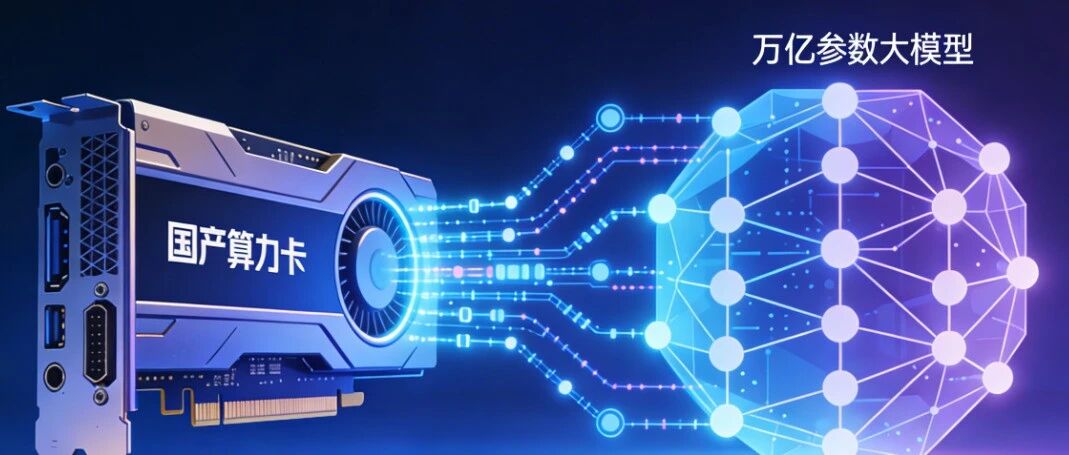
Core Viewpoint - The development of domestic AI computing power is crucial for the evolution of large AI models, with the recent establishment of a significant domestic AI computing pool marking a historical convergence in this field [1][3]. Group 1: Domestic AI Computing Power - The recent "National AI Computing Power Pool" in Zhengzhou has become the largest domestic AI computing pool with a deployment of 30,000 cards, operational as of February 5 [1]. - The demand for large AI models is driving the evolution of domestic computing power towards "ten-thousand card" level computing clusters, as AI models with trillions of parameters are becoming the new standard [3][4]. Group 2: Growth of Large Models - By December 2025, the number of large models registered with China's National Cyberspace Administration is expected to reach 748, with many models exceeding the trillion-parameter scale [4]. - The scaleX ten-thousand card super cluster has been deployed for training trillion-parameter models and high-throughput inference, indicating a significant advancement in AI computing capabilities [4]. Group 3: Challenges and Innovations - Despite the growth of domestic computing power, challenges remain, such as the late start of domestic AI chips compared to NVIDIA GPUs and the need for additional adaptation for open-source models [5]. - The current computing ecosystem is fragmented, with barriers between intelligent computing centers, which limits the performance of domestic computing infrastructure in heterogeneous environments [5]. Group 4: Collaborative Innovation - A consensus is forming around an open collaborative approach in the AI industry, with stakeholders from model vendors and computing infrastructure providers working together on a joint initiative for "domestic large computing power + domestic large models" [6]. - The concept of "open collaboration" is becoming a central theme in the evolution of AI computing in China, potentially leading to a restructuring of competitive rules in the industry [7].
中科曙光拟可转债募资80亿元:算力市场正在发生什么?
经济观察报· 2026-02-10 04:17
Core Viewpoint - The article discusses the recent fundraising efforts by Zhongke Shuguang (603019.SH) to raise up to 8 billion yuan, which reflects the current trends in the computing power market [2][3]. Fund Allocation - The raised funds will be allocated to three main projects: - 3.5 billion yuan for an advanced computing cluster system project focused on artificial intelligence, accounting for 43.75% of the total funds [5][6]. - 2.5 billion yuan for the next-generation high-performance AI training and inference machine project [10]. - 2 billion yuan for a domestic advanced storage system project [5]. Advanced Computing Cluster System - The advanced computing cluster system project aims to enhance AI capabilities, with a reference to the recently launched national supercomputing internet core node in Zhengzhou, which features the largest single domestic AI computing resource pool [7][6]. - The project emphasizes the need for innovative cooling and power supply systems due to the high-density computing environment, which surpasses traditional IT solutions [8]. Next-Generation AI Training and Inference Machine - The investment in the next-generation AI training and inference machine project reflects a shift in the computing power market from pure model training to inference applications [11]. - Industry insiders suggest that 2026 may be a pivotal year for the large-scale deployment of domestic super nodes in inference applications, with increasing competition among companies like Huawei and Muxi [12]. Financial Performance - In the first three quarters of 2025, Zhongke Shuguang reported a revenue of 8.82 billion yuan, a year-on-year increase of 9.68%, and a net profit of 966 million yuan, up 25.55% year-on-year [14].
中科曙光拟可转债募资80亿元:算力市场正在发生什么?
Jing Ji Guan Cha Wang· 2026-02-10 02:19
Core Viewpoint - The leading supercomputer company, Zhongke Shuguang, plans to raise up to 8 billion yuan through a convertible bond issuance to invest in advanced computing projects, reflecting significant changes in the computing power market [2][3]. Funding Allocation - The raised funds will be allocated to three main projects: - 3.5 billion yuan for an advanced computing cluster system project focused on artificial intelligence, accounting for 43.75% of the total funds [4]. - 2.5 billion yuan for the next-generation high-performance AI training and inference machine project [4]. - 2 billion yuan for a domestic advanced storage system project [4]. Market Trends - The investment in the next-generation AI training and inference machine project indicates a shift in the computing power market from pure model training to inference applications [8]. - Industry insiders suggest that the competition for user traffic in the domestic large model market is intensifying, which will reshape AI interaction modes and drive explosive growth in inference-side computing power demand [9]. Technological Challenges - The advanced computing cluster system project will address complex engineering challenges, including cooling and power supply in high-density computing environments, which require interdisciplinary knowledge [5][6]. - The project has achieved a 20-fold increase in computing density through innovative designs, emphasizing the need for a systematic approach to tackle technical challenges [6]. Company Performance - In the first three quarters of 2025, Zhongke Shuguang reported a revenue of 8.82 billion yuan, a year-on-year increase of 9.68%, and a net profit of 966 million yuan, up 25.55% year-on-year [11].
万卡集群点亮中原:国家级“智算样板间”的落地与远见
Xin Lang Cai Jing· 2026-02-09 01:21
Core Insights - Zhengzhou has become a strategic hub for AI computing infrastructure in China with the launch of the first domestic AI computing pool featuring 30,000 AI acceleration cards [1][12] - The deployment of the scaleX supercluster systems marks a significant milestone in the evolution of national supercomputing infrastructure, facilitating AI innovation and ecosystem empowerment [1][12] Infrastructure Development - The transition to the AI era necessitates a profound transformation in infrastructure, driven by explosive growth in demand for AI models and applications [3][14] - The national supercomputing internet aims to create a leading national-level computing facility and service platform, akin to an e-commerce marketplace for computing resources [5][16] Technical Specifications - The scaleX supercluster can provide over 30,000 AI cards for various applications, including AI model training and high-throughput inference [6][16] - The system features advanced technologies such as high-density blade servers and immersion cooling, achieving a power usage effectiveness (PUE) of 1.04 and a 20-fold increase in computing density [7][16] Innovation and Ecosystem - The scaleX supercluster represents a comprehensive innovation in system architecture and engineering, having been operationally deployed just two months after its initial reveal [8][17] - The open architecture of the scaleX supercluster supports compatibility with mainstream software ecosystems and mixed deployments of various AI acceleration cards, fostering collaboration and innovation across the AI industry [10][19] Future Implications - The open architecture approach is expected to lower barriers for users, stimulate innovation, and enable widespread application of AI across various sectors [10][19] - The deployment of the scaleX supercluster is a clear expression of China's path in developing AI infrastructure, balancing self-innovation with openness and inclusivity [12][20]
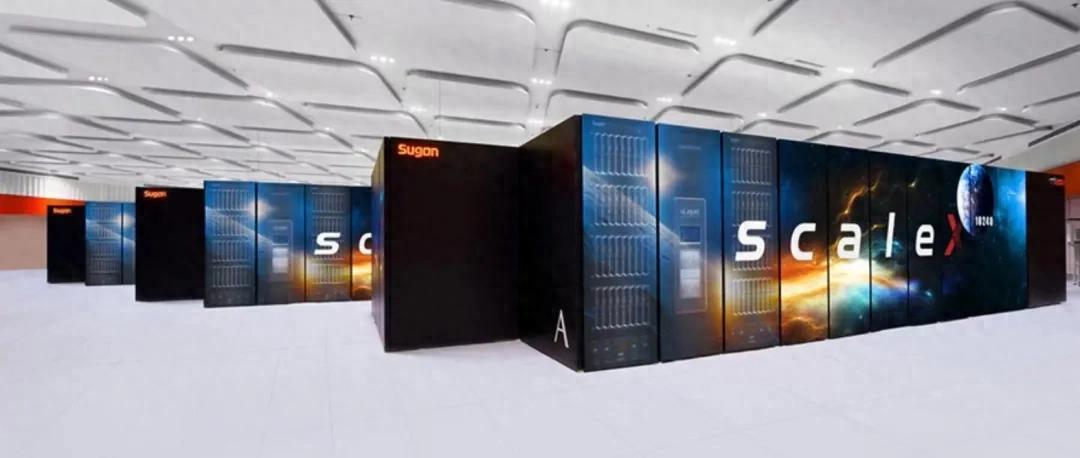
未来智造局|国家超算互联网核心节点上线试运行 3万卡国产AI算力随取随用
Xin Hua Cai Jing· 2026-02-08 07:11
Core Insights - The launch of the national supercomputing internet core node marks a significant milestone in the deployment and practical application of domestic AI computing resources, alleviating the imbalance between supply and demand in computing power [1][2][5] - The core node is part of a major infrastructure initiative aimed at creating a leading national computing infrastructure and service platform to support various fields, including artificial intelligence and digital economy [2][5] - The deployment of the core node, supported by three sets of "Wanka" supercluster systems from Sugon, can provide over 30,000 domestic AI accelerator cards, facilitating large-scale AI computing applications [2][6] Industry Context - The increasing demand for AI-driven innovations has highlighted the shortage of computing resources, which has become a critical bottleneck for industry upgrades [2][8] - The national supercomputing internet aims to address issues such as resource underutilization and inefficiencies in computing resource allocation, enhancing the overall efficiency of computing power distribution [2][5] - The project is expected to create a nationwide integrated computing network, connecting over 30 backbone computing centers and offering nearly 70 types of domestic super-intelligent computing services [5][8] Technological Advancements - Sugon's "Wanka" supercluster systems have achieved significant innovations in performance and efficiency, enabling the support of trillion-parameter AI models and various application scenarios [6][7] - The core node's architecture is designed to be compatible with mainstream software ecosystems, allowing for mixed deployment of various domestic accelerator cards [7] - The supercomputing internet platform is evolving into a marketplace for computing applications, aiming to lower the barriers to access and enhance usability for a wide range of users [8][9] Application and Impact - The core node has already served over 1 million users and processed nearly 196 million jobs, significantly reducing computing costs and facilitating AI innovation [8][9] - The platform is actively engaging with various industries to promote the integration of AI computing resources, with initiatives like the invitation for testing plans to attract diverse applications [9][12] - The first batch of application validation results has been released, showcasing the potential of the supercomputing internet to empower various sectors and drive innovation [12]

国内最大单体AI算力池启用, 超算互联网迈出关键一步
Sou Hu Cai Jing· 2026-02-07 02:33
Group 1 - The core viewpoint of the news is that the launch of the core node in Zhengzhou marks a significant breakthrough in the construction of the national supercomputing internet, paving the way for a nationwide integrated computing power network [2][3][9] - The Zhengzhou core node is the largest single domestic AI computing power resource pool, capable of providing over 30,000 domestic AI computing units and facilitating nationwide resource scheduling and efficient collaboration [3][4] - Zhengzhou aims to become a leading computing power hub, leveraging its geographical advantages to connect eastern and western computing demands, despite not being listed among the top ten computing power centers [3][4] Group 2 - The construction of the supercomputing internet is part of a national strategy initiated in 2023, aiming to enhance the efficiency of computing power utilization and promote the marketization and standardization of computing services [4][6] - There is a growing demand for intelligent computing across various industries, with over 222 billion-level projects expected by 2025, indicating a rapid increase in the need for AI applications [6][10] - The utilization rate of existing intelligent computing centers is only 30%, highlighting a mismatch between supply and demand, which the supercomputing internet aims to address through unified scheduling [8][9] Group 3 - The user base of the national supercomputing internet has surpassed 1 million, connecting over 30 national supercomputing and intelligent computing centers, with more than 7,200 products available [8][9] - The platform has completed 196 million job volumes since its launch, with expectations to expand to over 1,000 service providers and 10,000 products by 2026 [8][9] - The shift from a focus on construction to a balanced approach of construction and application is expected to drive the scale of AI applications [9][10] Group 4 - The demand for high-quality intelligent computing remains strong, with the AI large model solution market expected to reach 3.07 billion yuan by mid-2025, reflecting a 122.1% year-on-year growth [15] - AI applications are increasingly penetrating core business processes across various sectors, including manufacturing, meteorology, and biomedicine, demonstrating the growing reliance on advanced computing power [13][14][15] - The supercomputing internet platform faces challenges in catering to diverse user needs and ensuring compatibility across different AI application models [15]
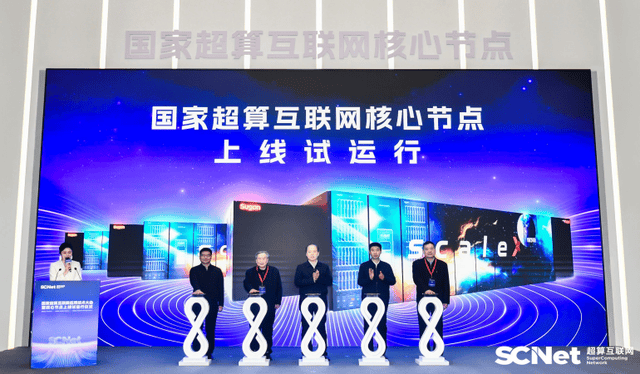
华尔街见闻早餐FM-Radio|2026年2月7日
Sou Hu Cai Jing· 2026-02-07 00:02
Market Overview - US consumer confidence reached a six-month high, driving a rebound in US stocks, with the S&P 500 rising nearly 2%, marking its best single-day gain since May last year. The Dow Jones Industrial Average surpassed 50,000 points for the first time, and the Russell 2000 surged by 3.6% [1] - Nvidia's CEO Jensen Huang stated that AI demand is extremely high, leading to a 7% increase in Nvidia's stock and a 5.7% rise in semiconductor stocks. Software ETFs rebounded by 3.5% [1] - US Treasury yields rose across the board, with the 10-year yield up nearly 3 basis points and the 2-year yield increasing by 5.54 basis points. The US dollar fell by 0.3% during the day but gained 0.56% over the week [1] - After a significant drop on Thursday, cryptocurrencies rebounded sharply on Friday, with Bitcoin soaring by 11% to reclaim the $70,000 mark and Ethereum rising by 11% to surpass $2,000 [1] - Gold and silver experienced a V-shaped recovery, with silver initially plunging 10% before surging 20% from its daily low. Spot gold ultimately rose by nearly 4% [1] Key Developments in China - The People's Bank of China and eight other departments issued a notice prohibiting domestic entities from issuing virtual currencies abroad without approval. The China Securities Regulatory Commission clarified regulatory requirements, banning six types of activities related to virtual currencies [2][18] - The State Council emphasized the need to effectively utilize central budget investments, ultra-long-term special bonds, and local government special bonds to stimulate economic growth [19] - Premier Li Qiang stated that macroeconomic policies should be proactive, with fiscal funds arranged in advance to explore new growth points in domestic demand [20] AI and Technology Developments - A milestone in domestic AI computing power was achieved with the launch of three sets of scaleX superclusters by Inspur, marking the largest AI computing pool in China [4] - Intel and AMD have informed Chinese customers of extended delivery times due to CPU supply shortages, with Intel warning that delivery times could reach up to six months [21] Market Reactions and Trends - Amazon's stock fell by 5.6% after its earnings report, despite a 40% increase in AWS backlog orders to $244 billion. The market reacted negatively to Amazon's projected $200 billion capital expenditure for 2026 [36] - The software sector faced significant declines, with UBS suggesting that the downturn reflects structural challenges due to AI disruption and growth slowdown [27] International Developments - The US and Iran reached a consensus on maintaining dialogue in the latest nuclear negotiations, although specific terms remain contentious [22][29] - Concerns arose over the massive $650 billion investments by tech giants, with Nvidia's CEO defending the sustainability of high spending driven by AI demand [9]