
创新与消费驱动

Search documents
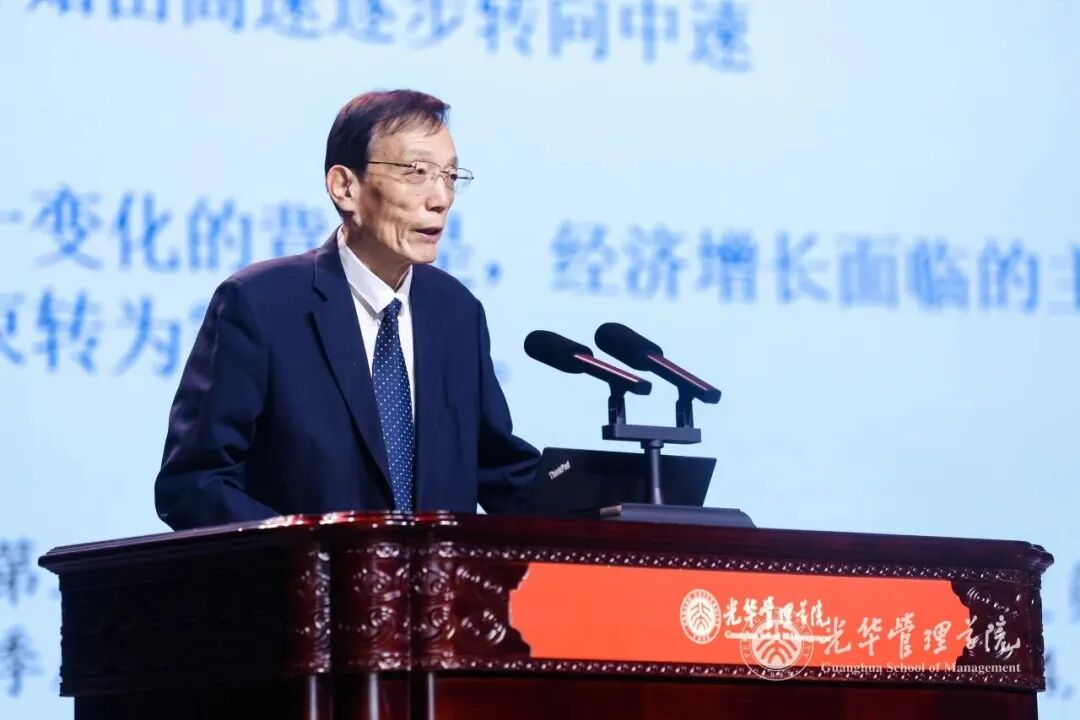
刘世锦:从旧框架转向新框架
Xin Lang Cai Jing· 2026-01-17 13:36
Core Viewpoint - China's economic growth is shifting from investment and export-driven to innovation and consumption-driven, emphasizing the importance of terminal demand in the economic structure [1][3]. Group 1: Economic Transition - The focus should shift from supply-side investment in material capital to demand-side investment in consumption and human capital [1]. - Terminal demand, primarily driven by consumer spending and non-productive investments, is crucial for economic stability and growth [1][2]. - Recent statistics indicate a 2.6% year-on-year decline in fixed asset investment from January to November 2025, with private investment down by 5.3% [1]. Group 2: Human Capital Investment - Emphasis on developing new types of consumption, particularly in services such as education, healthcare, and social security, which are seen as investments in human capital [2][6]. - Enhancing human capital through education and healthcare is essential for sustaining innovation and economic growth [2][6]. Group 3: Innovation and Demand - Economic growth can be understood through two dimensions: height (productivity improvements) and width (demand matching supply) [3]. - Innovation alone cannot replace the need for expanding demand; a stable and growing terminal demand is necessary for translating innovation into economic growth and employment [3]. Group 4: Consumption and Currency Strategy - A new strategy for achieving a balance in imports and exports is recommended, focusing on increasing imports settled in RMB while maintaining export competitiveness [4][8]. - Accelerating the internationalization of the RMB is crucial, with a goal to enhance the currency's global standing and facilitate consumer access to better imported goods [4][9]. - The construction of a strong consumer economy is essential for achieving growth targets and enhancing the quality of life for residents [4][5].

国投证券国投产业研究院执行院长韩晖:中国经济的确定性价值——全球波动中的信心锚
Zheng Quan Shi Bao Wang· 2025-10-27 09:01
Core Insights - The global economy is experiencing significant volatility, with geopolitical risks, high inflation, and rising debt risks impacting growth prospects, while China's economy is seen as a stabilizing force amid these uncertainties [1][7] Economic Performance - China's GDP growth for the first three quarters of 2025 is projected at 5.2%, with quarterly growth rates of 5.4%, 5.2%, and 4.8% respectively, indicating resilience compared to other major economies [2] - High-tech manufacturing investment increased by 8.1% year-on-year, and the core industries of the digital economy accounted for over 10% of GDP, reflecting a shift towards innovation and consumption-driven growth [2] Policy Framework - The continuity and foresight of macroeconomic policies are crucial for China's economic stability, with a focus on high-quality development and structural reforms [3] - Active fiscal policies have led to the issuance of over 3.5 trillion yuan in special bonds, targeting infrastructure, technological innovation, and green transformation [3] Foreign Investment - The negative list for foreign investment in manufacturing has been cleared, and approximately 30,000 new foreign-invested enterprises were established in the first half of 2025, showing an 11.7% year-on-year increase [4] - Despite a 15.2% decline in actual foreign investment to around 423.2 billion yuan, there is a trend of higher quality foreign investment in high-tech sectors [4] International Cooperation - China is actively participating in global governance through high-level openness and international cooperation, particularly in green energy and digital infrastructure [5] - The country aims to enhance its role as a provider of global public goods, with a focus on new areas such as carbon trading and green finance [5] Future Outlook - The 14th Five-Year Plan period is critical for China to achieve middle-income status, with goals for R&D investment intensity at 3.3% and a significant increase in the digital economy's contribution to GDP [6] - The focus will be on regional integration, industrial upgrading, and green transformation as key drivers of growth, while maintaining high-quality development to address external shocks [6] Conclusion - In an era of increasing global volatility, China's economic stability is expected to become more prominent, serving as a stabilizer for domestic growth and a confidence anchor for the global economy [7]