创造即消费

Search documents
App 开始消失
投资界· 2026-03-03 07:35
Core Viewpoint - The article argues that the software era is ending, with AI applications like OpenClaw replacing traditional apps and services, leading to a shift towards a "create-to-consume" economy [3][7][10]. Group 1: Impact of OpenClaw - OpenClaw has significantly reduced the number of apps on users' devices by providing personalized services that replace traditional applications, such as fitness coaching and news aggregation [5][6]. - Users are increasingly relying on OpenClaw for various tasks, indicating a trend where traditional software is being replaced by AI-driven solutions [6][10]. Group 2: The "Create-to-Consume" Economy - The concept of "create-to-consume" suggests that users will directly interact with AI to generate personalized services instead of purchasing pre-existing products [8][10]. - This shift is driven by advancements in AI programming, which have transformed the role of AI from a tool for developers to a service provider for all users [9][10]. Group 3: Evolution of Software Consumption - The article posits that traditional apps will not disappear but will evolve into data interfaces and service nodes that support AI applications [10][11]. - The emergence of AI agents will change consumer habits from downloading apps to creating personalized services through AI interactions [11][16]. Group 4: Maker Economy and Community Innovation - The rise of the maker economy is highlighted, where individuals can create and share tools, leading to new revenue models based on usage rights rather than software sales [13][14]. - OpenClaw exemplifies this trend by fostering a community-driven innovation environment, similar to the early days of 3D printing [11][14]. Group 5: OpenClaw's Role in the AI Ecosystem - OpenClaw is positioned as a central hub in the AI ecosystem, connecting various agents and services, akin to an operating system in the PC era [16]. - The focus of OpenClaw is on service consumption rather than developer efficiency, aiming to meet the direct needs of users without requiring them to understand programming [15][16].

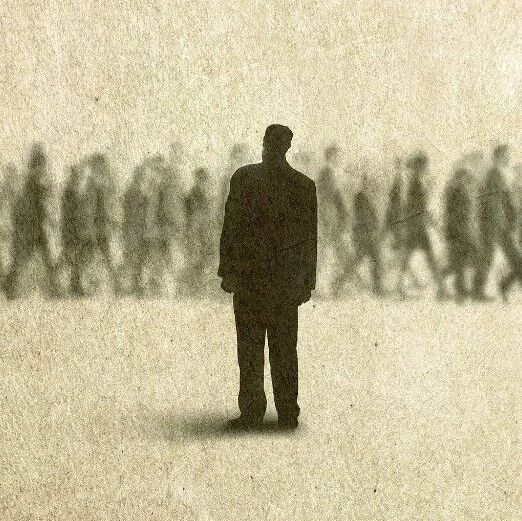
App开始消失,我们正在进入一个「不会用软件」的时代
36氪· 2026-03-02 10:17
Core Viewpoint - The article discusses how AI, particularly through tools like OpenClaw, is transforming the software landscape by replacing traditional applications with personalized AI assistants, leading to a shift from purchasing software to creating customized services through AI interactions [5][14][50]. Group 1: Impact of AI on Software Consumption - OpenClaw has led to a significant reduction in the number of apps on users' devices, as it can perform multiple functions traditionally handled by separate applications, such as fitness coaching and news aggregation [5][7][8]. - The emergence of AI tools like OpenClaw signifies a shift towards a "create instead of consume" model, where users interact with AI to generate personalized services rather than purchasing pre-existing software [14][28][50]. - The role of traditional apps is evolving; they are becoming data interfaces and service nodes rather than direct user interaction points, as users increasingly rely on AI agents to fulfill their needs [28][30][31]. Group 2: Evolution of AI Programming - The article highlights a significant transformation in AI programming, where the capabilities of models like Claude Opus 4.6 and GPT-5.3-Codex have shifted the narrative from AI as a tool for developers to AI as a self-sufficient entity that can accomplish tasks for users [15][19][21]. - This change allows ordinary users to access advanced functionalities without needing to understand programming, as AI tools handle the complexity behind the scenes [22][25][50]. Group 3: Maker Economy and Community Innovation - The rise of the Maker economy is emphasized, where individuals can create and share tools, leading to new economic models based on the sharing of AI-generated resources and templates [32][41]. - OpenClaw is positioned as a catalyst for this Maker economy, enabling users to generate tools and services that can be monetized, thus fostering a community-driven innovation ecosystem [33][36][41]. Group 4: OpenClaw as a Central Hub - OpenClaw is described as an "operating system" for the AI era, connecting various agents and services, and facilitating a new way of interacting with technology [52][53]. - The article draws parallels between the current landscape of AI tools and the early days of personal computing, suggesting that OpenClaw could redefine how users engage with technology in a more integrated and personalized manner [54][55].