利率波动性

Search documents
特朗普没有“速战速决”!全球市场直面“伊朗冲击”,焦点是“持续时间”
华尔街见闻· 2026-03-02 02:27
Core Viewpoint - The ongoing military conflict involving the U.S. and Israel against Iran has escalated, with significant implications for global oil prices and market dynamics, particularly in the context of the Strait of Hormuz and energy supply disruptions [1][5][10]. Group 1: Military Conflict and Market Impact - President Trump's recent statements indicate a commitment to continue military actions against Iran until all objectives are met, suggesting a prolonged conflict [1]. - Goldman Sachs warns that the duration of the conflict has become a critical variable influencing oil, gold, and U.S. stock market trends, replacing the initial outbreak of hostilities as the primary concern [5][10]. - The potential for a significant increase in oil prices (10%-15%) is anticipated if markets reopen, with Brent crude possibly exceeding $80 per barrel [3]. Group 2: Strait of Hormuz and Oil Supply - The Strait of Hormuz, a vital passage for approximately 20% of global oil transport, has not been physically closed, but shipping volumes have significantly decreased due to market fears and self-imposed pauses [2][4]. - Current shipping disruptions are attributed to insurance companies withdrawing coverage and industry pauses in response to U.S. Navy requests, rather than direct actions from Iran or military strikes on oil infrastructure [2][4]. Group 3: Economic and Inflation Concerns - Goldman Sachs highlights the risk of a return to the "2022 energy shock scenario," which could lead to persistent inflationary pressures and complicate monetary policy for central banks [6][9]. - The current macroeconomic environment shows structural changes in inflation dynamics, with high fiscal spending and AI investment contributing to elevated inflation expectations [7][8]. Group 4: Asset Class Implications - For commodities, Goldman Sachs suggests that if commodity price increases become sustainable, the market will shift from a simple risk-hedging approach to a more complex interplay of inflation, growth, and distribution factors [12][13]. - In the equity market, the outlook is predominantly negative, with significant impacts expected only from severe and prolonged oil supply disruptions [14]. - The foreign exchange market may favor the U.S. dollar and Japanese yen as preferred safe-haven assets amid rising oil prices and supply shocks [16].

沃什提名效应降温?交易员押注美联储年内仅降息两至三次
Zhi Tong Cai Jing· 2026-02-11 00:43
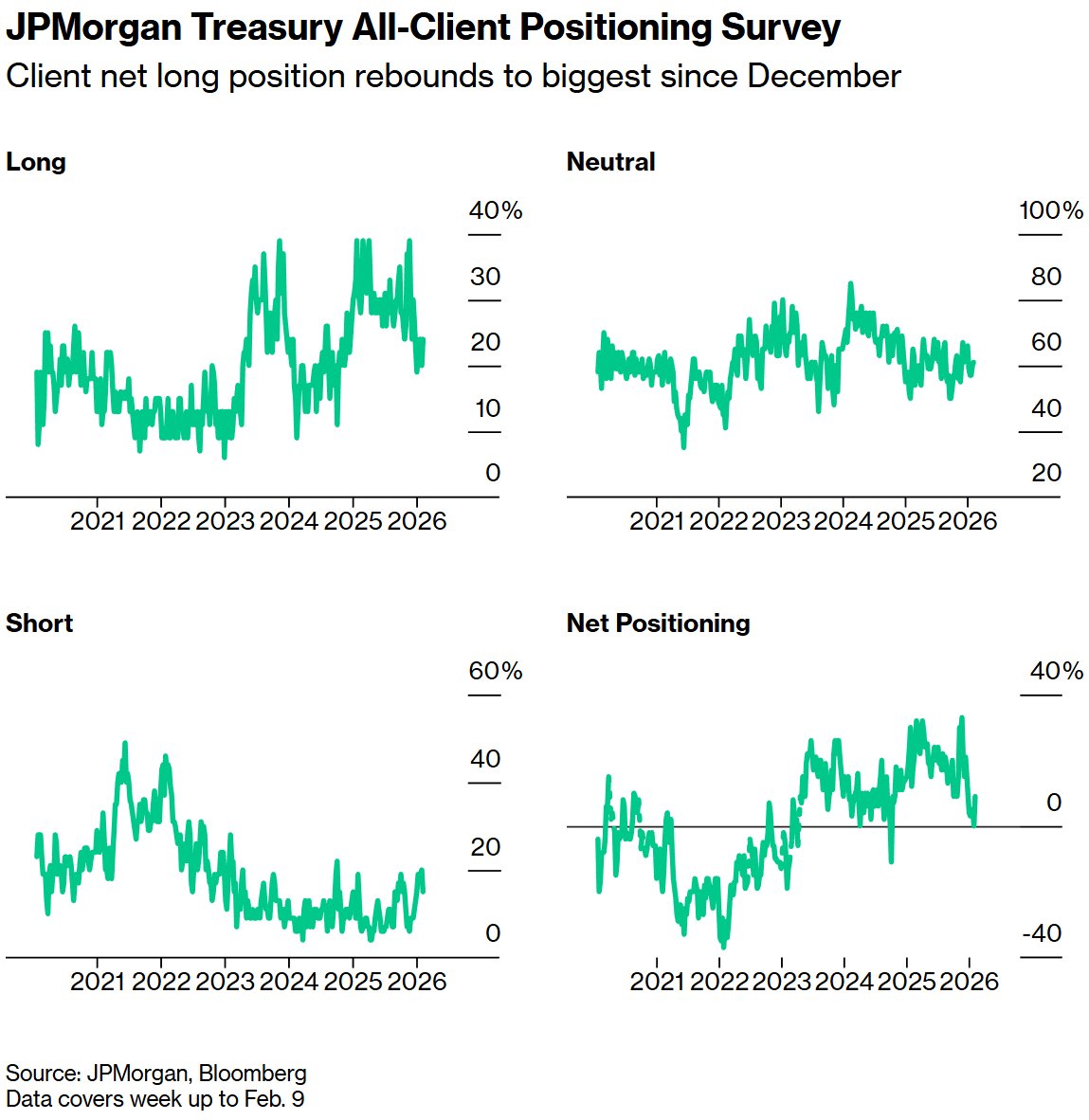
Core Viewpoint - Short-term interest rate traders are increasingly betting that the Federal Reserve will only cut rates two to three times this year, which could yield returns for these positions [1][2]. Group 1: Market Sentiment and Positioning - Following President Trump's nomination of Kevin Warsh as Fed Chair, traders have been buying positions anticipating a dovish shift from the Fed, although current bets appear conservative ahead of key employment data [1][2]. - The swap market currently estimates a 30% chance of a third 25 basis point rate cut this year, with the likelihood of two cuts before the September meeting nearly fully priced in [2]. - After the release of weaker-than-expected retail sales data, U.S. Treasury yields fell to their lowest levels in a month, indicating a shift towards a more dovish outlook [3]. Group 2: Options Market Activity - There has been strong demand for bullish options linked to the Secured Overnight Financing Rate (SOFR), particularly for options expiring in March and June 2026, indicating investor expectations for potential rate cuts [10][12]. - The most active strike price in the options market remains at 96.50, with significant open interest in both call and put options, reflecting a growing interest in hedging against rate movements [12]. - Recent trading highlights include structures aimed at achieving up to three rate cuts, with notable activity around the 96.75 strike price [10]. Group 3: Investor Strategy - Investors are seeking long-duration exposure to hedge against a more dovish Fed, but do not expect aggressive rate cuts beyond two to three additional reductions [1][2]. - Barclays strategists noted an increase in interest rate volatility following Warsh's nomination, with investors favoring long bond positions [1].
非农今夜来袭,将验证一个关键押注:美联储今年真会“克制降息”吗?
Xin Lang Cai Jing· 2026-02-10 23:46
Core Viewpoint - Following the nomination of Kevin Warsh as the new Federal Reserve Chairman by President Trump, market expectations for monetary easing initially surged, but the sentiment has shifted towards a more cautious outlook, with traders now betting on only two to three rate cuts by 2026 [1][4]. Group 1: Market Reactions - Traders are forming a consensus that if the Federal Reserve only cuts rates two to three times this year, their positions will be profitable [1]. - There is a demand for "hawkish options" linked to the Secured Overnight Financing Rate (SOFR), which indicates expectations for two or three 25 basis point cuts by the Federal Reserve in 2026 [1][5]. - The options market has seen increased activity, particularly ahead of the critical January non-farm payroll report, which is expected to reveal a weakening or stagnating U.S. labor market [2][5]. Group 2: Economic Indicators - The swap market pricing indicates a 30% probability of a third 25 basis point cut this year, with two cuts nearly fully priced in by the September meeting [2][5]. - Recent weak retail sales data has further strengthened the market's shift towards dovish expectations [2][5]. - U.S. Treasury prices rose on the back of retail data, leading to the lowest yields in a month [3][6]. Group 3: Federal Reserve Leadership - Market speculation suggested that Warsh would likely follow Trump's calls for rate cuts upon taking over from Powell, but persistent high inflation and some hawkish Federal Reserve policymakers may prevent aggressive rate cuts [3][6]. - If confirmed by the Senate, Warsh will officially take over the Federal Reserve before the June policy meeting [3][6].
资金大迁徙!逃离“泡沫化”AI债券,华尔街巨头悄然涌入MBS避风港
智通财经网· 2025-12-01 23:28
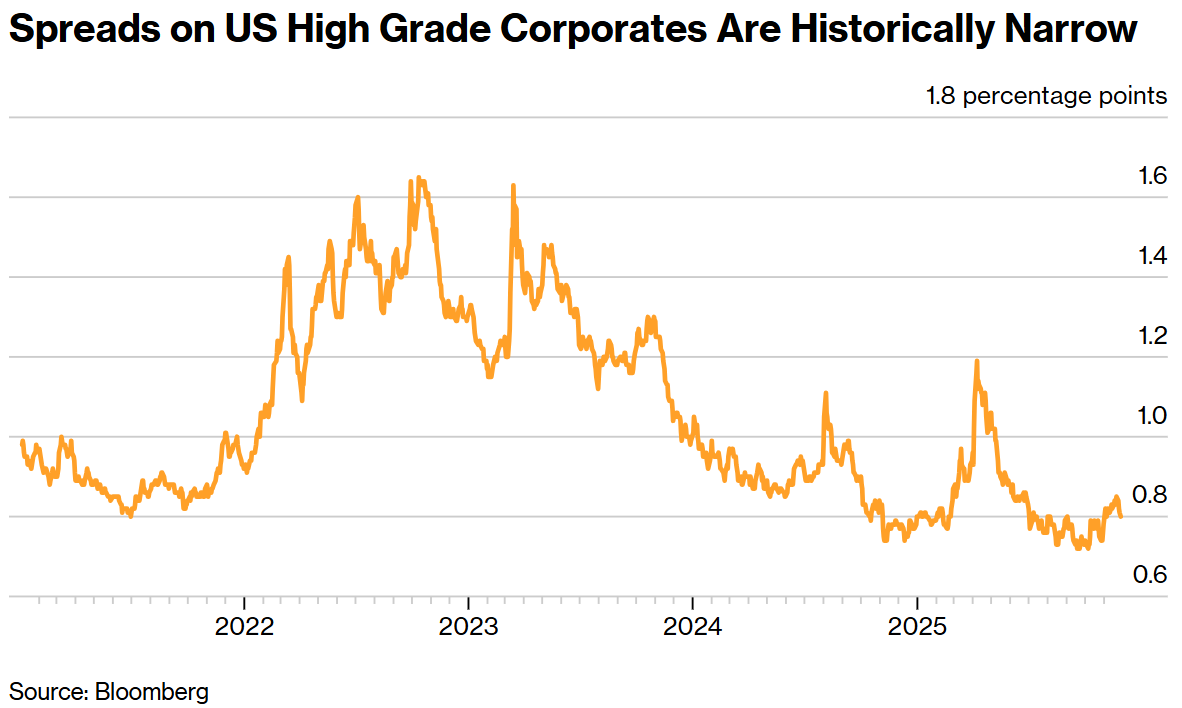
Core Viewpoint - Investment firms, including Columbia Threadneedle, are closely monitoring U.S. mortgage-backed securities (MBS) as a refuge from the high valuations of U.S. corporate bonds and a wave of tech bond issuances that may impact returns [1] Group 1: Corporate Bond Market - JPMorgan strategists predict that the total issuance of U.S. investment-grade bonds, excluding refinancing, could exceed $800 billion in 2026, representing a net increase of approximately 54% from this year [1] - The majority of this issuance is expected to come from tech companies investing in artificial intelligence infrastructure, such as data centers [1] - JPMorgan anticipates that the spread of U.S. high-grade corporate bonds will widen by about 0.15 percentage points in 2026 due to the large volume of issuances [1] Group 2: Mortgage-Backed Securities (MBS) - MBS are projected to deliver the strongest returns in two decades, with the Bloomberg U.S. MBS Index rising by 8.35% as of last Friday, the best performance since 2002 [1] - Morgan Stanley notes that while corporate bond supply is increasing, the net supply of MBS may only see a slight rise next year due to high home prices and mortgage rates suppressing home buying activity [5] - Demand for MBS is expected to be stronger, particularly from real estate investment trusts (REITs) that are purchasing more MBS due to high valuations of their stocks [5] Group 3: Investment Strategies - Columbia Threadneedle's investment manager, Alex Christensen, indicates a gradual shift towards MBS as long-term investment-grade bond spreads fail to provide sufficient buffer against various risks, including increased issuance and deteriorating fundamentals [6] - Some investors are reallocating funds from corporate bonds to other securitized debt products, seeking higher yields [6] - Loomis Sayles' portfolio manager, Brian Kennedy, is focusing on bonds that offer higher yields than MBS, such as mortgage obligations and bonds backed by franchise fees, while attempting to minimize interest rate risk [6]