利用影响力受贿

Search documents
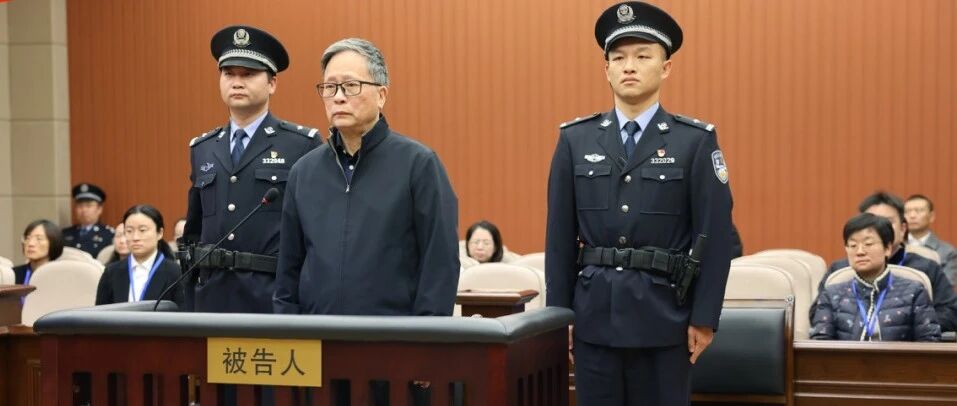
受贿数额特别巨大,苏增添被判死缓
中国能源报· 2025-12-05 14:53
Core Viewpoint - The court sentenced Su Zengtian, former Vice Chairman of the Fujian Provincial People's Congress, to death with a two-year reprieve for bribery, abuse of power, and using influence for bribery, highlighting the severity of his crimes and the significant losses incurred to the state and public interests [2][4]. Summary by Sections Criminal Activities - From 1996 to 2023, Su Zengtian utilized his positions in various governmental roles to provide assistance to related entities and individuals in matters such as company listings and project contracts, illegally accepting bribes totaling approximately 1.65 billion RMB [3]. - Between 2019 and 2024, after leaving office, he continued to exploit his former authority to gain improper benefits for others, receiving bribes amounting to around 3.356 million RMB [3]. - During his tenure as Vice Governor and Mayor of Fuzhou from 2010 to 2011, he made illegal decisions to sell land at low prices and reduce land value fees, resulting in significant losses to state assets [3]. Court's Ruling - The Ningbo Intermediate People's Court determined that Su Zengtian's actions constituted severe bribery and abuse of power, with particularly large amounts involved and a notably negative social impact, warranting a death sentence [4]. - The court acknowledged mitigating factors such as his confession and the return of illicit gains, allowing for a suspended death sentence for the bribery charge and a lighter penalty for the influence-related bribery charge [4].

利用影响力受贿还是斡旋受贿
Zhong Yang Ji Wei Guo Jia Jian Wei Wang Zhan· 2025-10-29 00:20
Core Viewpoint - The article discusses the legal distinctions between two forms of bribery in China: "intermediary bribery" and "influence bribery," highlighting the nuances in their definitions and applications under the law [1][2][3]. Group 1: Legal Definitions - Intermediary bribery occurs when a state worker uses their position to facilitate benefits for a third party, while influence bribery involves close associates of state workers leveraging their relationships to gain benefits [1][2]. - The key difference lies in the nature of the relationship between the parties involved; intermediary bribery is strictly between state workers, whereas influence bribery can involve non-state workers as well [1][3]. Group 2: Case Analysis - The case presented involves two individuals, A and B, who have a professional relationship and a history of working together, leading to a request for assistance in a project that resulted in a bribe [2][4]. - There are differing opinions on how to classify the actions of A, with some arguing for ordinary bribery, others for influence bribery, and a third perspective supporting intermediary bribery based on the nature of A's position and actions [3][4]. Group 3: Judicial Interpretation - The Supreme People's Court has clarified that "using one's position" can include both direct authority and indirect influence through professional relationships [4][5]. - The analysis of the case suggests that A's actions were primarily influenced by their official position rather than personal relationships, supporting the classification of the behavior as intermediary bribery [5][6].
刘满仓被提起公诉
中国基金报· 2025-08-29 03:18
Core Viewpoint - The article discusses the investigation and prosecution of Liu Mancang, a former high-ranking official in Henan Province, for serious corruption charges including bribery and abuse of power [2][3][6]. Group 1: Investigation and Charges - Liu Mancang is accused of using his various official positions to gain illegal benefits for others and accepting substantial bribes, with the amounts being particularly large [3][6]. - The investigation was concluded by the National Supervisory Commission and the case was transferred to the Suzhou Municipal People's Procuratorate for prosecution [2][3]. Group 2: Background and Career - Liu Mancang held multiple significant positions, including Secretary of the Shangqiu Municipal Committee, Vice Governor of Henan Province, and Deputy Director of the Standing Committee of the Henan Provincial People's Congress [6][7]. - His career spanned several decades, with notable roles in local and provincial government, culminating in his position as Deputy Director of the Henan Provincial People's Congress until 2018 [7]. Group 3: Disciplinary Actions - Liu was expelled from the Communist Party and stripped of his benefits due to severe violations of party discipline and laws, including engaging in superstitious activities and accepting gifts and money [4][6]. - The decision to expel him was made by the Central Commission for Discipline Inspection and was based on his persistent misconduct after the 18th National Congress of the Communist Party [6].

三堂会审丨准确认定违规从事营利活动违纪和受贿犯罪
Zhong Yang Ji Wei Guo Jia Jian Wei Wang Zhan· 2025-08-27 01:34
Core Points - The case involves Li, who used his position to help his sister secure engineering projects, resulting in profits of 1.25 million yuan for her [3] - Li's actions were classified as a violation of discipline, leading to his expulsion from the party and public office [4] - The court sentenced Li to 11 years and 6 months in prison for bribery, with a fine of 700,000 yuan [5] Summary by Sections Basic Case Facts - Li served as the Party Secretary and Chairman of Company B, a state-owned enterprise, from 2020 to 2022 [3] - He facilitated his sister's partnership in projects, resulting in her earning 1.25 million yuan [3] - Li received a total of 8.04 million yuan in illegal benefits through his position [3] Investigation Process - The investigation began on May 8, 2024, with Li being placed under detention on May 10, 2024 [4] - The case was transferred to the People's Procuratorate for prosecution on August 8, 2024 [4] - Li was expelled from the party and public office on September 12, 2024 [4] Court Proceedings - The People's Procuratorate filed charges against Li on September 30, 2024 [5] - The first-instance court sentenced him on February 17, 2025, and he appealed the decision [5] - The second-instance court upheld the original ruling on June 9, 2025 [6] Legal Analysis of Actions - Li's actions were deemed a violation of discipline for using his position to benefit his sister [10] - The distinction between bribery and violation of discipline was discussed, with Li's case not constituting bribery due to lack of intent to receive bribes [10] - The legal framework for defining bribery and violations of discipline was outlined, emphasizing the need for intent and the nature of the benefits received [9][13] Joint Bribery Considerations - The case also examined the concept of joint bribery, where Li and his sister were found to have conspired to receive benefits [15] - The court determined that the benefits received by Li were a result of their collusion, thus constituting joint bribery [16] Profit Distribution Analysis - The discussion included whether profits exceeding Li's investment share should be counted as bribery [17] - The court concluded that the excess profits were indeed part of the bribery scheme, as they were linked to Li's misuse of his position [21]