
共同受贿

Search documents
三堂会审丨违反廉洁纪律与受贿行为交织如何辨别
Zhong Yang Ji Wei Guo Jia Jian Wei Wang Zhan· 2026-02-25 00:16
Core Viewpoint - The case of Li Moumou highlights the intertwining of disciplinary violations and criminal activities among party members, particularly focusing on the misuse of power for personal gain through bribery and business dealings [2][4][5]. Group 1: Case Background - Li Moumou, a member of the Communist Party since November 1987, held various leadership positions in state-owned enterprises [3]. - From 2012 to 2023, Li utilized his position to gain benefits for others, receiving illegal payments totaling over 16.49 million yuan [5]. - In July 2021, Li invested 1.2 million yuan in an environmental company, acquiring a 30% stake, but the company did not yield profits by the time of the investigation [4]. Group 2: Legal Proceedings - The investigation into Li's misconduct began on September 19, 2023, leading to his detention and subsequent extension of the detention period [8]. - On March 13, 2024, Li was expelled from the Party and removed from public office, with the case being forwarded for prosecution on March 21, 2024 [9]. - On July 2, 2024, the prosecution was initiated against Li for multiple charges, including bribery and abuse of power, resulting in a combined sentence of 14 years in prison and fines totaling 2.15 million yuan [10]. Group 3: Bribery and Business Operations - Li's actions of soliciting 1.2 million yuan from a businessman for investment in a company were analyzed under the lens of bribery, with differing opinions on the nature of the crime [12][13]. - The consensus determined that Li's request for funds constituted bribery rather than a legitimate investment partnership, as the funds were used to facilitate his business interests [14][16]. - Li's use of the bribe for business operations was deemed a violation of disciplinary regulations, regardless of the source of the funds [18][19]. Group 4: Influence and Collusion - The case also examined the involvement of Li's relatives in the bribery scheme, with findings suggesting a collaborative effort in the bribery process [20][21]. - The legal framework distinguishes between direct bribery and collusion, emphasizing the need for shared intent and actions between Li and his relatives in the bribery activities [22][23].

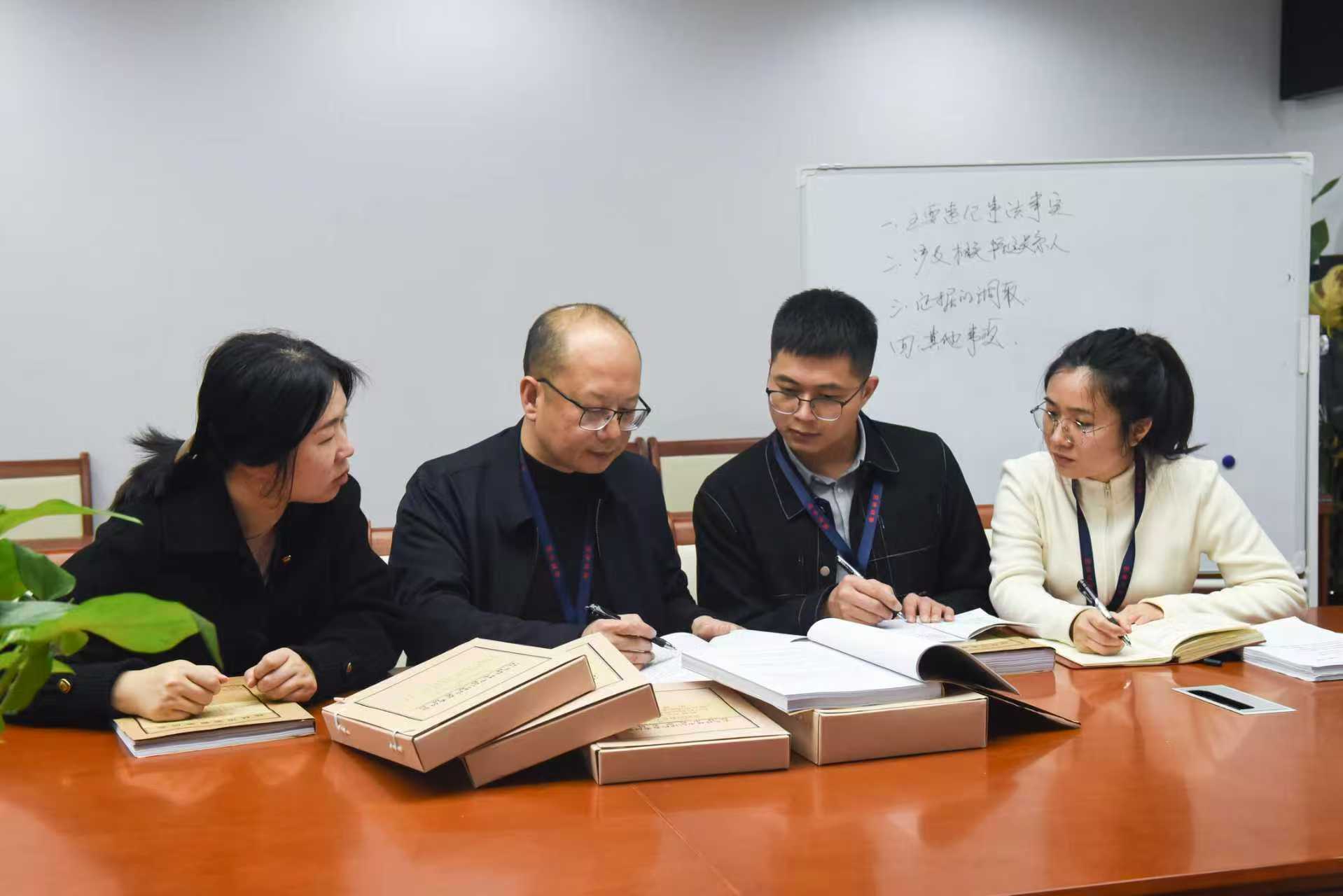
三堂会审丨受贿并对抗组织审查如何认定
Zhong Yang Ji Wei Guo Jia Jian Wei Wang Zhan· 2025-11-25 23:55
Core Points - The article discusses the case of a former hospital director, Yu, who was involved in bribery and corruption, highlighting the importance of party loyalty and the consequences of violating political discipline [5][17]. Group 1: Case Background - Yu, a former director of a hospital, was found guilty of accepting bribes totaling 7.34 million RMB from 2014 to 2021 while in office [5]. - The investigation into Yu's misconduct began in July 2023, leading to his expulsion from the party and the cancellation of his retirement benefits in January 2024 [6][8]. Group 2: Bribery Details - In 2016, Yu conspired with a private entrepreneur, Zhu, to accept a bribe of 200,000 RMB from a medical equipment company in exchange for facilitating a project at the hospital [9][12]. - Yu and Zhu were found to have a clear agreement on the distribution of the bribe, indicating a joint effort in the bribery scheme [10][12]. Group 3: Legal Proceedings - The case was formally prosecuted in February 2024, resulting in Yu being sentenced to 13 years in prison and fined 1 million RMB [8][17]. - The court determined that both Yu and Zhu constituted a joint bribery offense, with the total bribe amount being 200,000 RMB [12][22]. Group 4: Debt Forgiveness as Bribery - Yu also accepted a debt forgiveness of 1 million RMB from another businessman, Shang, which was deemed a form of bribery rather than a legitimate loan [18][22]. - The analysis concluded that Yu's actions reflected a clear intent to receive benefits through the cancellation of the debt, thus constituting bribery [19][22].
三堂会审丨准确认定违规从事营利活动违纪和受贿犯罪
Zhong Yang Ji Wei Guo Jia Jian Wei Wang Zhan· 2025-08-27 01:34
Core Points - The case involves Li, who used his position to help his sister secure engineering projects, resulting in profits of 1.25 million yuan for her [3] - Li's actions were classified as a violation of discipline, leading to his expulsion from the party and public office [4] - The court sentenced Li to 11 years and 6 months in prison for bribery, with a fine of 700,000 yuan [5] Summary by Sections Basic Case Facts - Li served as the Party Secretary and Chairman of Company B, a state-owned enterprise, from 2020 to 2022 [3] - He facilitated his sister's partnership in projects, resulting in her earning 1.25 million yuan [3] - Li received a total of 8.04 million yuan in illegal benefits through his position [3] Investigation Process - The investigation began on May 8, 2024, with Li being placed under detention on May 10, 2024 [4] - The case was transferred to the People's Procuratorate for prosecution on August 8, 2024 [4] - Li was expelled from the party and public office on September 12, 2024 [4] Court Proceedings - The People's Procuratorate filed charges against Li on September 30, 2024 [5] - The first-instance court sentenced him on February 17, 2025, and he appealed the decision [5] - The second-instance court upheld the original ruling on June 9, 2025 [6] Legal Analysis of Actions - Li's actions were deemed a violation of discipline for using his position to benefit his sister [10] - The distinction between bribery and violation of discipline was discussed, with Li's case not constituting bribery due to lack of intent to receive bribes [10] - The legal framework for defining bribery and violations of discipline was outlined, emphasizing the need for intent and the nature of the benefits received [9][13] Joint Bribery Considerations - The case also examined the concept of joint bribery, where Li and his sister were found to have conspired to receive benefits [15] - The court determined that the benefits received by Li were a result of their collusion, thus constituting joint bribery [16] Profit Distribution Analysis - The discussion included whether profits exceeding Li's investment share should be counted as bribery [17] - The court concluded that the excess profits were indeed part of the bribery scheme, as they were linked to Li's misuse of his position [21]
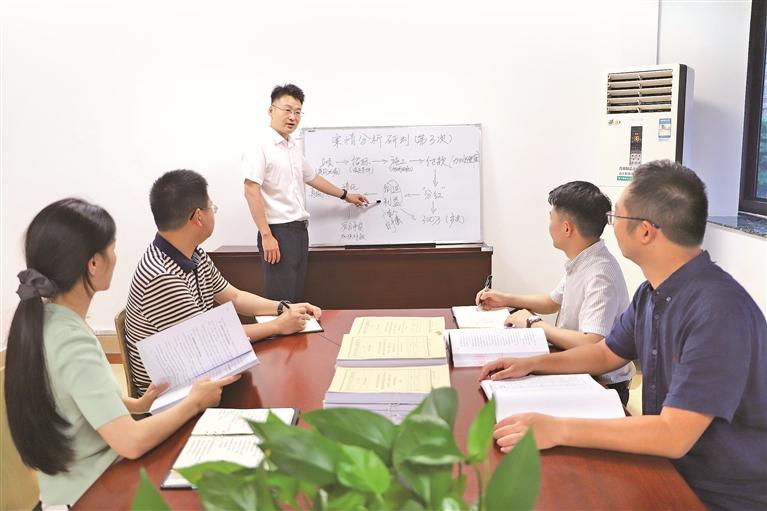
以案明纪释法丨准确识别以“咨询服务费”为名行权钱交易之实
Zhong Yang Ji Wei Guo Jia Jian Wei Wang Zhan· 2025-07-16 00:30
Core Viewpoint - The article discusses the emergence of new forms of corruption, particularly focusing on the case of a public official who facilitated a consulting company to disguise illicit financial transactions under the guise of legitimate consulting services [1][5]. Summary by Sections Basic Case Facts - Li, a director at the A Province Market Supervision Administration, helped his associate Wang establish a consulting company to improve Wang's financial situation [2]. - Wang's company, B, was set up to provide consulting services related to standardization, but it lacked the necessary expertise and resources [3]. Nature of Services Provided - B Company did not deliver genuine consulting services as per the contracts signed with project applicants, leading to additional costs for those applicants to seek real consulting services elsewhere [3][11]. - The services provided were superficial and did not meet the standards of legitimate consulting practices, indicating that B Company was essentially a "shell company" [10][12]. Legal Opinions and Analysis - There are differing opinions on whether Li and Wang's actions constitute legitimate business operations or corruption. The second opinion, which is favored, argues that their actions were a coordinated effort to disguise bribery under the pretense of consulting services [5][6]. - The establishment of B Company was primarily for the purpose of facilitating bribery, as evidenced by the lack of genuine business operations and the nature of the services provided [9][10]. Criminal Implications - Li and Wang's actions are classified as joint bribery, as they conspired to use the consulting company as a front for receiving illicit payments [13][14]. - The total amount received by Wang, approximately 9 million yuan, is considered to be part of the bribery scheme, with Li having a general awareness of the financial transactions involved [15][16].
特定关系人明知系贿款仍帮助接收保管行为的定性
Zhong Yang Ji Wei Guo Jia Jian Wei Wang Zhan· 2025-05-28 00:50
Core Viewpoint - The case highlights the complexities of defining the legal status of specific relations involved in bribery, particularly focusing on the actions of Wang and Chen in the context of bribery and potential money laundering [1][2][3][4][5] Group 1: Bribery and Legal Implications - Chen's actions clearly constitute bribery as he used his official position to assist Company B in securing a project, subsequently facilitating the transfer of benefits to Wang, who is his son-in-law [2][5] - There are differing opinions on Wang's legal culpability; one view suggests he does not meet the criteria for joint bribery due to lack of direct involvement in the initial bribery scheme, while another view argues that he acted in concert with Chen, thus constituting joint bribery [2][5] Group 2: Money Laundering Considerations - Wang's actions do not align with the criteria for money laundering, as his intent was not merely to conceal the source of illicit funds but to actively participate in the receipt and management of the bribe [3][4] - The involvement of Wang was crucial in completing Chen's bribery act, indicating that his actions were part of the bribery rather than a separate money laundering offense [4][5] Group 3: Conspiracy and Collaboration - The concept of "conspiracy" in this context can occur either before or during the bribery act; Wang's knowledge of the bribe's nature and his actions to facilitate it suggest a collaborative effort with Chen [5] - Wang's engagement in signing false contracts and investment agreements under Chen's direction indicates a clear understanding of the bribery scheme, thus supporting the argument for joint bribery [5]
三堂会审丨单位受贿还是共同受贿
Zhong Yang Ji Wei Guo Jia Jian Wei Wang Zhan· 2025-05-06 23:51
Core Viewpoint - The case involves范某某, who utilized his position to engage in bribery and embezzlement, resulting in significant financial gains for himself and others involved in the scheme [3][4][7]. Group 1: Bribery Details - From 2009 to 2024,范某某 received over 2.47 million yuan in bribes from company representatives, leveraging his official capacity to benefit them in securing municipal projects [3][4]. -范某某 and other officials conspired to receive over 1 million yuan in cash under the guise of "overtime pay" and "performance bonuses," with范某某 personally obtaining 270,000 yuan [3][8]. - The funds received were not for the benefit of the public institution but were distributed among the conspirators, indicating a clear intent to profit personally [9][10]. Group 2: Embezzlement Activities -范某某 engaged in embezzlement by misappropriating public funds, including 250,000 yuan through unauthorized use of hotel accounts and restaurant cards [4][16]. - He manipulated project funds, directing 90,000 yuan to a hotel account for personal use, with only a portion being used for legitimate business expenses [5][17]. - The embezzlement was characterized by a deliberate concealment of funds, indicating a clear intent to misappropriate public resources for personal gain [16][18]. Group 3: Legal Proceedings - The investigation into范某某 began on May 13, 2024, leading to his detention and subsequent legal actions, including expulsion from the party and prosecution for bribery and embezzlement [6][7]. - On March 7, 2025, the court sentenced范某某 to a total of seven years in prison and imposed fines totaling 600,000 yuan for his crimes [7][8]. - The legal proceedings highlighted the distinction between bribery and embezzlement, with the court recognizing范某某's actions as primarily embezzlement due to the nature of the funds involved [16][17].
