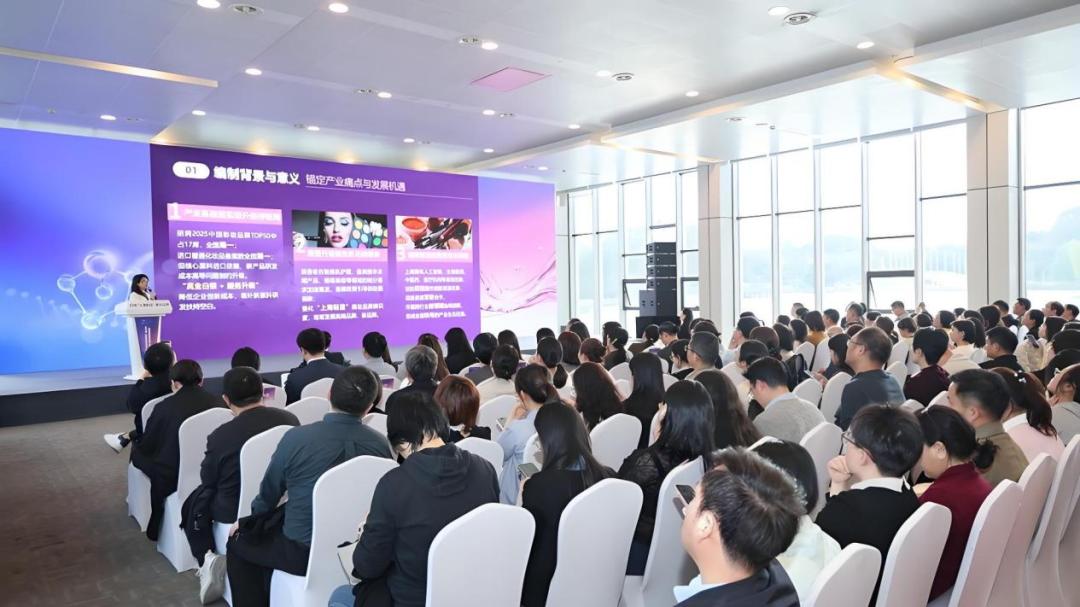
化妆品产业升级

Search documents
政策多维赋能化妆品产业高质量发展
Zheng Quan Ri Bao· 2025-11-19 16:13
Core Viewpoint - The National Medical Products Administration (NMPA) has issued opinions to deepen cosmetic regulation reform and promote high-quality industry development, emphasizing innovation support and streamlined registration channels for new cosmetic products [1][2]. Group 1: Regulatory Changes and Industry Support - The NMPA's opinions include six targeted measures to enhance innovation support, facilitate new product launches in China, and promote the development of the silver economy in cosmetics [1]. - The opinions aim to create a systematic path for the healthy development of the cosmetics industry, addressing consumer demands for health and personalized beauty [1][3]. Group 2: Market Growth and Challenges - China's cosmetics market is projected to reach a total transaction value of 1,073.82 billion yuan in 2024, with a year-on-year growth of 2.8%, and domestic brands holding a market share of 55.2% [2]. - Despite rapid growth, challenges such as insufficient innovation capabilities and lagging brand development persist within the industry [2]. Group 3: Innovation and Transformation - The industry is forming a comprehensive support system for the cosmetics sector, focusing on innovation and consumer demand, which will enhance regulatory frameworks and promote sustainable development [3]. - Companies are actively seeking transformation and new growth opportunities, with raw material innovation becoming a key focus area [3][4]. Group 4: Digitalization and New Business Models - Digital technology is driving quality improvement and efficiency, exemplified by the strategic partnership between Proya Cosmetics and Ant Group to enhance consumer experience through AI and digital solutions [4]. - The integration of beauty and tourism is being explored, as seen with the launch of "Natural Hall Future Beauty City," which combines beauty science, product display, and immediate consumption [4]. Group 5: Recommendations for Industry Players - Companies are encouraged to pursue multiple avenues for upgrading, including green packaging, strengthening brand culture, and expanding international market presence to seize development opportunities [4].
重磅 | 国药监“新24条”,绘出中国美妆从大到强的路线图
FBeauty未来迹· 2025-11-17 12:49
Core Viewpoint - The article discusses the release of the "Opinions on Deepening Cosmetic Regulation Reform to Promote High-Quality Development" by the National Medical Products Administration, which outlines 24 reform opinions and 48 specific measures aimed at modernizing the regulatory system and upgrading the cosmetic industry in China by 2035 [4][5][21]. Group 1: Reform Objectives - The document aims to achieve a regulatory system that meets international advanced standards by 2035, enhancing the innovation capacity and global competitiveness of the cosmetic industry [4][21]. - It sets a two-step goal: by 2030, to improve regulatory frameworks and risk management systems, and by 2035, to fully modernize the regulatory approach [21][22]. Group 2: Key Reform Areas - Encouraging innovation by establishing fast-track review channels for new efficacy cosmetics and supporting the development of products for the elderly [6][13]. - Optimizing registration and filing management to enhance service efficiency, including simplifying documentation and establishing a collaborative review mechanism [7][25]. - Strengthening production and operational supervision to build a risk prevention system, including differentiated regulatory measures based on risk levels [8][27]. - Solidifying technical support to modernize regulatory capabilities, including enhancing the review and inspection workforce and promoting the use of artificial intelligence [10][31]. - Promoting international alignment to enhance global competitiveness, including reducing animal testing requirements and improving the adaptability of raw materials [11][30]. Group 3: Highlights of the Reform - Establishing a fast-track review mechanism for new efficacy products to stimulate research and development [13][16]. - Positioning China as a global launch site for new products by removing barriers to international product launches [14][16]. - Focusing on the "silver economy" by encouraging the development of cosmetics tailored for the elderly [15][16]. - Implementing electronic label trials to enhance consumer experience and support sustainable development [15][16]. - Improving the quality management system within three years to address industry weaknesses [18][24]. Group 4: Industry Context - The Chinese cosmetic market is projected to exceed 1 trillion yuan by 2024, becoming the largest global market, with over 2.3 million product registrations as of October 2025 [18][24]. - Despite rapid growth, the industry faces challenges such as insufficient innovation capabilities and a lagging quality management system [18][19][24]. - The article emphasizes the need for a modernized regulatory framework to address these challenges and enhance the industry's competitiveness on a global scale [20][22].


第一家市值500亿的本土美妆公司要出在上海?
3 6 Ke· 2025-11-06 00:26
Core Viewpoint - Shanghai is positioning itself as a leader in the cosmetics industry through the introduction of significant policies aimed at fostering high-quality development and innovation in the sector [1][5][14]. Group 1: Policy Measures - Shanghai released the "Measures for Further Promoting High-Quality Development of the Cosmetics Industry," which includes financial support of up to 30 million yuan for each project [1][5]. - The policy focuses on four key areas: technological innovation, service system innovation, ecological development, and industrial layout optimization, with 11 targeted initiatives to cultivate high-end and emerging brands [5][14]. - The measures include substantial financial support for innovative raw materials, with up to 2 million yuan for new registered raw materials and 500,000 yuan for new filed raw materials [5][14]. Group 2: Development Goals - Shanghai aims to cultivate one enterprise with a market value of 50 billion yuan, two enterprises with a market value of 10 billion yuan, and twelve enterprises with a production value exceeding 1 billion yuan within three years [7][8]. - The current highest market value for domestic beauty companies is held by Maogeping at approximately 38.27 billion yuan, followed by Juzhibio and Shangmei, both below 40 billion yuan [10][11]. Group 3: Competitive Landscape - The competition among major cities in China's cosmetics industry is intensifying, with Shanghai, Guangzhou, and Hangzhou being the primary contenders [2][11]. - Hangzhou has emerged as a strong competitor due to its e-commerce advantages and favorable business environment, housing top domestic brands like Proya and Maogeping [2][11]. - Shanghai's local beauty companies include Shangmei and Shanghai Jahwa, while brands like Lin Qingxuan and Natural Hall are targeting the Hong Kong stock market for IPOs [2][10]. Group 4: Industry Trends - The Chinese cosmetics market is experiencing a shift towards brand-driven and high-end products, with domestic brands capturing a growing market share [11][12]. - The market size for Chinese cosmetics is projected to be approximately 774.65 billion yuan in 2024, with domestic brands accounting for 55.74% of sales [11]. - Shanghai is actively developing live-streaming and cross-border e-commerce to enhance its competitive edge in the beauty sector [13][14]. Group 5: Regional Strategies - Different districts in Shanghai are focusing on specific segments of the cosmetics industry, such as functional skincare and AI integration in beauty health [14][15]. - The Jing'an district aims to create a billion-level beauty health industry cluster by 2028, attracting local beauty companies and establishing partnerships with major players [14][15].