北极资源争夺

Search documents
全球第二大国家将与第四大国家合并?一旦成功,领土比俄罗斯还大
Sou Hu Cai Jing· 2026-02-18 06:25
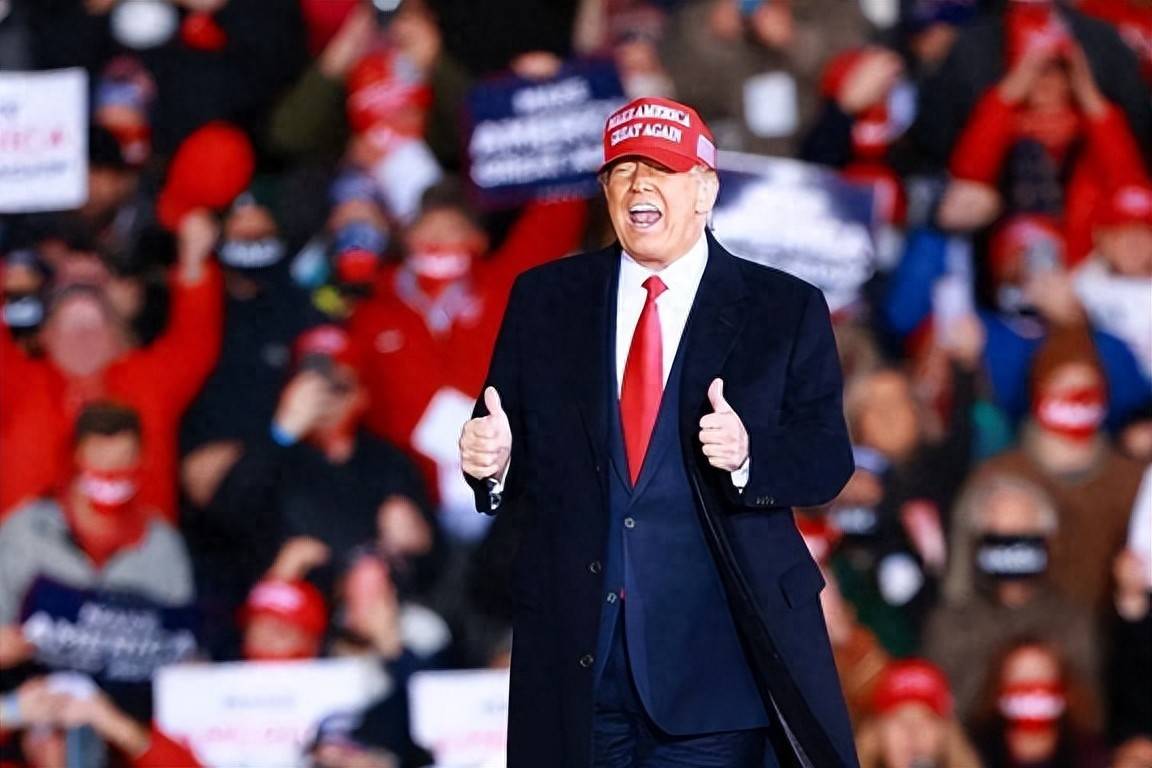
Core Viewpoint - The proposal by former President Trump to make Canada the 51st state of the U.S. stems from discussions with Canadian Prime Minister Trudeau, primarily focused on trade and tariffs, suggesting that joining the U.S. could alleviate economic pressures from high tariffs [1][3]. Group 1: Economic Implications - Trump argues that if Canada were to join the U.S., it could help reduce the U.S. debt burden and eliminate import tariffs, thereby enhancing U.S. energy independence [5][11]. - Canada’s economy is heavily reliant on the U.S. market, with 90% of its exports going to the U.S., which Trump believes provides leverage to impose tariffs [11][18]. - The merger would significantly increase the U.S. economic scale, potentially surpassing Europe and solidifying its status as a superpower [16][22]. Group 2: Political Reactions - Canadian officials, including Trudeau and former Bank of Canada Governor Mark Carney, have firmly rejected the proposal, emphasizing Canada’s sovereignty and political independence [3][7]. - The Canadian Parliament has engaged in heated debates regarding national sovereignty, with a consensus that it is non-negotiable [11][15]. - Trump's comments have sparked a strong backlash in Canada, with many viewing the proposal as an insult to their national identity [7][20]. Group 3: Historical Context - The idea of annexing Canada has historical roots, dating back to the War of 1812, but Canada has since established itself as a strong independent nation [13][22]. - The historical context of U.S.-Canada relations highlights a long-standing alliance, yet the current proposal has raised tensions and concerns about sovereignty [13][20]. Group 4: Future Outlook - The renegotiation of the USMCA in 2026 will be crucial, as Trump may seek to modify or abolish existing agreements, putting further pressure on Canada [22]. - Canada is pivoting towards Pacific trade partners to reduce reliance on the U.S., indicating a strategic shift in its economic policy [18][20]. - The ongoing trade conflict, despite the absence of military confrontation, underscores the fragility of U.S.-Canada relations and the potential for future disputes [18][22].

特朗普加税吓退德国,加拿大访华之后态度大变,计划出兵格陵兰岛
Sou Hu Cai Jing· 2026-01-20 12:20
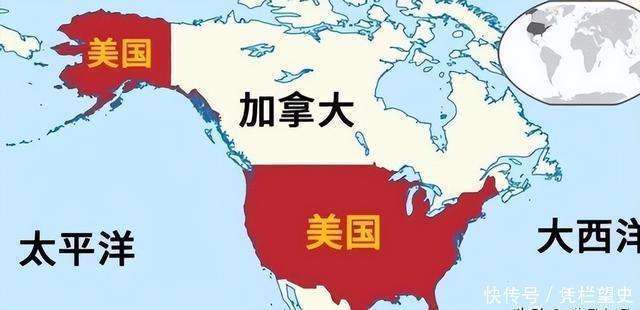
Core Viewpoint - The geopolitical struggle over Greenland has intensified, with Trump's tariff threats aimed at European allies, raising questions about the motivations behind such actions and the implications for U.S. dominance in international relations [1][3]. Group 1: U.S. Actions and Implications - Trump's imposition of a 10% tariff on European allies, with a potential increase to 25%, represents a shift from traditional trade practices to economic coercion, reflecting a transactional approach to international relations [3]. - The withdrawal of a small German contingent in response to U.S. pressure symbolizes Europe's struggle against American hegemony, highlighting a sense of helplessness and compromise among traditional allies [3][5]. - The U.S. strategy appears to treat Greenland as a commodity, raising concerns about the future of U.S. leadership and the trust among traditional allies as unilateral policies gain traction [7][9]. Group 2: Canada's Strategic Position - Canada’s decision to send troops to Greenland for military exercises is a calculated move to support Denmark and assert its role in Arctic affairs, emphasizing the importance of regional security [5][7]. - This action aims to strengthen ties with European allies and enhance Canada’s presence in the transatlantic alliance, showcasing a shift from being perceived as a U.S. subordinate to an independent actor [5][7]. - Canada's proactive stance in the Arctic is seen as a strategic maneuver to secure a voice in future resource competitions, indicating a broader geopolitical shift in the region [7][9]. Group 3: Future Geopolitical Landscape - The competition for influence in the Arctic is expected to escalate, with various powers vying for control and redefining the rules of engagement in the region [9]. - The evolving dynamics suggest that the U.S. dominance may face challenges, prompting a reevaluation of international relationships and strategies among nations [9].
法国、德国、瑞典、挪威、芬兰、荷兰、英国,都出兵了
中国基金报· 2026-01-17 16:06
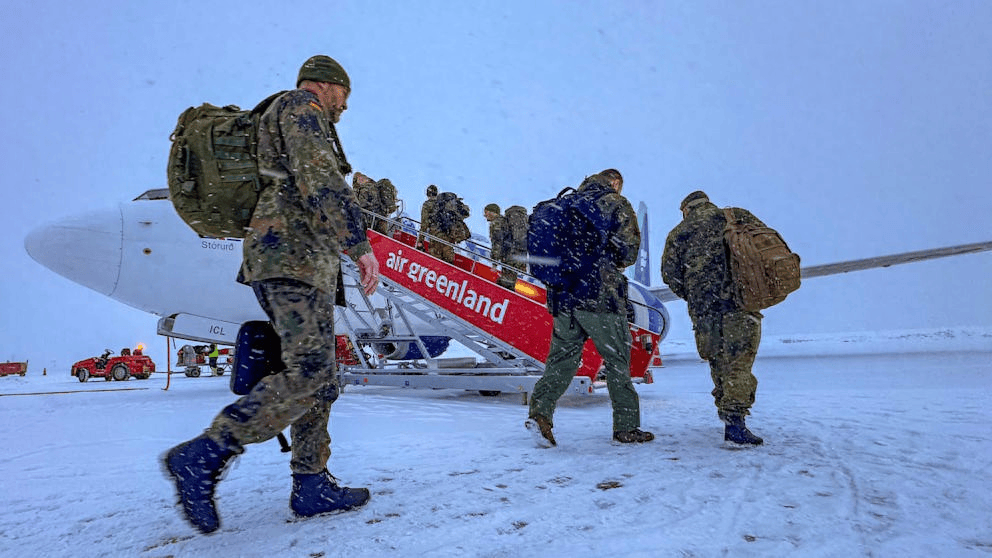
Group 1 - European countries, including France, Germany, and the UK, have announced troop deployments to Greenland for the "Arctic Endurance" military exercise initiated by Denmark, signaling a strengthened military posture [1][2] - The troop numbers from these countries are minimal, with France sending 15 soldiers, Germany 13, and other nations contributing even fewer personnel [1][2] - The European nations' military presence is seen more as a political gesture rather than a significant military contribution, reflecting their reliance on NATO and the U.S. for defense [3][4] Group 2 - The U.S. administration, represented by White House Press Secretary, downplayed the European troop deployments, stating it would not affect U.S. ambitions regarding Greenland [3] - Analysts suggest that the European troop movements are intended to support Denmark and signal to the U.S. but lack the military capability to challenge U.S. interests in the region [3][4] - Greenland is rich in natural resources, including oil and minerals, which are crucial for various industries, making it a strategic asset in the context of U.S. interests and military strategy [4]

一图梳理:美国强索格陵兰岛惹众怒,北约内讧|图览天下
Zhong Guo Xin Wen Wang· 2026-01-10 02:59
Core Viewpoint - The article discusses the recent controversial statements made by U.S. President Trump regarding Greenland, indicating a desire for the U.S. to acquire the territory, which has sparked strong opposition from several European countries, emphasizing that Greenland belongs to its people and that only Denmark and Greenland have the authority to decide on matters concerning it [1]. Group 1: U.S. Intentions and Reactions - President Trump has threatened that the U.S. "absolutely needs Greenland" and mentioned the possibility of using military options to acquire it [1]. - The U.S. Secretary of State Rubio stated that the government's goal is to purchase Greenland from Denmark, clarifying that this does not imply a military invasion [1]. - European nations, including Denmark, France, Germany, Italy, Poland, Spain, and the UK, have expressed strong opposition to the U.S. claims, asserting that Greenland's future is a matter for its people and Denmark to decide [1][1]. Group 2: Historical Context and Implications - The U.S. has a historical precedent for attempting to acquire Greenland, as evidenced by President Truman's 1946 proposal to buy the island for $100 million, which was rejected by Denmark [1]. - The potential U.S. control over Greenland could create significant tensions within NATO, as it would challenge the alliance's principles and the sovereignty of member states [1][1]. - The article highlights that Greenland is considered a "non-sale item" by its people and that any attempt by the U.S. to seize control would violate international norms and the United Nations Charter [1][1].

真要出兵打?特朗普重磅宣布:美国将很快变成一个更大的国家
Sou Hu Cai Jing· 2025-11-23 05:38
Core Viewpoint - Trump's statements regarding territorial expansion, including the incorporation of Canada as the 51st state, regaining control of the Panama Canal, and purchasing Greenland, have shocked the world and are seen as exaggerated rhetoric rather than feasible actions [1][4][11]. Group 1: Canada - Trump has repeatedly suggested that Canada should merge with the U.S. to avoid high tariffs, especially during trade tensions, which escalated when he raised tariffs to 25% [3][11]. - Despite Trump's claims, 90% of Canadians prefer to continue paying high taxes rather than becoming part of the U.S., indicating strong national sentiment against such proposals [4]. - The Canadian government has maintained strict border controls, and Trump's threats have not resulted in any actual changes to the status quo [4][11]. Group 2: Greenland - Trump views Greenland as strategically important due to its resources and location, but Denmark has firmly rejected any notion of selling the territory, asserting it belongs to the Greenlandic people [4][6]. - Following Trump's comments, Denmark increased its defense budget and military presence, demonstrating a strong response to perceived threats [4][6]. - The local elections in Greenland showed a significant rise in support for parties opposing Trump's views, further solidifying Greenland's status as a Danish territory [4]. Group 3: Panama Canal - Trump argues that the U.S. should regain control of the Panama Canal, claiming it was built by the U.S. and criticizing current tolls, while the Panamanian government has firmly stated that the canal is their territory [6][11]. - Despite Trump's rhetoric, U.S. naval operations continue to comply with existing agreements, and the canal's revenue has reached new highs, with Chinese companies still operating key ports [6][11]. - Trump's threats regarding the canal have not led to any tangible outcomes, reinforcing the notion that his statements are more about negotiation tactics than actual policy changes [6][11]. Group 4: Global Perception and Strategy - Global media interpret Trump's rhetoric as a revival of imperialistic attitudes, suggesting he is applying 19th-century thinking to 21st-century issues, which is increasingly viewed as outdated [8][9]. - The international community, particularly Arctic nations, has become more cautious of U.S. intentions, with Canada moving closer to the EU and Latin American countries growing wary of U.S. actions [9][11]. - Trump's approach appears to be a strategy to leverage extreme statements for negotiation advantages, as evidenced by his use of the 51st state proposal to pressure Canada into trade concessions [11][13].