北美销售

Search documents
美国关税重创墨西哥汽车业,中国车企趁机抄底,特朗普急眼了!
Sou Hu Cai Jing· 2026-02-18 06:48
Core Viewpoint - Mexico is cautiously accepting the expansion of Chinese automotive companies, following a more welcoming stance from Canada, which presents a challenge for the U.S. as Chinese brands extend their reach into North America [1] Group 1: Market Dynamics - Mexico ranks as the 4th largest exporter and 7th largest producer of light vehicles globally, heavily reliant on the U.S. market, with projections indicating that 2.8 million out of 4 million vehicles produced in 2024 will be exported to the U.S. [3] - The Nissan-Mercedes-Benz plant in Aguascalientes, Mexico, is a target for acquisition by Chinese automotive firms, with the plant's production capacity historically underutilized at less than 60% [3] - The plant's closure is part of Nissan's broader strategic realignment, influenced by tariffs imposed by the U.S. on Mexican-made vehicles [3][4] Group 2: Impact of Tariffs - The imposition of a 25% tariff on Mexican-made vehicles by the Trump administration has significantly impacted Mexico's automotive industry, leading to a projected decline in exports to the U.S. by nearly 3% in 2025 [3][4] - If current tariffs persist, Mexico could see a more substantial drop in automotive exports by 2026, resulting in the loss of approximately 60,000 jobs in the automotive sector by 2025 [4] Group 3: Chinese Automotive Expansion - Chinese automotive brands are rapidly expanding globally, with projections indicating that by 2025, their total global sales will reach 30.42 million vehicles, surpassing Japan for the first time [5] - In Mexico, the market share of Chinese automotive brands is expected to rise from 0% in 2020 to nearly 10% by 2025, positioning Mexico as a strategic hub for Chinese companies targeting the North American market [5] Group 4: Geopolitical Considerations - Mexican officials are concerned that a successful acquisition by Chinese firms could provoke a strong reaction from the U.S., leading to private discussions about delaying such investments until trade negotiations with the U.S. are concluded [5][6] - Recent tariff adjustments by Mexico, aimed at balancing trade deficits, have strained economic relations with China, despite the intention to boost domestic production [6]


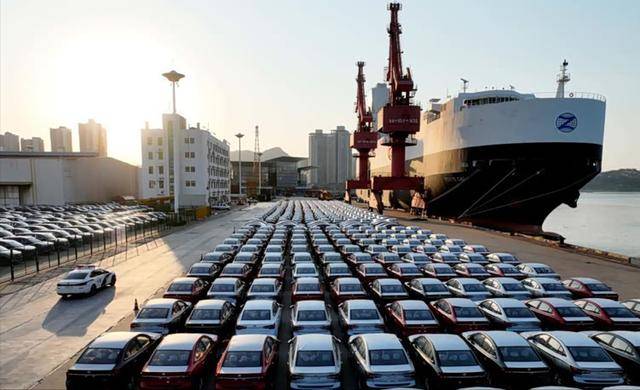
中国车企,正加快进军美国左邻右舍
财富FORTUNE· 2026-02-15 13:04
Core Viewpoint - Mexico is cautiously accepting the expansion of Chinese automotive companies in the country, following a more welcoming stance from Canada, which presents a challenge for the U.S. as Chinese automotive brands extend their industrial layout into neighboring territories [1]. Group 1: Chinese Automotive Companies' Expansion - Two major Chinese automotive companies have reached the final selection stage to bid for the Nissan-Mercedes-Benz factory in Mexico [3]. - A total of four Chinese automotive companies are involved in the bidding process, but they have not disclosed any information regarding the matter [4]. - The Nissan-Mercedes-Benz factory in Aguascalientes, Mexico, has a designed annual capacity of 230,000 vehicles but has never operated at full capacity, with a utilization rate below 60% [4]. Group 2: Impact of Tariffs on the Mexican Automotive Industry - Mexico is the world's fourth-largest exporter and seventh-largest producer of light vehicles, heavily reliant on the U.S. market, with 2.8 million out of 4 million vehicles produced in 2024 expected to be exported to the U.S. [4]. - The imposition of a 25% tariff on cars produced in Mexico by the Trump administration has led to a projected decline of nearly 3% in exports to the U.S. by 2025 [4]. - The chairman of the Mexican Automotive Industry Association (AMIA) warned that if current tariffs persist, exports to the U.S. could see a more significant drop by 2026, resulting in a loss of 60,000 jobs in the automotive sector by 2025 [5]. Group 3: Strategic Implications for Chinese Brands - The growth of the Chinese automotive industry has fueled ambitions for global market expansion, with projections indicating that by 2025, Chinese brands will sell 30.42 million vehicles globally, surpassing Japan for the first time [7]. - In Mexico, the market share of Chinese automotive brands is expected to rise from 0% in 2020 to approximately 10% by 2025 [7]. - Mexico serves as a strategic hub for Chinese companies to penetrate the North American market, with local investments creating much-needed jobs [7]. Group 4: Trade Relations and Tariff Adjustments - The Mexican government has raised tariffs on imports from countries without free trade agreements, including China, with rates reaching up to 35% [9]. - The core purpose of the recent tariff increases appears to be to appease the Trump administration, which has led to heightened tensions in Mexico-China trade relations [9]. - Recent direct talks between Chinese and Mexican officials indicate ongoing discussions about bilateral trade relations amidst the backdrop of Chinese automotive companies bidding for the factory [9].