
中国技术

Search documents
美国关税重创墨西哥汽车业,中国车企趁机抄底,特朗普急眼了!
Sou Hu Cai Jing· 2026-02-18 06:48
Core Viewpoint - Mexico is cautiously accepting the expansion of Chinese automotive companies, following a more welcoming stance from Canada, which presents a challenge for the U.S. as Chinese brands extend their reach into North America [1] Group 1: Market Dynamics - Mexico ranks as the 4th largest exporter and 7th largest producer of light vehicles globally, heavily reliant on the U.S. market, with projections indicating that 2.8 million out of 4 million vehicles produced in 2024 will be exported to the U.S. [3] - The Nissan-Mercedes-Benz plant in Aguascalientes, Mexico, is a target for acquisition by Chinese automotive firms, with the plant's production capacity historically underutilized at less than 60% [3] - The plant's closure is part of Nissan's broader strategic realignment, influenced by tariffs imposed by the U.S. on Mexican-made vehicles [3][4] Group 2: Impact of Tariffs - The imposition of a 25% tariff on Mexican-made vehicles by the Trump administration has significantly impacted Mexico's automotive industry, leading to a projected decline in exports to the U.S. by nearly 3% in 2025 [3][4] - If current tariffs persist, Mexico could see a more substantial drop in automotive exports by 2026, resulting in the loss of approximately 60,000 jobs in the automotive sector by 2025 [4] Group 3: Chinese Automotive Expansion - Chinese automotive brands are rapidly expanding globally, with projections indicating that by 2025, their total global sales will reach 30.42 million vehicles, surpassing Japan for the first time [5] - In Mexico, the market share of Chinese automotive brands is expected to rise from 0% in 2020 to nearly 10% by 2025, positioning Mexico as a strategic hub for Chinese companies targeting the North American market [5] Group 4: Geopolitical Considerations - Mexican officials are concerned that a successful acquisition by Chinese firms could provoke a strong reaction from the U.S., leading to private discussions about delaying such investments until trade negotiations with the U.S. are concluded [5][6] - Recent tariff adjustments by Mexico, aimed at balancing trade deficits, have strained economic relations with China, despite the intention to boost domestic production [6]


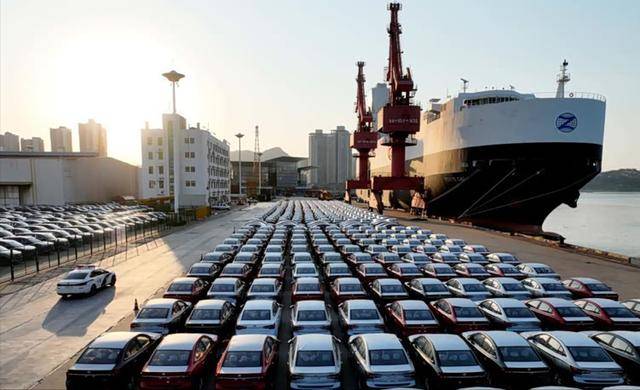
中国车企,正加快进军美国左邻右舍
财富FORTUNE· 2026-02-15 13:04
Core Viewpoint - Mexico is cautiously accepting the expansion of Chinese automotive companies in the country, following a more welcoming stance from Canada, which presents a challenge for the U.S. as Chinese automotive brands extend their industrial layout into neighboring territories [1]. Group 1: Chinese Automotive Companies' Expansion - Two major Chinese automotive companies have reached the final selection stage to bid for the Nissan-Mercedes-Benz factory in Mexico [3]. - A total of four Chinese automotive companies are involved in the bidding process, but they have not disclosed any information regarding the matter [4]. - The Nissan-Mercedes-Benz factory in Aguascalientes, Mexico, has a designed annual capacity of 230,000 vehicles but has never operated at full capacity, with a utilization rate below 60% [4]. Group 2: Impact of Tariffs on the Mexican Automotive Industry - Mexico is the world's fourth-largest exporter and seventh-largest producer of light vehicles, heavily reliant on the U.S. market, with 2.8 million out of 4 million vehicles produced in 2024 expected to be exported to the U.S. [4]. - The imposition of a 25% tariff on cars produced in Mexico by the Trump administration has led to a projected decline of nearly 3% in exports to the U.S. by 2025 [4]. - The chairman of the Mexican Automotive Industry Association (AMIA) warned that if current tariffs persist, exports to the U.S. could see a more significant drop by 2026, resulting in a loss of 60,000 jobs in the automotive sector by 2025 [5]. Group 3: Strategic Implications for Chinese Brands - The growth of the Chinese automotive industry has fueled ambitions for global market expansion, with projections indicating that by 2025, Chinese brands will sell 30.42 million vehicles globally, surpassing Japan for the first time [7]. - In Mexico, the market share of Chinese automotive brands is expected to rise from 0% in 2020 to approximately 10% by 2025 [7]. - Mexico serves as a strategic hub for Chinese companies to penetrate the North American market, with local investments creating much-needed jobs [7]. Group 4: Trade Relations and Tariff Adjustments - The Mexican government has raised tariffs on imports from countries without free trade agreements, including China, with rates reaching up to 35% [9]. - The core purpose of the recent tariff increases appears to be to appease the Trump administration, which has led to heightened tensions in Mexico-China trade relations [9]. - Recent direct talks between Chinese and Mexican officials indicate ongoing discussions about bilateral trade relations amidst the backdrop of Chinese automotive companies bidding for the factory [9].

中企承建伊拉克港口疏浚项目完成验收
Xin Hua Cai Jing· 2026-01-08 06:44
Core Viewpoint - The successful completion of the dredging project for the first phase of the new port in Iraq, undertaken by China Communications Tianjin Dredging Co., Ltd., establishes a solid foundation for the development of the Al-Faw Port as a key trade and logistics hub connecting Europe and the Middle East [1][2]. Group 1 - The Al-Faw Port is a critical project under Iraq's "Road to Development" plan launched in 2023, aimed at enhancing trade connectivity [1]. - The project involved the dredging of 106 million cubic meters of soil, equivalent to raising a standard football field by 10 meters each day, showcasing the efficiency and quality of Chinese engineering [1]. - The project faced challenges such as extreme summer heat and sandstorms, but the company effectively managed these issues through meticulous planning and innovative technical solutions [1]. Group 2 - The project team implemented a construction model combining "deep and shallow zones" with "dredging and raking," which successfully addressed key challenges such as controlling sediment diffusion while meeting safety and environmental standards [2]. - The engineering team dynamically optimized key technical parameters of the dredging equipment, overcoming precision control difficulties, which led to cost reduction and efficiency improvements [2]. - The company emphasizes its commitment to creating quality and livelihood projects in Iraq, aiming to contribute to regional connectivity and economic revival through Chinese technology and solutions [2].
青春华章津彩绽放|“鲁班”出国记!中国“师父”全球“收徒”
Yang Shi Wang· 2025-12-19 03:56
Core Viewpoint - Luban Workshop, named after the ancient Chinese craftsman, is a globally recognized vocational education brand initiated in Tianjin, providing a pathway for overseas youth towards a better life through skills training [2] Group 1: Company Overview - Luban Workshop represents a significant advancement in vocational education, aligning with China's technical standards and Tianjin's vocational education programs [2] - The initiative emphasizes the importance of skills over products, promoting a deeper and more lasting impact of "Made in China" through skill development [2] Group 2: Global Impact - The program fosters international relationships, showcasing how Chinese "masters" are training students globally, thus enhancing the perception of "Chinese manufacturing" to "Chinese technology" [2]

竣工通车!伊拉克总理再为这个中企项目点赞
人民网-国际频道 原创稿· 2025-09-18 06:50
Core Points - The completion and opening of the Nisour Transportation Hub project in Baghdad, Iraq, marks a significant milestone in Iraq-China cooperation, showcasing advanced Chinese engineering and construction techniques [1][2] - The project is expected to alleviate traffic congestion by over 80% in the region and reduce traffic pollution and noise [1] - The project incorporates various advanced Chinese technologies, including post-tensioned beam technology and a comprehensive set of prestressed products, enhancing structural efficiency and aesthetics [2] Group 1 - The Nisour project is the largest among 19 planned transportation infrastructure projects in Baghdad, as announced by Iraqi Prime Minister Sudani [2] - The project features a complex design with 2 elevated sections and 5 tunnels, representing a significant engineering achievement in the capital's transportation network [1] - The project utilized advanced tunnel monitoring systems and construction techniques, increasing the maximum excavation depth from 10 meters to 24 meters, significantly enhancing tunnel construction capabilities [2] Group 2 - Iraqi officials, including Prime Minister Sudani, expressed gratitude for China's contributions to Iraq's economic reconstruction and emphasized the importance of further cooperation in various sectors [1] - The project is seen as a catalyst for new urban development in Baghdad, with Sudani making multiple site visits to oversee progress and express support for the Chinese company's efforts [2]