
区域联防联控

Search documents
乌海空气质量多项指标创历史最优
Xin Lang Cai Jing· 2026-02-13 20:37
Group 1 - In 2025, Uihai City achieved significant improvements in air quality, with a comprehensive air quality index dropping to 3.74, marking a historical low [1] - PM10 concentration reached the national secondary standard for the first time at 67 micrograms per cubic meter, while PM2.5 annual average concentration hit a record low of 24 micrograms per cubic meter, meeting the WHO's second stage standard [1] - The city recorded 304 days of good air quality, with a good days ratio of 83.3%, indicating a consistent presence of blue skies [1] Group 2 - Uihai City implemented a comprehensive ecological remediation strategy, focusing on five key areas and the Yellow River, with 43 long-term mechanisms established [2] - Specific measures were taken in the coking industry, including strict adherence to low emission standards and expert assistance for coking enterprises, resulting in 261 improvement suggestions and full completion of low emission upgrades for eight coking companies [2] - The city also initiated four volatile organic compounds (VOCs) management projects and conducted thorough inspections of 5,525 non-road mobile machinery across 320 enterprises to control mobile source pollution [2] Group 3 - Uihai City established regional cooperation agreements for joint prevention and control of air pollution with neighboring areas, enhancing collaborative pollution management efforts [3]
PM2.5年均浓度首次“破30” 北京空气质量多项指标创监测以来最优
Zhong Guo Xin Wen Wang· 2026-01-04 08:13
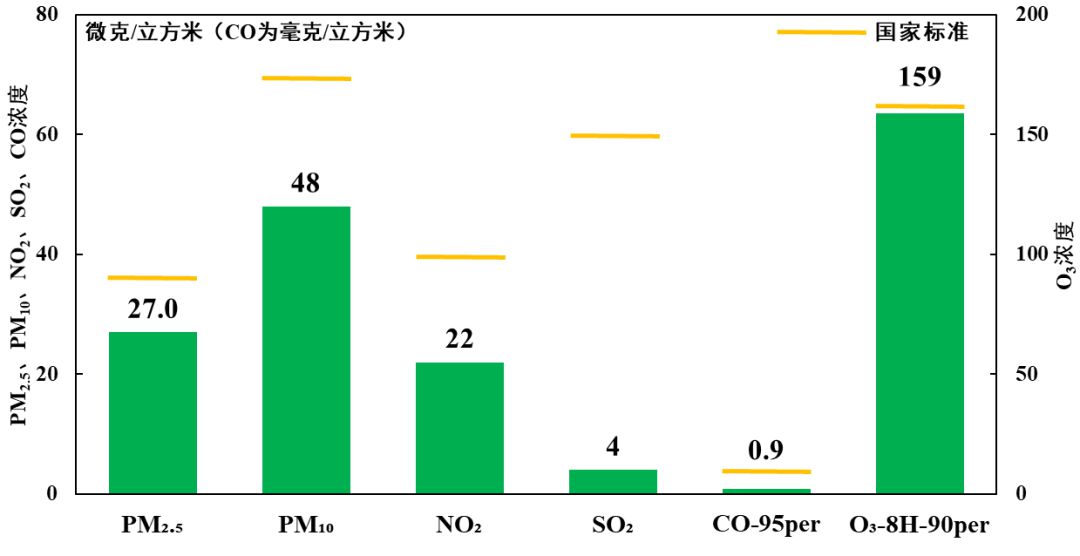
Core Viewpoint - In 2025, Beijing achieved significant improvements in air quality, with PM2.5 annual average concentration dropping to 27.0 micrograms per cubic meter, marking a historic low and a milestone in air pollution control efforts [2][6][12] Group 1: Air Quality Improvements - The annual average concentration of PM2.5 in Beijing for 2025 is 27.0 micrograms per cubic meter, a year-on-year decrease of 11.5%, and the first time it has fallen below 30 micrograms [2][4] - Other major pollutants also saw improvements, with PM10, NO2, and O3 concentrations at 48, 22, and 159 micrograms per cubic meter respectively, showing year-on-year declines of 11.1%, 8.3%, and 7.0% [2] - The air quality was classified as good for 311 days in 2025, an increase of 21 days from the previous year, resulting in a good air quality rate of 85.2% [4][10] Group 2: Long-term Trends - Since 2013, PM2.5 levels have shown a long-term improvement trend, decreasing from 89.5 micrograms per cubic meter to 27.0 micrograms per cubic meter, a reduction of 69.8% [6][8] - Heavy pollution days dropped dramatically from 58 days in 2013 to just 1 day in 2025, a decrease of 98.3% [8][10] Group 3: Policy and Implementation - The achievement of improved air quality is attributed to comprehensive efforts in pollution control, including the promotion of new energy vehicles, with over 60% of new cars being electric by 2025 [12][14] - The city has implemented strict management measures, including enhanced dust control and green construction practices, leading to a significant reduction in road dust levels [12][14] - Collaborative efforts with neighboring regions have also played a crucial role in improving air quality through coordinated pollution control measures [14]

广州市召开三防和蚊媒传染病疫情防控工作视频调度会
Guang Zhou Ri Bao· 2025-08-10 01:53
Group 1 - The article emphasizes the importance of effectively managing flood prevention and disaster relief, as well as epidemic prevention and control, particularly during the critical flood season [2][3] - The city leadership is focused on enhancing political responsibility and risk awareness to ensure safety and stability while promoting economic recovery [2][3] - There is a call for comprehensive safety inspections and targeted measures to address potential risks associated with extreme weather events [3] Group 2 - The ongoing epidemic situation is described as severe and complex, with a focus on preventing the spread and controlling existing cases [4][5] - The city is urged to strengthen community-level prevention measures and engage various stakeholders in public health initiatives [4][5] - Enhanced monitoring and rapid response mechanisms are highlighted as essential for effective epidemic control, including environmental sanitation and health education [5]