大气污染治理

Search documents
新空气质量标准3月1日实施,PM2.5年均限值收严
Di Yi Cai Jing· 2026-02-27 13:16
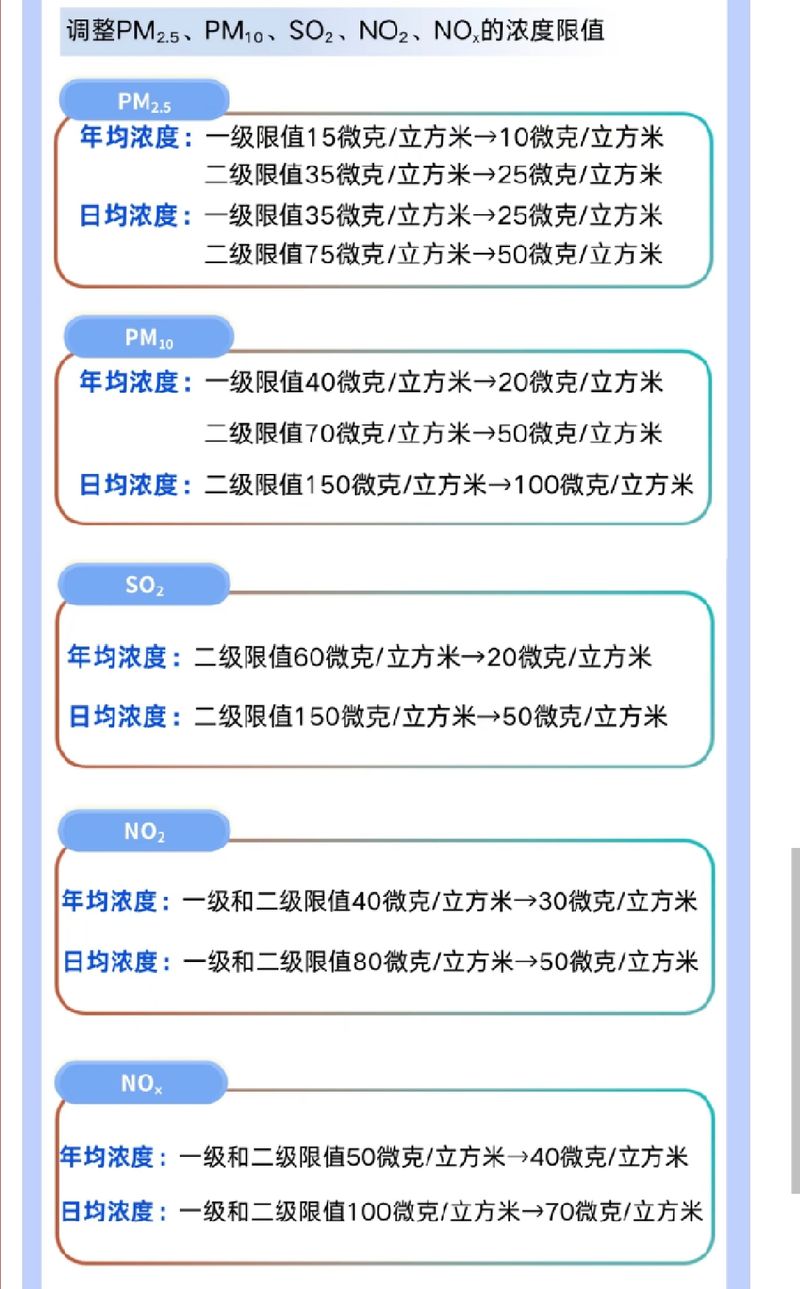
Core Viewpoint - The new air quality standards in China, effective from March 1, aim to tighten PM2.5 concentration limits to improve air quality and public health, with a five-year transition period to allow for necessary adjustments and reductions in emissions [1][4]. Group 1: PM2.5 Concentration and Health Impact - Approximately 60% of cities in China are projected to have an annual average PM2.5 concentration exceeding 25 micrograms per cubic meter by 2025, indicating a gap from the "Beautiful China" construction goals [2]. - PM2.5 is identified as the most significant pollutant affecting human health, with over one million premature deaths attributed to it annually in China [2]. - The World Health Organization has tightened its PM2.5 annual concentration guideline from 10 micrograms per cubic meter to 5 micrograms per cubic meter in 2021 [2]. Group 2: Standard Revision and Implementation - The revised PM2.5 annual average concentration limit has been reduced from 35 micrograms per cubic meter to 25 micrograms per cubic meter, with a focus on both primary and secondary particulate matter sources [3]. - The new standards will also tighten limits on PM10, sulfur dioxide, and nitrogen oxides, with 140 cities expected to meet the new PM2.5 limit by 2025, accounting for about 40% of cities [3]. Group 3: Historical Context and Achievements - Since 2013, China's PM2.5 annual average concentration has decreased from 68 micrograms per cubic meter to a projected 28 micrograms per cubic meter by 2025, marking it as one of the fastest improvements globally [5]. - By 2025, the average PM2.5 concentration for cities is expected to be 28.0 micrograms per cubic meter, with 89.3% of days classified as good air quality [6]. Group 4: Policy Measures and Challenges - The Ministry of Ecology and Environment has implemented various financial and regulatory measures, including a cumulative investment of 158.5 billion yuan to support air pollution control projects [7]. - Despite progress, challenges remain in continuous improvement, deep emission reduction pressures, and the need for precise governance in pollution control [7].
新版《环境空气质量标准》发布,收严PM2.5浓度限值
Xin Jing Bao· 2026-02-25 02:56
Core Viewpoint - The Ministry of Ecology and Environment has released the revised "Ambient Air Quality Standards" (GB 3095—2026), which significantly tightens the limits for PM2.5 and other pollutants, aiming to improve air quality and public health in line with international standards [1][4][5] Group 1: Revised Standards - The annual average concentration limit for PM2.5 has been reduced from 35 micrograms per cubic meter to 25 micrograms per cubic meter, with a transitional limit of 30 micrograms per cubic meter from March 1, 2026, to December 31, 2030 [1][6] - The revised standards also tighten limits for PM10, SO2, and NO2, aligning them with the latest World Health Organization guidelines [6][8] Group 2: Health and Environmental Impact - The revision is expected to lead to a significant reduction in PM2.5 levels, thereby lowering health risks, particularly for vulnerable populations, with a cost-benefit ratio of nearly 1:10 for pollution control investments versus health benefits [7] - The implementation of the new standards is projected to extend average life expectancy and reduce healthcare costs for residents, enhancing public satisfaction with air quality [7] Group 3: Economic and Industrial Implications - The new standards are anticipated to foster the development of clean energy and new energy vehicles, promoting green and low-carbon transitions in key industries [8] - It is estimated that pollution reduction measures from 2026 to 2035 could lead to a reduction of over 7 billion tons of CO2 emissions [8] Group 4: Monitoring and Future Actions - The Ministry plans to enhance monitoring of toxic air pollutants, including heavy metals, and will implement a new round of air quality improvement actions [9] - There will be a focus on developing a comprehensive monitoring capability and improving the national air quality management system [9]

杭州科学施策守护蓝天
Hang Zhou Ri Bao· 2026-02-14 00:02
Core Insights - The article highlights the significant improvement in air quality in Hangzhou, with PM2.5 concentration at 27.9 micrograms per cubic meter, a 2.1% improvement year-on-year, and an 85.9% rate of good air quality days, up 5 percentage points from the previous year [1][2]. Group 1: Air Quality Improvement - Hangzhou's air quality indicators show a marked progress, indicating a new phase in air pollution control [2]. - The city has established a high-level coordination mechanism for air quality improvement, with regular meetings led by the deputy mayor to address challenges and ensure accountability [3]. Group 2: Pollution Control Strategies - The city has implemented 1,029 pollution reduction projects focusing on engineering, structural, and management measures to reduce local pollutant emissions [3]. - Over the past three years, Hangzhou has invested 500 million yuan in subsidies to eliminate 65,000 old diesel vehicles and over 9,000 non-road mobile machinery units, significantly reducing nitrogen oxides and particulate matter emissions [3]. Group 3: Technological Innovations - Hangzhou has installed over 800 mobile monitoring systems for particulate matter at key sites, achieving a 100% annual closure rate for identified issues [5]. - The city employs an AI application called "Dust Vision" to monitor construction sites for dust control, enhancing management efficiency [5]. Group 4: Seasonal Pollution Management - During critical periods like Spring Festival and Qingming, the city has successfully prevented large-scale firework displays in restricted areas, maintaining air quality [6]. - A comprehensive monitoring network for open burning of straw has been established, achieving a 75% efficiency in responding to fire incidents within 30 minutes [5]. Group 5: Future Goals - Hangzhou aims to continue improving air quality by focusing on the synergistic control of PM2.5 and ozone, enhancing comprehensive management of industrial, mobile, and dust sources [8]. - The city is committed to optimizing industrial, energy, and transportation structures while deepening digital governance for ecological management [8].
【省生态环境厅】去年陕西空气质量实现“5个首次”
Shan Xi Ri Bao· 2026-02-09 00:33
Group 1 - The core viewpoint of the articles highlights Shaanxi's commitment to air pollution control, aiming for significant improvements in air quality by 2025, including a PM2.5 concentration below 35 micrograms per cubic meter, achieving a 10.8% year-on-year improvement to 31.4 micrograms per cubic meter [1][2] - Shaanxi plans to achieve its first-ever compliance with national air quality standards in seven cities and exceed 300 days of good air quality, reaching 302.4 days [1] - The province's strategy includes reducing coal usage, with targeted adjustments for 128 key industrial enterprises in the Guanzhong area, and increasing subsidies for clean heating in rural households from 300 yuan to 600 yuan [1] Group 2 - Industrial emissions reduction is emphasized as a core focus, with 95% of crude steel capacity and 91% of cement clinker capacity in the Guanzhong area completing ultra-low emission transformations [2] - By 2025, Shaanxi aims to add 117 enterprises with B-level or above environmental performance, bringing the total to 323 [2] - The province has implemented a "whitelist" system for 520 key enterprises to balance environmental protection with economic growth, and has eliminated 32,000 old diesel trucks to control mobile source pollution [2]
从“广州蓝”到“全运蓝” 广州多举措守牢生态颜值
Xin Lang Cai Jing· 2026-02-07 07:23
Core Viewpoint - Guangzhou has implemented multiple measures to enhance its ecological environment, achieving significant improvements in air quality during the "14th Five-Year Plan" period, which has positively impacted the city's development and the hosting of major events like the 15th National Games [1][2]. Group 1: Air Quality Improvement - During the "14th Five-Year Plan," the average concentration of PM2.5 in Guangzhou decreased by 30.1% compared to the "13th Five-Year Plan" period [2] - The number of days exceeding PM2.5 standards dropped from 51 to just 3, a reduction of 94.1% [2] - The air quality exceeded standards on 40.3% fewer days compared to the previous plan, with heavy pollution days reduced to zero [2] Group 2: Pollution Source Management - Guangzhou focuses on "emission reduction first and source control," optimizing industrial, energy, and transportation structures to combat air pollution [3][4] - The city has cultivated 93 green factories and increased the share of non-fossil energy consumption to 73% [3] - The public transportation system has achieved 100% electrification for buses and taxis, with a 99% electrification rate for ride-hailing services [4] Group 3: Technological Support - Guangzhou has established an integrated smart monitoring network for air quality, featuring over 20 national control points and various advanced monitoring technologies [4] - The city aims to maintain an annual average PM2.5 concentration in the "1" range as a new target for the "15th Five-Year Plan" [4]
深圳罗湖区大气治理实现历史性突破
Zhong Guo Huan Jing Bao· 2026-01-30 00:48
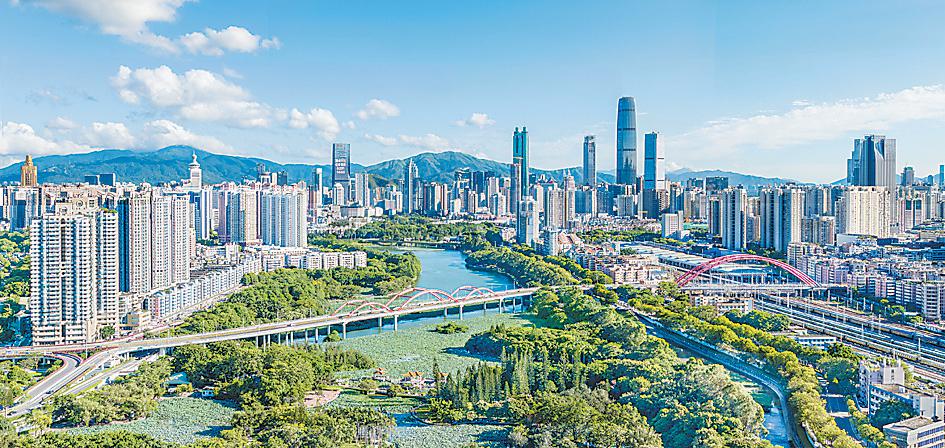
Core Viewpoint - The Luo Hu District of Shenzhen has made significant progress in air quality improvement, achieving a PM2.5 concentration of 14.4 micrograms per cubic meter by 2025, marking a historic low and meeting WHO standards for the first time in a high-density urban area [2][3]. Group 1: Air Quality Improvement - By 2025, PM2.5 concentration in Luo Hu District decreased by 1.3 micrograms per cubic meter year-on-year, reaching 14.4 micrograms per cubic meter, which is the best level since monitoring began [3]. - The air quality improvement metrics include a PM10 concentration of 27 micrograms per cubic meter (down 2 micrograms), and an ozone concentration of 126 micrograms per cubic meter (down 8 micrograms), with air quality rated as good for 252 days, representing 69% of the year [3]. Group 2: Collaborative Governance - Luo Hu District has established a multi-departmental collaborative governance network involving ecological environment, urban management, water resources, construction, transportation, and local street offices to tackle air pollution [4]. - A systematic work mechanism has been implemented, including daily reports, weekly assessments, monthly analyses, quarterly reviews, and annual summaries to ensure effective pollution control measures [4]. Group 3: Dust Control Measures - The district has launched a comprehensive dust pollution prevention plan, conducting inspections on 9,585 construction sites and enforcing corrective actions on 661 problematic sites [5]. - Innovative technologies, such as the giant "canopy" system at the Yulong landfill, have been introduced to mitigate dust and odor, effectively isolating nearly 80% of dust and reducing noise pollution [5]. Group 4: Technological Empowerment - Luo Hu District has embraced new technologies by developing the "Tianyan" AI atmospheric environment system, which integrates satellite remote sensing and AI to predict PM2.5 trends and provide pollution alerts [6]. - The system has facilitated 29 responses to air pollution, coordinating efforts to implement emission reduction measures effectively [6]. Group 5: Green Development Initiatives - The district is focusing on optimizing its energy structure, with 5,892 new electric vehicle charging facilities established to ensure coverage within 500 meters in urban areas [7]. - In 2025, the district added 3,227.605 kilowatts of photovoltaic capacity, integrating clean energy solutions into architectural designs to support near-zero carbon initiatives [7]. Group 6: VOCs Management in Automotive Repair - Luo Hu District has introduced a differentiated management mechanism for VOCs emissions in the automotive repair industry, achieving a reduction of 2.17 tons in annual VOCs emissions through source substitution [8]. - The district has implemented a monitoring and control model that significantly reduced unorganized emissions from 13.42 mg/m to 0.70 mg/m, a decrease of 94.7% [8]. Group 7: Future Plans and Goals - In 2026, Luo Hu District aims to enhance its ecological environment protection strategies while preparing for the APEC summit, focusing on comprehensive pollution control measures [9]. - The district plans to establish a "1+3+N" blue sky protection system, targeting specific pollution sources and ensuring a coordinated regulatory approach [9].
“赤峰蓝”已成“常态蓝”
Xin Lang Cai Jing· 2026-01-23 19:56
Group 1 - The core viewpoint of the article highlights the improvement in air quality in Chifeng City, with a target of 354 days of good air quality by 2025, including 216 days rated as "excellent," which is an increase of 18 days compared to 2024, resulting in a good air quality ratio of 97%, up by 1.4 percentage points year-on-year [1] - The average PM2.5 concentration is projected to decrease to 20 micrograms per cubic meter, with these two key indicators ranking among the best in the autonomous region, indicating a steady enhancement in ecological environment quality [1] - The improvement in air quality is attributed to the implementation of a precise ecological environment zoning and control system, which is essential for achieving a "normal blue" sky [1] Group 2 - Chifeng City is focusing on water quality improvement, coordinating pollution control with ecological restoration, and maintaining the effectiveness of river pollution outlet remediation [2] - By 2025, the city aims to complete sewage treatment in 170 administrative villages, with a total of 658 villages having completed sewage management [2] - The city is also conducting special actions targeting key areas such as water, air, and soil, cracking down on illegal discharges and addressing environmental issues affecting local communities [2]
北京PM2.5年均浓度首次“破30”,北京大气治理成果带来哪些启示?
Zhong Guo Huan Jing Bao· 2026-01-09 03:28
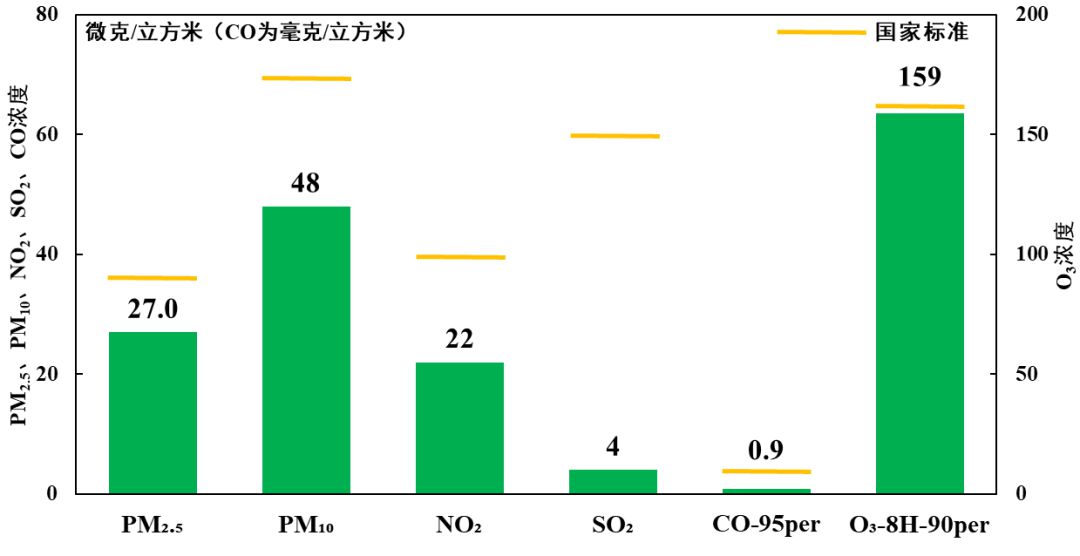
Group 1 - Beijing achieved a significant milestone in air pollution control, with PM2.5 annual average concentration reaching 27.0 micrograms per cubic meter by 2025, marking a breakthrough as it is the first time it falls below 30 [1] - The number of days with good PM2.5 levels reached 348, an increase of 144 days compared to 2013, with the good air quality ratio rising from 55.9% to 95.3% [1] - The city has implemented a comprehensive strategy since 2013, focusing on reducing coal pollution, with a cumulative reduction of 13 million tons of coal by 2017 [1] Group 2 - Beijing utilized a data-driven approach to tackle pollution, identifying four major sources: vehicles, coal, industry, and dust, and continuously refining strategies based on data analysis [2] - A three-dimensional monitoring network was established, leveraging artificial intelligence for intelligent regulation, which includes automatic identification of violations in construction sites [2] - Collaborative pollution control mechanisms were developed with surrounding provinces, promoting a unified approach to air quality management [2] Group 3 - The achievement of 348 good air quality days reflects over a decade of persistent efforts in air pollution control, showcasing the commitment of various stakeholders including government, businesses, and citizens [3] - Continuous improvements in pollution control measures have been noted, with a focus on maintaining long-term efforts to ensure sustainable air quality [3]
北京空气质量多项指标创监测以来最优
Xin Hua She· 2026-01-05 03:04
Core Insights - Beijing has achieved a significant improvement in air quality, with the annual average concentration of PM2.5 dropping to 27.0 micrograms per cubic meter in 2025, marking the first time it has fallen below 30 micrograms since monitoring began [1] - The city has implemented a comprehensive "Blue Sky Defense War" to combat air pollution, focusing on various pollution sources and achieving substantial reductions in heavy pollution days [1] Group 1 - The annual average PM2.5 concentration in Beijing reached 27.0 micrograms per cubic meter in 2025, a record low [1] - The number of good air quality days increased to 348 in 2025, up by 144 days compared to 2013, while heavy pollution days decreased from 58 in 2013 to just 1 in 2025, a reduction of over 98% [1] - All six major pollutants, including inhalable particles, nitrogen dioxide, and ozone, met national standards, indicating comprehensive compliance with air quality requirements [1] Group 2 - Despite improvements, experts warn that the air quality gains are not yet stable, with regional pollutant emissions still high and exceeding environmental capacity [2] - The Beijing Ecological Environment Bureau plans to continue its efforts over the next five years, integrating air pollution control into broader economic and social development, focusing on green transformation and collaborative reduction of emissions and carbon [2] - The "0.1 microgram" action plan will be a key initiative in the ongoing battle for better air quality in Beijing [2]
PM2.5年均浓度首次“破30” 北京空气质量多项指标创监测以来最优
Zhong Guo Xin Wen Wang· 2026-01-04 08:13
Core Viewpoint - In 2025, Beijing achieved significant improvements in air quality, with PM2.5 annual average concentration dropping to 27.0 micrograms per cubic meter, marking a historic low and a milestone in air pollution control efforts [2][6][12] Group 1: Air Quality Improvements - The annual average concentration of PM2.5 in Beijing for 2025 is 27.0 micrograms per cubic meter, a year-on-year decrease of 11.5%, and the first time it has fallen below 30 micrograms [2][4] - Other major pollutants also saw improvements, with PM10, NO2, and O3 concentrations at 48, 22, and 159 micrograms per cubic meter respectively, showing year-on-year declines of 11.1%, 8.3%, and 7.0% [2] - The air quality was classified as good for 311 days in 2025, an increase of 21 days from the previous year, resulting in a good air quality rate of 85.2% [4][10] Group 2: Long-term Trends - Since 2013, PM2.5 levels have shown a long-term improvement trend, decreasing from 89.5 micrograms per cubic meter to 27.0 micrograms per cubic meter, a reduction of 69.8% [6][8] - Heavy pollution days dropped dramatically from 58 days in 2013 to just 1 day in 2025, a decrease of 98.3% [8][10] Group 3: Policy and Implementation - The achievement of improved air quality is attributed to comprehensive efforts in pollution control, including the promotion of new energy vehicles, with over 60% of new cars being electric by 2025 [12][14] - The city has implemented strict management measures, including enhanced dust control and green construction practices, leading to a significant reduction in road dust levels [12][14] - Collaborative efforts with neighboring regions have also played a crucial role in improving air quality through coordinated pollution control measures [14]