
医用机器人

Search documents
创新破局 国产高端医疗器械崛起正当时
Xin Hua Wang· 2026-01-06 11:37
Core Insights - The article highlights the rise of domestic high-end medical devices in China, with a significant increase in innovation and production, supported by favorable policies and regulatory reforms [1][2][3] Industry Transformation - The high-end medical device industry in China is transitioning from reliance on imports to domestic production, with a focus on innovation and quality improvement [2][4] - The number of approved innovative medical devices reached 76 in 2025, maintaining a high level for three consecutive years, covering various advanced fields [1][2] Regulatory Support - The National Medical Products Administration (NMPA) has implemented reforms to streamline the approval process for innovative medical devices, enhancing efficiency and encouraging innovation [3][6] - Key measures include special reviews, priority approvals, and a focus on early-stage guidance for companies, which have significantly shortened the time from development to market [3][6] Breakthrough Innovations - Several notable products were approved in 2025, including a transcatheter aortic valve system and advanced imaging technologies, showcasing the capabilities of domestic companies to break import monopolies and achieve competitive technical standards [5][6] Market Integration - The improvement of the medical insurance system and procurement mechanisms has made high-end medical devices more accessible to grassroots hospitals, reducing costs and enhancing availability [6][7] - Since the 14th Five-Year Plan, 292 innovative medical devices have been approved, representing a 3.3-fold increase compared to the previous five-year period [6][7] Global Expansion - Chinese medical device exports accounted for approximately 8% of the global market in 2024, positioning China as the fourth-largest exporter [7] - Chinese companies are increasingly participating in international regulatory discussions and establishing overseas R&D centers, facilitating global market integration [7]
力争突破百亿元!烟台出台医疗器械产业发展五年规划
Qi Lu Wan Bao· 2025-12-13 00:40
Core Insights - Yantai City is implementing a development plan for the medical device industry from 2025 to 2029, aiming to create a modernized medical device industry system and enhance international competitiveness [1] Group 1: Industry Goals and Scale - The plan targets a medical device industry scale exceeding 10 billion yuan by 2029, with high-value medical devices accounting for over 40% of the total [2] - The strategy includes attracting 2-3 core R&D medical device companies to establish headquarters or production bases in Yantai, while nurturing specialized and innovative enterprises [2] Group 2: Development Framework - A "1+4+N" development framework is established, focusing on one core area led by the high-tech zone, with four districts collaborating to enhance industry concentration [3] - The core area will develop an IVD medical device industrial park, while the four districts will focus on various medical device sectors, including oxygen-related devices and medical imaging equipment [3] Group 3: Policy Support and Market Activation - Yantai City will implement a "chain leader system" for the biopharmaceutical industry, coordinating strategic planning and resource integration to support industry development [4] - Policies will facilitate enterprise establishment, project approval, and land supply, creating a green channel for high-end medical device projects [4]
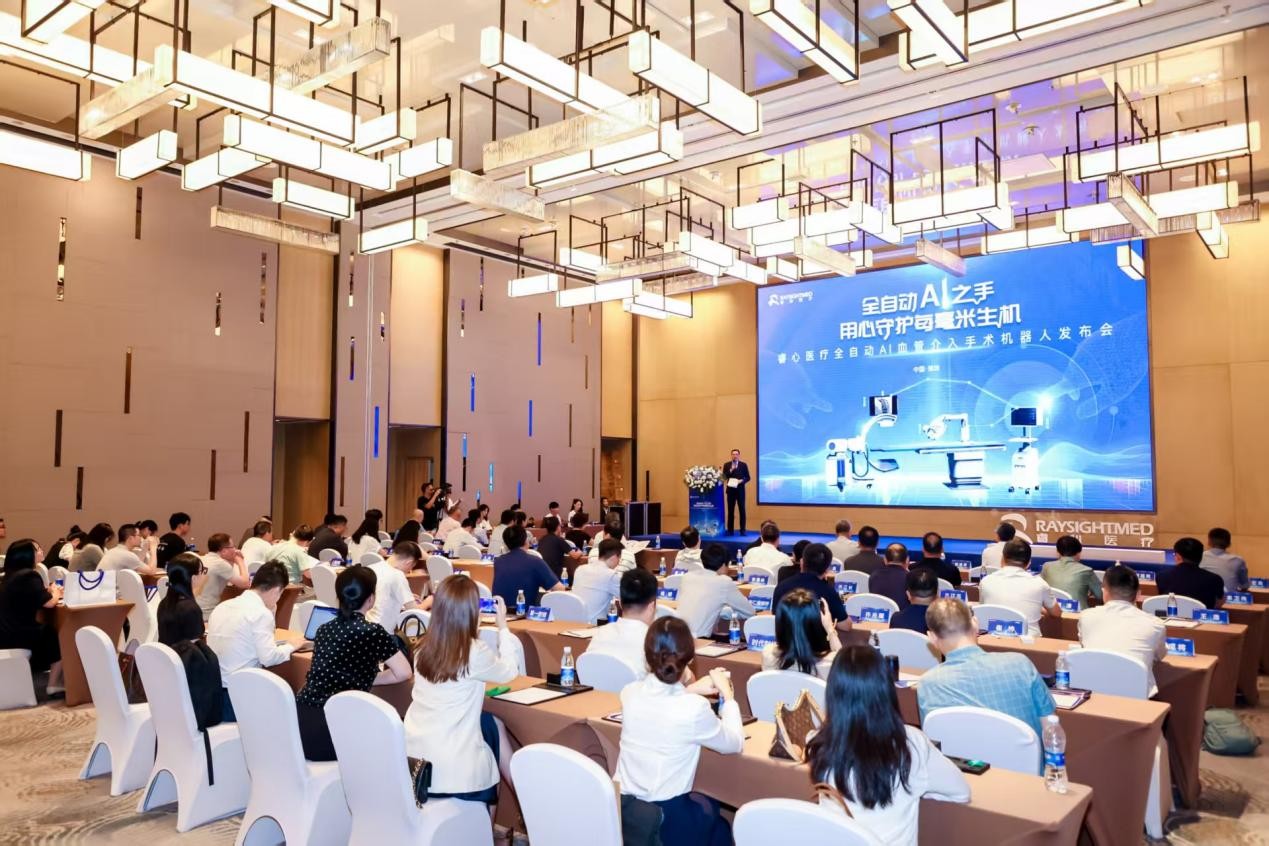
睿心医疗发布全自动AI血管介入手术机器人,精准介入“全自动”智能时代将来临
3 6 Ke· 2025-08-17 14:08
Core Viewpoint - Ruixin Medical is committed to developing an all-automatic AI vascular interventional surgical robot to enhance early diagnosis and precise treatment of cardiovascular diseases, aiming to create a closed-loop diagnostic and treatment system [1][3]. Company Developments - The all-automatic AI vascular interventional surgical robot is expected to complete animal surgeries using AI automation in the second half of this year, following prototype production and simulation experiments [3]. - The robot aims to assist in simple and repetitive surgical procedures under the supervision of doctors, while providing enhanced support for more challenging surgeries [3][4]. Industry Challenges - The cardiovascular treatment field faces three main challenges: heavy physical burden on doctors due to lead aprons, variability in manual operations leading to training difficulties for younger doctors, and uneven distribution of medical resources across the country [3][4]. Technological Integration - Ruixin Medical's robot integrates a tri-party collaboration among doctors, intelligent systems, and execution terminals, allowing for natural language interaction and automated surgical operations [4]. - The short-term goals include reducing radiation exposure, alleviating the burden of lead aprons, lowering repetitive tasks, shortening training periods, standardizing surgical quality, and supporting remote medical services [4]. Regulatory Environment - The launch of the robot coincides with the National Medical Products Administration's new measures to support high-end medical device innovation, marking a significant step towards the "fully automatic" intelligent era in vascular intervention [5]. Expert Insights - Experts agree that the integration of AI and fully automatic vascular interventional robots represents a major trend for the future, emphasizing the importance of overcoming challenges to lead in this innovative field [5].


政策支持高端医疗器械创新发展 AI、机器人等技术加速临床应用
Zheng Quan Ri Bao· 2025-07-07 16:49
Group 1 - The announcement from the National Medical Products Administration supports significant innovation in high-end medical devices, focusing on core technologies such as brain-computer interfaces, artificial intelligence, and medical robots [1][2] - The announcement outlines key areas for development, including medical robots, high-end medical imaging equipment, AI medical devices, and new biological materials, and proposes measures to optimize approval processes and enhance regulatory frameworks [2][3] - The high-end medical device market in China is expanding, with an average annual growth rate exceeding 20%, particularly in areas like medical robots and AI medical devices, which are experiencing explosive growth [3][4] Group 2 - Companies are actively advancing technology applications in high-end medical devices, with many listed firms strategically positioning themselves in AI and medical robotics to seize development opportunities [4] - Several companies have developed innovative products, such as the ZAP-X radiation surgery robot and a fully magnetic levitation artificial heart, indicating a trend towards high-quality development in the sector [4] - Collaboration between companies, medical institutions, and research organizations is emphasized to accelerate the transformation of research results into market-ready products [4]