
半导体技术路线选择

Search documents
等死与找死?FD-SOI何以成为中国半导体的一条活路
Guan Cha Zhe Wang· 2025-11-30 01:03
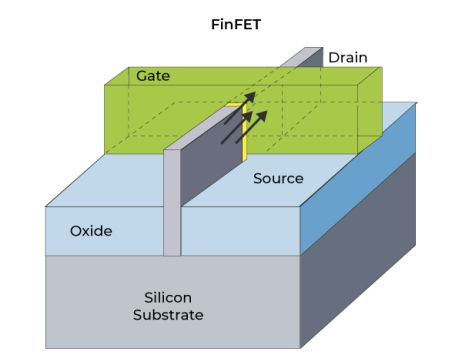
Core Insights - The article discusses the historical context and current relevance of FD-SOI technology in the semiconductor industry, particularly in China, as it faces challenges in advanced process nodes due to geopolitical factors [2][21]. Group 1: Historical Context - In the early 2010s, Soitec, a leader in SOI substrate materials, faced financial difficulties due to the slow growth of the FD-SOI market and required government loans to survive [1]. - The Chinese National Integrated Circuit Industry Investment Fund (the "Big Fund") considered investing in Soitec but ultimately chose to focus on FinFET technology, reflecting a broader industry skepticism towards FD-SOI at that time [1][2]. - The decision by Intel to fully commit to FinFET technology led to a domino effect, causing other major players like TSMC and Samsung to follow suit, effectively sidelining FD-SOI [9][10]. Group 2: Technological Divergence - Two distinct solutions emerged in the late 1990s to address the limitations of traditional CMOS technology: FinFET and FD-SOI [3][5]. - FinFET technology enhances control over electrical currents by utilizing a three-dimensional structure, while FD-SOI employs a thin insulating layer to prevent leakage, offering advantages in power consumption and manufacturing simplicity [5][7]. - Despite its advantages, FD-SOI faced challenges due to stringent substrate material requirements and a lack of industry support, leading to its marginalization [8][9]. Group 3: Recent Developments - In 2016, Shanghai Silicon Industry Investment Co. established a strategic partnership with Soitec, acquiring approximately 14.5% of its shares, which opened doors for Chinese semiconductor firms to access SOI technology [10][12]. - The investment has yielded significant returns and has been pivotal in developing China's capabilities in FD-SOI technology, which is now seen as a viable alternative to FinFET in specific applications [12][21]. - FD-SOI technology is gaining traction in markets such as IoT, automotive electronics, and RF communications, where its lower manufacturing costs and power efficiency are advantageous [13][21]. Group 4: Ecosystem Development - Over the past decade, a complete FD-SOI ecosystem has been developing in China, encompassing substrate materials, wafer foundries, EDA tools, and IP design [14][16]. - Key players include GlobalFoundries, which has been a major proponent of FD-SOI technology, and various Chinese companies adopting FD-SOI for IoT chip designs [16][17]. - The ecosystem is still smaller compared to the well-established FinFET market, which presents challenges in scaling and cost competitiveness [18][19]. Group 5: Future Outlook - The article suggests that FD-SOI may not compete directly with FinFET in high-performance computing but can carve out a niche in emerging markets [20][21]. - The global FD-SOI market is projected to grow significantly, from approximately $700 million in 2022 to over $4 billion by 2027, indicating a compound annual growth rate exceeding 30% [20]. - The ongoing development of FD-SOI technology in China represents a strategic path for maintaining technological capabilities amid external pressures [21][22].

心智观察所:等死与找死?FD-SOI何以成为中国半导体的一条活路
Guan Cha Zhe Wang· 2025-11-30 00:56
Core Viewpoint - The FD-SOI technology, once abandoned by the mainstream semiconductor industry, is now emerging as a viable alternative for China's semiconductor sector amidst geopolitical challenges and supply chain constraints [2][21]. Group 1: Historical Context - In the early 2010s, Soitec, a leader in SOI substrate materials, faced severe financial difficulties due to the slow growth of the FD-SOI market, relying on government loans to survive [1]. - The Chinese National Integrated Circuit Industry Investment Fund (the "Big Fund") considered investing in Soitec but ultimately opted for FinFET technology, reflecting a widespread belief that pursuing FD-SOI was a dead end [1][2]. Group 2: Technological Divergence - The divergence in technology routes began in the late 1990s when two solutions were proposed to overcome the limitations of CMOS technology: FinFET and FD-SOI [3][5]. - FinFET technology enhances control over electrical currents by adopting a three-dimensional structure, while FD-SOI employs an insulating layer to prevent leakage, offering a simpler manufacturing process [5][7]. Group 3: Industry Response - The semiconductor industry overwhelmingly favored FinFET due to its compatibility with existing processes and the perceived challenges of FD-SOI, particularly its stringent substrate requirements [9][10]. - Intel's decision to focus solely on FinFET led to a domino effect, with TSMC and other companies following suit, effectively sidelining FD-SOI [9][10]. Group 4: Strategic Investment - In 2016, Shanghai Silicon Industry Investment Co. strategically invested in Soitec, acquiring approximately 14.5% of its shares, which facilitated access to the Smart-Cut technology essential for FD-SOI [10][12]. - This investment not only saved Soitec but also strengthened the collaboration between Chinese firms and French technology, laying the groundwork for China's capabilities in FD-SOI [12]. Group 5: Current Market Dynamics - FD-SOI technology is gaining traction as a cost-effective alternative to FinFET, particularly in applications requiring lower power consumption, such as IoT and automotive electronics [13][21]. - The global FD-SOI market is projected to grow from approximately $700 million in 2022 to over $4 billion by 2027, with a compound annual growth rate exceeding 30% [20][21]. Group 6: Ecosystem Development - Over the past decade, a complete FD-SOI ecosystem has been developing in China, encompassing substrate materials, wafer foundries, EDA tools, and IP design [16][17]. - Key players include GlobalFoundries, which has been a major proponent of FD-SOI technology, and various Chinese companies adopting FD-SOI for IoT chip designs [16][17]. Group 7: Challenges Ahead - Despite progress, the FD-SOI ecosystem faces challenges, including a smaller market presence compared to FinFET and higher substrate costs, which hinder widespread adoption [18][19]. - The lack of local foundry capacity for advanced FD-SOI processes remains a significant barrier, necessitating reliance on overseas production facilities [19]. Group 8: Future Outlook - The potential for integrating SOI substrates with FinFET structures is being explored, indicating that both technologies may coexist and serve different market needs [20][21]. - FD-SOI's strategic value for China's semiconductor industry lies in its ability to maintain technological development in a constrained environment, providing a pragmatic approach to addressing supply chain vulnerabilities [21][22].
