
南北方协调发展

Search documents
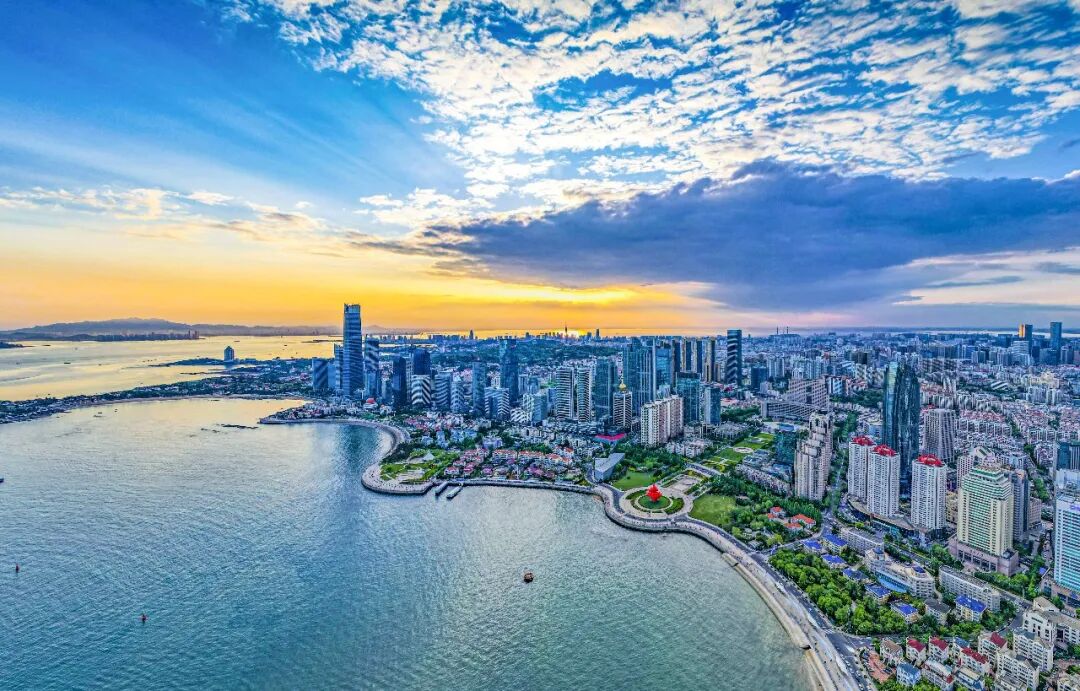
【微聚焦】山东“努力建设北方地区经济重要增长极”,瞄准2万亿的“青岛担当”!
Xin Lang Cai Jing· 2025-12-26 12:24
Core Viewpoint - Shandong province aims to establish itself as a significant economic growth pole in northern China, contributing to national development and regional coordination as outlined in the 14th Five-Year Plan [1][24][26]. Group 1: Economic Goals and Projections - Qingdao is set to achieve a GDP of 2 trillion yuan by 2028, requiring an increase of 300 billion yuan over the next three years, with a projected GDP of 1.7 trillion yuan by 2025 [5][28]. - Qingdao's economic growth during the 14th Five-Year Plan saw it cross five hundred billion yuan milestones, with an average annual growth rate of 5.9%, positioning it among the top cities in terms of growth [5][28]. Group 2: Industrial Development and Innovation - Qingdao is focusing on a "10+1" innovative industrial system, emphasizing the "4+4+2" modern marine industry and ten modern service sectors to reshape its industrial landscape [6][30]. - The city has identified 62 leading enterprises in key industries, with significant projects in semiconductor, micro-display modules, and energy storage set to launch, indicating a robust growth in emerging industries [8][32]. Group 3: Marine Economy and Service Sector - The marine economy is a key growth driver for Qingdao, with a marine GDP of 551.32 billion yuan in 2024, accounting for 33% of the city's total GDP [10][34]. - The service sector contributed 65% to economic growth in the first three quarters of 2025, with a notable increase in the value added by productive services [11][34]. Group 4: National Strategy and Open Economy - Qingdao plays a crucial role as a northern gateway for dual opening-up, leveraging its comprehensive industrial system and connectivity through Qingdao Port and Jiaodong International Airport [12][35]. - The city is enhancing its open economy by transitioning from a goods-based to a rules-based system, establishing platforms for international cooperation, particularly within the framework of the Belt and Road Initiative [14][37]. Group 5: Project Implementation and Investment - As of October, Qingdao has completed investments of 337.46 billion yuan across 1,073 key construction projects, exceeding its annual investment target [17][40]. - Major projects include the development of key port facilities and the establishment of an AI technology innovation center, which are expected to significantly contribute to the city's economic goals [18][42].

中经评论:“促进南北方协调发展”别有深意
Jing Ji Ri Bao· 2025-11-07 00:31
Core Viewpoint - The "15th Five-Year Plan" emphasizes the need for coordinated development between northern and southern regions of China, addressing the increasing economic disparity and aiming for high-quality growth in the long term [1][3]. Economic Disparities - The economic weight is shifting from the north to the south, with southern provinces dominating in both number and scale, as evidenced by Guangdong and Jiangsu exceeding 10 trillion yuan in GDP, while northern provinces like Shandong and Henan lag behind [2]. - The pace of economic transformation is faster in the south, particularly in innovation hubs like the Guangdong-Hong Kong-Macau Greater Bay Area and the Yangtze River Delta, while northern provinces face challenges in transitioning from traditional industries [2]. - Population trends show an increase in the south, with Guangdong gaining 740,000 residents, while the northeastern region continues to experience significant population decline [2]. Strategic Importance of Northern Development - The disparity in economic development reflects various factors, including resource endowments and industrial structures, necessitating improved regional coordination mechanisms [3]. - The northern region is crucial for national food security and energy resources, contributing significantly to the country's grain production [3]. Recommendations for Northern Development - The primary task is to promote industrial transformation in the north, focusing on advanced manufacturing, modern agriculture, and energy sectors while fostering emerging industries [4]. - Enhancing the business environment in northern regions is essential, requiring reforms to reduce institutional barriers and costs [4]. - Expanding openness and integrating regional development with international standards are vital for enhancing the north's competitive edge [4]. Conclusion - The goal of promoting coordinated development is not to achieve uniform speed but to leverage each region's comparative advantages through reforms, innovation, and openness, ultimately fostering a high-quality development synergy between the north and south [5][6].
“促进南北方协调发展”别有深意
Jing Ji Ri Bao· 2025-11-06 22:07
Core Viewpoint - The article emphasizes the need for coordinated development between northern and southern regions of China, highlighting the increasing economic disparity and the importance of addressing this issue for long-term high-quality growth [1][3]. Economic Disparities - The economic weight is shifting from north to south, with southern provinces dominating in both number and scale, as evidenced by the fact that 8 out of 10 major economic provinces are in the south [2] - In the first three quarters of this year, Guangdong and Jiangsu both exceeded a GDP of 10 trillion yuan, while northern provinces like Shandong and Henan lagged behind with 7.7 trillion and 4.9 trillion yuan respectively [2] - By 2024, 27 cities in China are projected to have a GDP exceeding 1 trillion yuan, with 19 of these cities located in the south, accounting for over two-thirds of the total [2] Economic Transition and Population Movement - The south is experiencing faster economic transformation, particularly in innovation-driven areas like the Guangdong-Hong Kong-Macau Greater Bay Area and the Yangtze River Delta, while northern provinces face challenges in transitioning from traditional industries [2] - Population trends show an increase in the south, with Guangdong gaining 740,000 residents and Zhejiang 454,000, while the northeastern provinces continue to see population declines [2] Strategic Importance of Northern Development - The disparity in economic development reflects various factors, including resource endowments and industrial structures, necessitating improved regional coordination mechanisms [3] - The northern region is crucial for national food security and energy resources, contributing half of the country's total grain production [3] Recommendations for Northern Development - The primary task is to promote industrial transformation in the north, focusing on advanced manufacturing, modern agriculture, and energy sectors while also developing emerging industries [4] - Enhancing the business environment and reducing institutional transaction costs are essential for fostering a market-oriented economy in northern regions [4] - Expanding openness and integrating regional development with international standards are vital for enhancing competitiveness [4] Conclusion - Coordinated development should not aim for uniform speed but rather leverage comparative advantages through reforms, innovation, and openness, fostering a synergistic high-quality growth between the north and south [5]