
反偷拍

Search documents
对准那个镜头:一份反偷拍指南
Hu Xiu· 2025-09-16 03:39
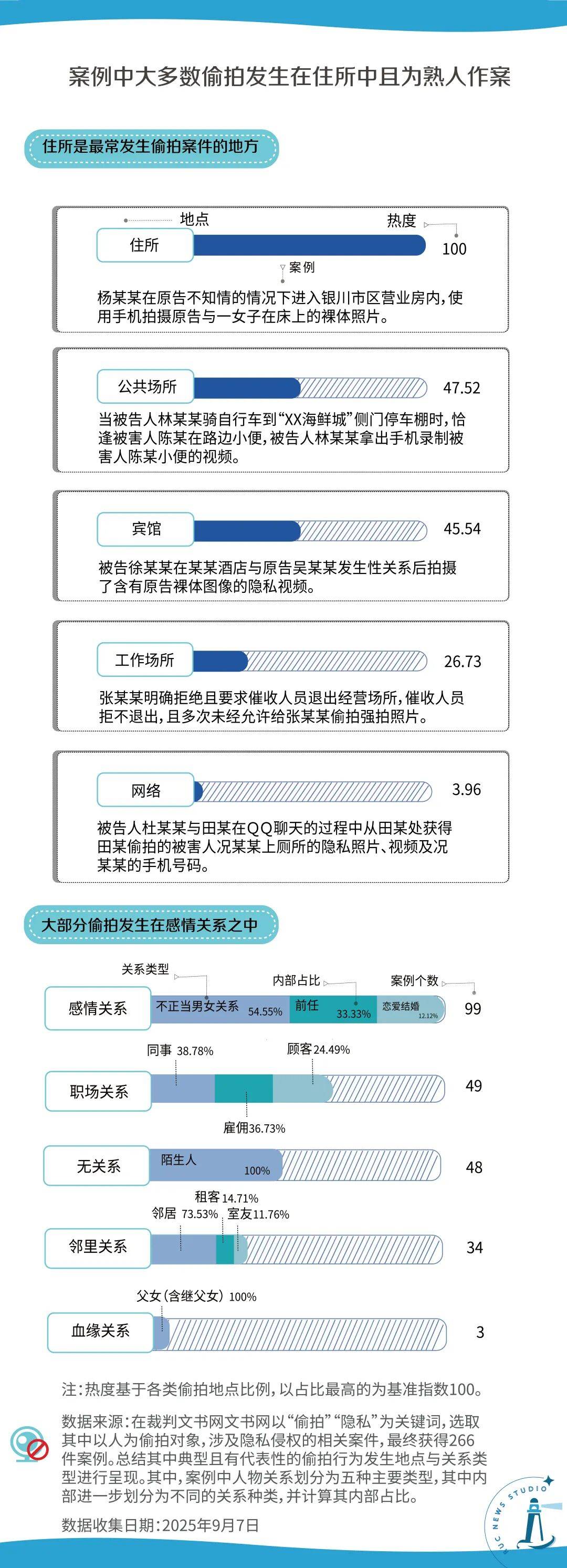
Core Viewpoint - The article highlights the pervasive issue of voyeurism and hidden camera incidents in various settings, emphasizing the need for awareness and legal reforms to protect individuals' privacy and safety in both public and private spaces [1][2]. Group 1: Identification of Risks - The distribution of voyeurism incidents is not random; most cases occur in familiar relationships, particularly in romantic contexts, followed by workplace and neighborly relationships [7][8]. - Common high-risk locations for hidden camera incidents include public restrooms, fitting rooms, rental properties, and hotel rooms, where evidence can be more easily obtained [6][12]. - The majority of voyeuristic acts are committed by individuals known to the victims, often using the relationship to exploit trust and access private spaces [13][12]. Group 2: Legal Reforms and Sanctions - Many countries have historically lacked clear legal definitions for voyeurism, leading to a high incidence of such crimes due to inadequate legal responses [30][31]. - Public incidents, such as the "upskirting" case in the UK, have spurred significant legal changes, resulting in stricter penalties for voyeuristic behaviors [35][41]. - The evolution of laws in various countries shows that increasing the legal consequences for voyeurism can effectively reduce its occurrence [41][49]. Group 3: Response and Prevention - Individuals are encouraged to be vigilant and proactive in identifying potential voyeuristic threats in both public and private settings [28][29]. - Legal measures and institutional support are essential for empowering individuals to combat voyeurism effectively, as personal vigilance alone is insufficient [53][54]. - Initiatives such as the development of anti-voyeurism materials and specific regulations in hospitality settings are being implemented to enhance safety [56][58].

「中国版N号房」,只是冰山一角
36氪· 2025-07-31 00:26
Core Viewpoint - The article discusses the alarming rise of hidden camera incidents and the associated underground industry in China, drawing parallels to the notorious "N Room" case in South Korea, highlighting the pervasive nature of this issue and the societal implications surrounding it [5][8][75]. Group 1: Overview of the Issue - The MaskPark incident exemplifies a disturbing trend where intimate videos and images of women are secretly recorded by trusted individuals and shared on encrypted platforms, affecting over 100,000 users [5][6]. - The article describes the complete black market chain from the act of filming to the distribution and monetization of these videos, indicating a well-organized operation [52][56]. Group 2: Methods and Tools Used - Various sophisticated tools and methods are employed by perpetrators to conduct hidden camera activities, including specially designed shoes and everyday items like shopping bags and pens that conceal cameras [27][41][50]. - The availability of these devices online, with prices ranging from 100 to 500 yuan, facilitates the ease of access for potential offenders [47][50]. Group 3: The Underground Market - The article outlines a structured underground market where videos are edited and sold to "wholesalers" known as "种爷," who distribute them to adult websites, thus creating a profitable cycle [56][64]. - Adult websites in China primarily profit by attracting users with free content and then converting them into paying customers through exclusive offerings [62][72]. Group 4: Societal Impact and Legal Response - The article emphasizes that the issue of hidden cameras is not confined to China but is a widespread problem across East Asia, with countries like South Korea experiencing even more severe incidents [76][78]. - Despite existing laws in countries like Japan and South Korea aimed at combating this issue, enforcement remains weak, and many offenders escape punishment due to insufficient evidence [101][106].
今起实施!关于偷拍首次明确民宿、酒店责任,有平台设置有奖举报
Xin Jing Bao· 2025-04-01 11:32
Group 1 - The State Council has implemented the "Public Safety Video Image Information System Management Regulations" starting from April 1, which prohibits the installation of image collection devices in guest rooms of hotels and homestays [1] - Violations of the regulations can result in fines ranging from 5,000 to 10,000 yuan for individuals and 10,000 to 20,000 yuan for entities, along with potential administrative penalties for responsible personnel [1] - The regulations aim to deter illegal activities such as voyeurism and unauthorized surveillance, addressing a growing concern among travelers regarding hidden cameras in accommodations [1] Group 2 - Hotel groups are prioritizing "anti-spy camera inspections" as part of their daily operations, employing detection devices and conducting regular checks to ensure guest safety [2] - Muni Homestay has mandated that hosts disclose the presence and purpose of any electronic monitoring devices in their listings, prohibiting installation in private areas like bedrooms and bathrooms [2] - The platform offers a compensation of 1,000 yuan for verified cases of unauthorized surveillance and encourages users to report suspicious devices [2] Group 3 - Muni Homestay is currently researching the implementation of a camera detection feature, which will be introduced once the technology is reliable [3] - The new regulations clarify the responsibilities of hotel and homestay operators regarding guest safety and privacy, holding them accountable even if they are unaware of any installed surveillance devices [3]