反台独

Search documents
中国海警联合本报重磅发布系列海报
Huan Qiu Shi Bao· 2025-12-31 04:04
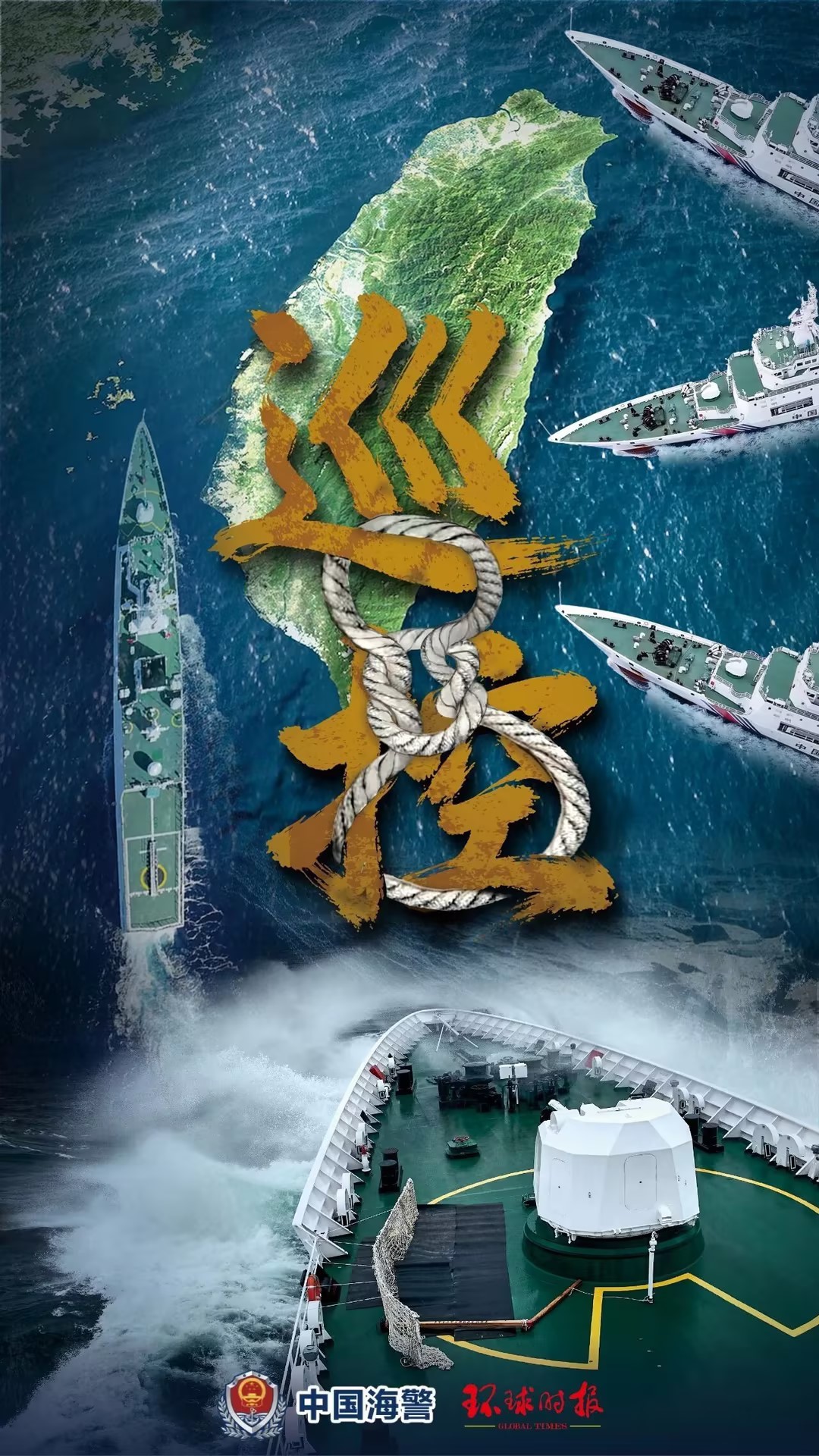
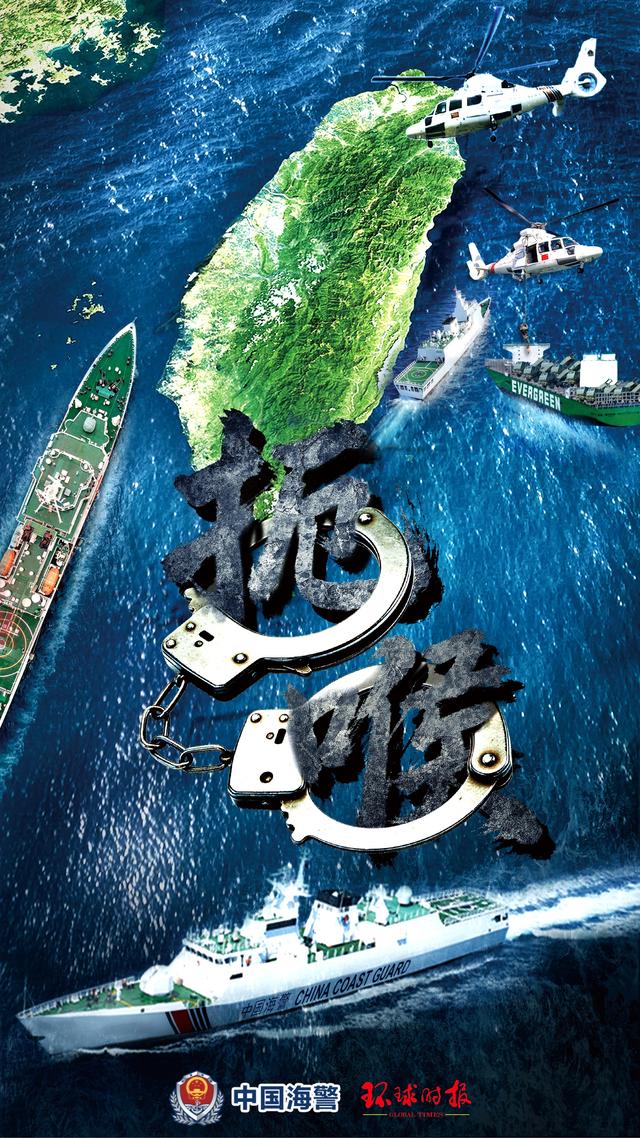
Core Viewpoint - The Chinese Coast Guard has initiated comprehensive law enforcement patrols around Taiwan, showcasing its capabilities to control maritime areas and prevent external support for Taiwan independence forces [1][2][4]. Group 1: Patrol Operations - Starting December 29, the Chinese Coast Guard organized a fleet to conduct patrols in waters near Taiwan, Matsu, and Wuqiu, focusing on joint fishing protection, identification, control, and interception exercises [1]. - The patrols involved multiple vessels, particularly emphasizing the blockade of key maritime routes to Taiwan, including ports in Keelung, Tainan, Kaohsiung, and Hualien [2][3]. Group 2: Thematic Posters - The Coast Guard released a series of thematic posters, including "巡控" (Control), "扼喉" (Choke), and "缉'独'" (Capture Independence), each highlighting different aspects of their enforcement capabilities [2][5][6]. - The "Control" poster illustrated the Coast Guard's strategy of surrounding Taiwan from multiple directions, emphasizing the strength of their maritime presence [2][3]. - The "Choke" poster depicted the interception of a cargo ship carrying military equipment, reinforcing the message of the Coast Guard's readiness to act against potential threats [3][4]. Group 3: Legal and Military Implications - The Coast Guard has asserted its authority to intercept civilian vessels suspected of transporting military equipment, framing such actions as legitimate under its enforcement rights in Chinese territorial waters [4]. - The thematic posters also symbolically represented the Coast Guard's commitment to countering Taiwan independence forces and preventing their escape or external support [6].
中国海警局联合《环球时报》重磅发布系列海报:《巡控》《扼喉》《缉“独”》
Huan Qiu Wang· 2025-12-30 22:53
Core Viewpoint - The Chinese Coast Guard has initiated comprehensive law enforcement patrols around Taiwan, showcasing its capabilities to control maritime areas and prevent external support for Taiwan independence forces [1][4]. Group 1: Patrol Operations - Starting December 29, the Chinese Coast Guard organized a fleet to conduct patrols around Taiwan and nearby waters, focusing on joint fishing protection, verification, control, and interception exercises [1]. - The patrols are aimed at key maritime routes, particularly around the northern, southwestern, and eastern approaches to Taiwan, effectively blocking access to major ports such as Keelung, Tainan, Kaohsiung, and Hualien [4]. Group 2: Thematic Posters - The Coast Guard released thematic posters titled "Patrol Control," "Chokehold," and "Capture Independence," each highlighting different aspects of their enforcement capabilities [1][4][8]. - The "Chokehold" poster emphasizes the Coast Guard's ability to intercept vessels carrying military equipment, such as the HIMARS rocket system, showcasing a proactive stance against potential threats [7]. Group 3: Legal Authority and Enforcement - The Coast Guard asserts its legal authority to intercept and detain vessels suspected of transporting military equipment, particularly those used by Taiwan's independence forces [8]. - The "Capture Independence" poster illustrates the Coast Guard's comprehensive enforcement strategy, including the use of aerial and maritime assets to prevent escape routes for independence advocates [11].

扼喉台海海报发布
Huan Qiu Shi Bao· 2025-12-30 02:54
Group 1 - The core viewpoint of the articles revolves around China's maritime enforcement actions around Taiwan, emphasizing the capability to intercept and control key maritime routes to counter "Taiwan independence" movements [2][4] - The Chinese Coast Guard has organized patrols in the waters surrounding Taiwan and nearby islands, showcasing their ability to manage critical sea areas and intercept dangerous targets [2] - The "Chokehold" poster released by the Chinese Coast Guard highlights the enforcement actions against vessels transporting military equipment, specifically targeting a cargo ship carrying HIMARS rocket launchers [2] Group 2 - Reports indicate that the Taiwanese authorities have previously used civilian cargo ships to transport U.S.-made M1A2T tanks, raising concerns about the legitimacy of such actions [4] - Military analysts suggest that if "Taiwan independence" forces provoke military conflict and utilize civilian vessels for arms transport, these ships could be treated as military targets by the Chinese Coast Guard [4] - The "Chokehold" poster emphasizes the enforcement authority of the Chinese Coast Guard, indicating their right to take action against civilian entities that support "Taiwan independence" and threaten national unity [4]
铭记历史荣耀 积蓄统一大势
Xin Lang Cai Jing· 2025-12-28 19:25
Core Viewpoint - The year 2025 marks significant historical commemorations for both sides of the Taiwan Strait, emphasizing unity and the importance of resisting separatism while promoting peaceful development and national rejuvenation [1][2][3]. Historical Commemoration - 2025 is the 80th anniversary of both the victory in the Chinese People's War of Resistance against Japanese Aggression and Taiwan's return to the motherland, with over 35 million casualties recorded during the war [2]. - Various commemorative activities have taken place across the Taiwan Strait, highlighting the shared historical memory and national identity among Chinese people [2][3]. Political Dynamics - The Democratic Progressive Party (DPP) faced significant backlash in 2025, with a failed "mass recall" campaign reflecting public dissatisfaction with its policies [4]. - The DPP's actions have been characterized by increased provocations for independence, which have heightened tensions across the Taiwan Strait [4][5]. Cross-Strait Relations - The mainland has maintained a firm stance against separatism, reinforcing the "One China" principle and enhancing legal frameworks to deter independence movements [5][6]. - There is a strong emphasis on deepening exchanges and cooperation between the two sides, with initiatives aimed at fostering closer ties and mutual benefits [6][7]. Cultural and Economic Exchange - The 2025 Cross-Strait Entrepreneurs Summit saw around 800 participants discussing opportunities in various sectors, emphasizing collaboration over division [7]. - Cultural exchanges have flourished, with Taiwanese films and mainland art gaining popularity, showcasing the shared cultural heritage [7][8]. Public Sentiment - The annual character selection in Taiwan revealed a preference for the character "势" (force), symbolizing a collective desire for unity and a hopeful future [8][9]. - There is a growing recognition among Taiwanese citizens of the benefits of closer ties with the mainland, countering negative narratives propagated by the DPP [8][9].
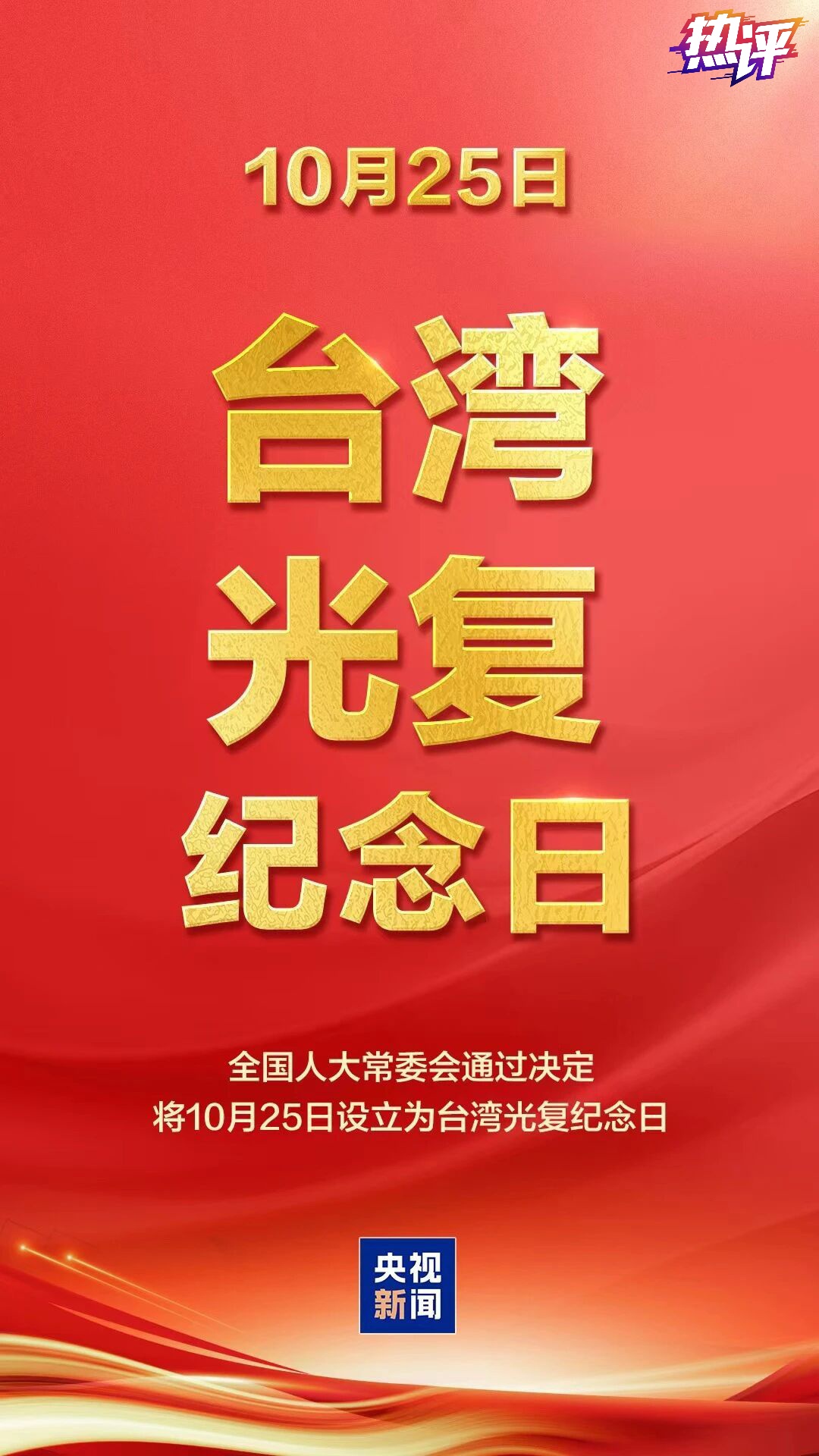
携手推进祖国统一大业 同心开创民族复兴光明前景
Yang Shi Xin Wen Ke Hu Duan· 2025-10-25 12:55
Core Viewpoint - The establishment of Taiwan Recovery Memorial Day reflects the collective will and sentiment of all Chinese people, including Taiwanese compatriots, marking a significant historical event in the context of Taiwan's return to Chinese sovereignty after World War II [4][5]. Group 1: Historical Context - Taiwan was ceded to Japan by the Qing government in 1895 after the First Sino-Japanese War and was returned to Chinese sovereignty on October 25, 1945, following Japan's defeat in World War II [1]. - The decision to establish Taiwan Recovery Memorial Day was passed by the 14th National People's Congress Standing Committee, highlighting the importance of this historical event [1][4]. Group 2: Collective Sentiment and Significance - The establishment of Taiwan Recovery Memorial Day is seen as a response to public sentiment and reflects the shared aspirations of all Chinese people, emphasizing the historical connection between Taiwan and the mainland [4]. - The sacrifices made by over 650,000 Taiwanese during the anti-Japanese struggle are acknowledged, reinforcing the narrative that Taiwan's recovery is a part of the broader Chinese national identity [4]. Group 3: Current Relevance - The memorial day serves as a counter to "Taiwan independence" rhetoric and aims to strengthen national unity and territorial integrity, especially in light of current political tensions [5]. - The commemoration of Taiwan's recovery is viewed as essential for fostering cross-strait relations and promoting a shared historical memory among the Chinese people [5][6].