反帝国主义

Search documents
英媒:特朗普撼动世界,世界却爱上中国
Xin Lang Cai Jing· 2026-01-19 05:50
Core Viewpoint - The article argues that Trump's approach to foreign policy has led to a decline in American moral superiority and an increase in global admiration for China, as countries grow weary of U.S. hypocrisy and double standards [1][2][5]. Group 1: U.S. Foreign Policy and Global Perception - The article highlights that the U.S. has lost credibility in its moral stance, particularly after the Biden administration's failed attempts to revive Cold War narratives following Russia's actions in Ukraine [1][2]. - A global opinion poll indicates that during Trump's first year of his second term, more people believe that China's influence will continue to grow, suggesting a shift in global sentiment towards China [2][6]. - The article notes that many individuals in various countries are increasingly using Chinese products, such as electric vehicles and solar panels, which contributes to a favorable view of China [2][6]. Group 2: Trump's Leadership and Its Implications - Trump's leadership is characterized as a departure from diplomatic niceties, openly stating that U.S. actions in countries like Venezuela are driven by oil interests rather than democratic ideals [2][6]. - The article suggests that Trump's display of American power has not yielded the expected support, as global attention is drawn to China's successes rather than U.S. military actions [7][8]. - It is noted that Trump's "America First" policy has led to a perception of the U.S. as a solitary actor, with only 16% of Europeans viewing the U.S. as an ally, while 20% see it as an adversary [8][9]. Group 3: Historical Context and Ideological Shifts - The article references Machiavelli's idea that being feared is better than being loved, questioning why Trump's show of strength has not garnered the anticipated support [7]. - It discusses how the U.S. won the Cold War not just through strength but by being distinct, which is now perceived as lacking, leading to a diminished fear of China [9]. - The article concludes by questioning the significance of U.S. support if it is not based on a genuine defense of freedom, implying that the rationale for pro-American sentiment is eroding [9].
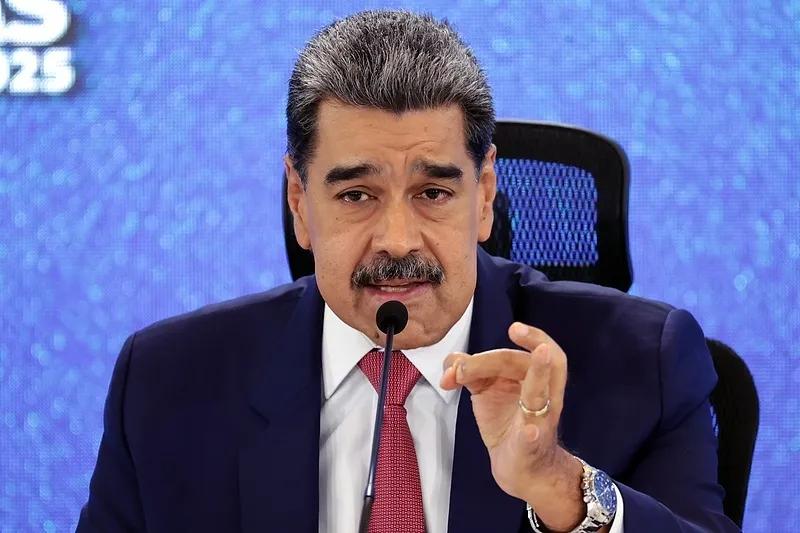
英国金融时报:从冉冉升起的革命者到特朗普的俘虏,委内瑞拉总统尼古拉斯·马杜罗
美股IPO· 2026-01-04 00:51
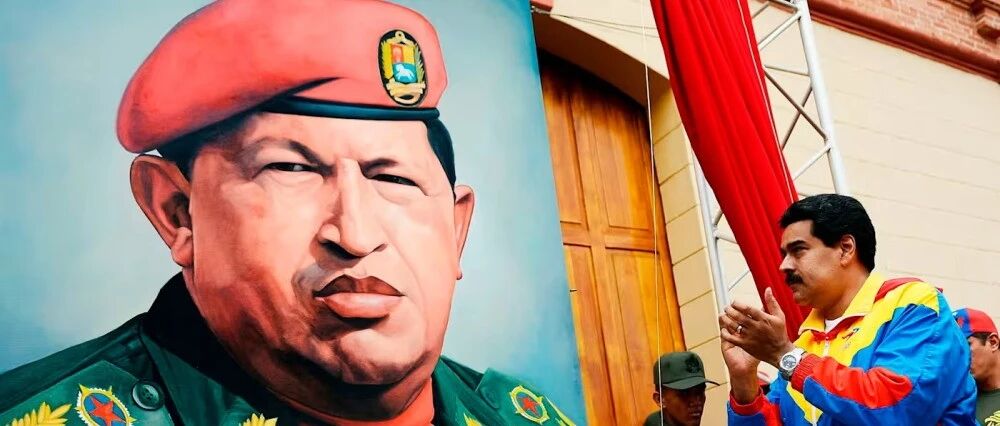
Core Viewpoint - Nicolás Maduro, the President of Venezuela, has faced multiple attempts to overthrow his regime but has led the country into economic collapse, with a significant decline in GDP and widespread corruption [1][10]. Group 1: Maduro's Political Journey - Maduro has survived several coup attempts, including a failed uprising by opposition leader Juan Guaidó in 2019 and a drone attack during a military parade in 2018 [3][10]. - Following the death of his predecessor Hugo Chávez in 2013, Maduro inherited the revolutionary mantle but has been characterized as a cunning and ruthless leader [6][9]. - Despite being seen as a "street leader" and a leftist figure opposing imperialism, Maduro's regime has been marred by corruption and mismanagement [10]. Group 2: Economic Decline - Venezuela, which possesses the largest proven oil reserves globally, has experienced one of the most severe economic contractions in history, with GDP shrinking nearly 80% since 2013, now standing at $83 billion [10]. - The country faces rampant corruption, with a global corruption index ranking Venezuela 178th out of 180 countries [10]. - An estimated 8 million Venezuelans have fled the country due to the dire economic situation [10]. Group 3: U.S. Relations and Legal Challenges - Maduro's regime has been under increasing pressure from the U.S., culminating in a shocking military operation that resulted in his kidnapping and transport to the U.S. [2][6]. - U.S. authorities have accused Maduro of leading a drug trafficking network known as the "Sun Cartel," which has been linked to significant criminal activities [12][13]. - The U.S. has imposed sanctions on Maduro and his associates, with impending legal actions expected in U.S. courts [13].

直扑马杜罗,特朗普为何这么急?
Xin Lang Cai Jing· 2026-01-03 12:02
Core Viewpoint - The article discusses a significant military action ordered by U.S. President Trump against Venezuelan President Maduro, resulting in Maduro's capture and the implications of this event for U.S.-Venezuela relations [1][3][8]. Group 1: Military Action Details - The military strike occurred on January 3, 2026, with reports of multiple explosions in Caracas, including at least seven explosions and low-flying helicopters [3][5]. - The U.S. military targeted key Venezuelan military installations, including air defense systems and military bases, leading to significant infrastructure damage [6][11]. - Following the attack, there was widespread power outage in Caracas, and the U.S. Federal Aviation Administration (FAA) prohibited commercial flights over Venezuela due to safety risks associated with the military action [6][11]. Group 2: Political Context - The military action was unexpected, as many analysts believed economic sanctions would suffice to prompt regime change in Venezuela [8][10]. - Trump's decision to escalate military involvement came despite previous assurances from U.S. officials that there were no plans for war against Venezuela [8][10]. - The political landscape in Venezuela has shifted, with Maduro and his government facing increasing pressure from both domestic and international fronts [9][10]. Group 3: Strategic Interests - The U.S. has long viewed Venezuela as a critical area of interest due to its rich energy resources and historical anti-imperialist sentiments [9][10]. - Trump's administration has been motivated by a desire to regain control over Venezuelan oil resources and to combat drug trafficking linked to the Maduro government [10][11]. - The military buildup around Venezuela included significant naval assets and personnel, indicating a serious commitment to military readiness in the region [10][11].