
发展与安全

Search documents
筑牢发展安全根基 守住风险防控底线
Zhong Guo Zheng Quan Bao· 2025-12-09 20:22
Group 1 - The core viewpoint emphasizes the importance of balancing development and security to ensure high-quality economic growth and stability in the face of complex internal and external challenges [1][6] - The Xinjiang Tarim Basin 750 kV power transmission and transformation project has been fully operational, enhancing China's energy security [1] - The agricultural sector has shown positive results, with summer grain production reaching 299.48 billion jin and early rice production increasing by 680 million jin [1] Group 2 - The implementation of the seed industry revitalization action and high-standard farmland construction aims to ensure food security and self-sufficiency in grain production [2] - The release of the world's first mass-producible sodium-ion battery by CATL enhances China's influence in the battery industry [2] - The high-tech manufacturing sector's added value increased by 9.6% year-on-year in the first three quarters, with China leading in the production of most major industrial products globally [2] Group 3 - Major infrastructure projects, including water conservancy and transportation upgrades, are being accelerated to support economic stability and growth [3] - China's GDP is projected to reach 140 trillion yuan in 2025, reinforcing its position as the world's second-largest economy [3] - The government is actively implementing measures to stabilize the real estate market, including financial support for housing demand [4][5] Group 4 - Over 60 cities have introduced housing subsidies or "old-for-new" policies, and the financing coordination mechanism for urban real estate has facilitated over 7 trillion yuan in loans [4] - The sales area and sales volume of new commercial housing from January to October have seen a reduction in year-on-year decline, indicating a gradual recovery in the real estate market [5] - The establishment of the Inner Mongolia Rural Commercial Bank has significantly enhanced the risk resistance capacity of local financial institutions [5] Group 5 - The issuance of 5 trillion yuan in special government bonds aims to support state-owned banks and enhance the financial system's risk management capabilities [6] - The government is focusing on proactive measures to address risks in key sectors, ensuring a stable foundation for high-quality development [6][7] - The construction of a unified national electricity market is progressing, with significant reforms aimed at overcoming regional barriers [7] Group 6 - The release of a new generation of ultra-fast real-time oscilloscopes is expected to support advancements in semiconductors and 6G communication technologies [7] - The "14th Five-Year Plan" outlines strategic initiatives to enhance agricultural productivity, energy systems, and safety measures across various sectors [8] - The emphasis on maintaining a reasonable proportion of manufacturing and advancing core technologies is crucial for securing China's economic stability and growth [8]
中国银行研究院院长陈卫东:锚定时代方位把握机遇
Jing Ji Ri Bao· 2025-10-30 22:10
Core Viewpoint - The 20th Central Committee's Fourth Plenary Session emphasizes the "14th Five-Year Plan" period as crucial for laying the foundation for socialist modernization and achieving comprehensive development [1] Group 1: Economic Stability and Development - Ensuring stable economic growth and long-term social stability is vital during this key period [1] - The need to balance development and security is highlighted, avoiding the separation or opposition of the two [1] Group 2: Risk Management and Innovation - Emphasis on bottom-line thinking and extreme thinking to build a solid barrier against major risks [1] - Focus on key areas such as food, energy resources, and supply chains, with independent innovation leading the way [1] Group 3: Future Outlook - The foundation for national development and security will continue to strengthen, enhancing the balance, coordination, and sustainability of economic development [1] - National economic strength, technological capability, defense strength, comprehensive national power, and international influence are expected to reach new heights [1]

关于人工智能发展的几点思考
机器人圈· 2025-09-29 08:22
Core Viewpoint - The article emphasizes the importance of artificial intelligence (AI) as a driving force for technological revolution and industrial transformation, highlighting the need for a balanced approach between innovation and safety, as well as the integration of government guidance and market dynamics in AI development [1][10]. Group 1: Self-Innovation and Open Cooperation - Self-innovation is the foundation of AI development, and without core technology autonomy, open cooperation may lead to dependency [3]. - Since 2018, China has made breakthroughs in core algorithms and chip structures, establishing a self-sustaining industrial ecosystem [3]. - The domestic market serves as a testing ground for AI technology, supported by a complete industrial chain and the largest digital economy market globally [3][4]. Group 2: Dynamic Balance of Development and Safety - AI technologies are double-edged swords, bringing productivity leaps while posing potential risks [7]. - The development of AI must adhere to technological evolution laws and maintain national security [8]. - A balance between safety and innovation is crucial to avoid missing opportunities for productivity enhancement or falling into technological chaos [8]. Group 3: Government Guidance and Market Drive - Effective collaboration between government and market is essential for the efficient operation of the modern economic system and the development of AI [10]. - Government plays a crucial role in areas where the market is unwilling or unable to act, such as early funding for disruptive technologies [10][11]. - The complexity of technological innovation and global competition highlights the necessity of this collaboration for orderly and efficient AI development [11]. Group 4: Value Integration of Industrial Application and Social Governance - The rapid advancement of AI brings significant societal challenges, making social governance a focal point [14]. - Issues like algorithm bias and data misuse arise as AI becomes more integrated into human decision-making [14]. - Ensuring that AI applications are grounded in reasonable social governance norms is vital for balancing efficiency and fairness, innovation and safety, and commercial interests with public welfare [14].

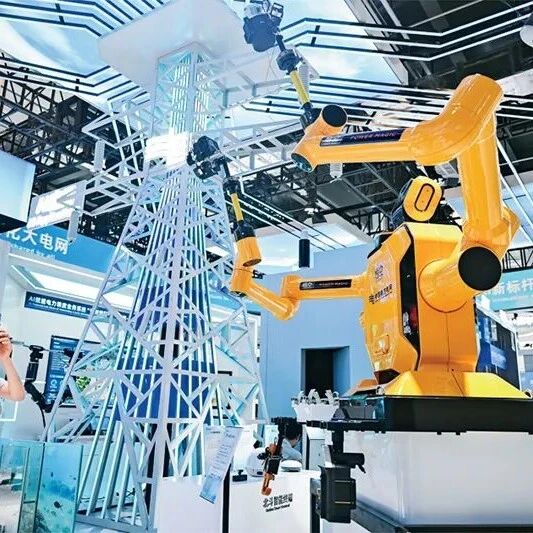
为什么既要坚定不移办好自己的事,也要坚定不移扩大高水平对外开放?
Si Chuan Ri Bao· 2025-08-31 22:27
Group 1 - The core viewpoint emphasizes the necessity of both "doing one's own business well" and "expanding high-level opening-up" as complementary strategies for building a new development pattern [1][4][6] - The internal foundation for constructing the new development pattern is to strengthen domestic capabilities, while the external condition is to create development opportunities and expand cooperation [1][6] - High-quality development is positioned as a fundamental requirement for China's modernization, necessitating a focus on both internal and external strategies to address uncertainties in the current environment [5][6][7] Group 2 - The approach of "doing one's own business well" is seen as essential for responding to external risks and challenges, enhancing strategic resilience [3][7] - The commitment to high-level opening-up is characterized as a distinctive feature of China's modernization, serving as a driving force for reform and development [4][5] - The integration of domestic and international markets is crucial for promoting high-quality development, with an emphasis on leveraging China's large market advantages [6][7]