同质化

Search documents
从背包客圣地到数字游民部落,大理是一座边缘乌托邦吗?
Xin Lang Cai Jing· 2026-02-22 05:08
Core Perspective - The article explores the paradox of modernity and the desire for an untouched utopia, as illustrated through the experiences of various groups in Dali, China, from the characters in James Hilton's "Lost Horizon" to contemporary backpackers and digital nomads [1][16][26]. Group 1: Historical Context - In 1933, during the Great Depression, the fictional "Shangri-La" in "Lost Horizon" represented a longing for a peaceful existence amidst chaos, combining modern comforts with a pre-modern lifestyle [1][2]. - The 1980s saw the arrival of backpackers in Dali, who sought an escape from consumerism and modernity, contrasting with the affluent tourists of the time [4][5]. Group 2: Cultural Interactions - Backpackers in Dali initially embraced local culture but soon grew weary of the simplicity, leading to a demand for familiar comforts like coffee and Western food [6][7]. - Local residents began to adapt to the preferences of backpackers, introducing Western-style cafes and foods, which altered the cultural landscape of Dali [7][8]. Group 3: Modern Nomads - By the 2010s, a new wave of middle-class digital nomads arrived in Dali, seeking a lifestyle that combined modern comforts with a connection to nature, similar to the earlier backpackers [12][16]. - These new immigrants faced challenges in adapting local customs to their modern expectations, leading to conflicts over the pace of life and local practices [13][14]. Group 4: Economic Dynamics - Both backpackers and digital nomads utilized economic advantages from their home countries to afford a lifestyle in Dali, highlighting a form of "temporal arbitrage" [18][20]. - The influx of tourists and new residents has driven up local rents, leading to a homogenization of Dali's cultural identity and a loss of its unique character [22][23]. Group 5: Utopian Illusions - The article argues that Dali serves as a mirror reflecting the desires and contradictions of modernity, where the quest for an untouched paradise ultimately leads to the same pressures of urban life [26][25]. - The cycle of seeking escape only to recreate the very systems they wish to flee from illustrates the inherent contradictions in the pursuit of authenticity and simplicity in a modern context [24][26].


“人均150元火锅时代”翻篇,门店排队两小时背后:巴奴、湊湊客单价失守
Mei Ri Jing Ji Xin Wen· 2025-10-13 08:50
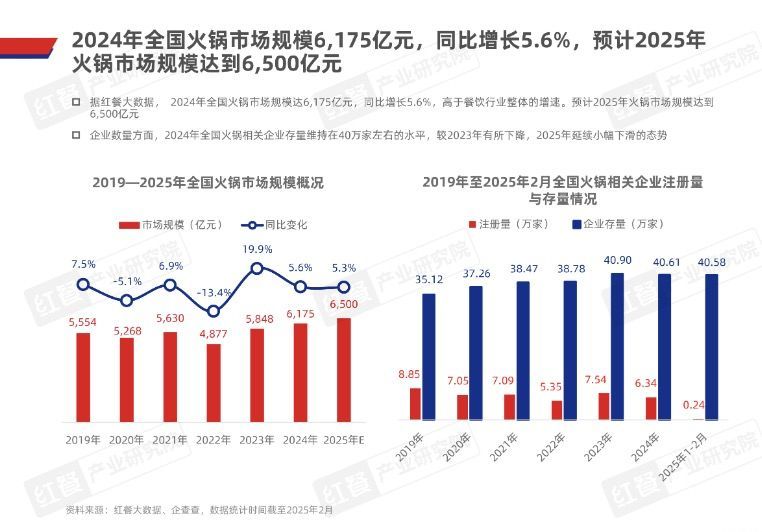
Core Insights - The hot pot industry in China is experiencing a significant shift from "incremental competition" to "stock competition," with a noticeable slowdown in market growth and a focus on price-sensitive consumers [5][6][10] Industry Overview - The national hot pot market size for 2024 is projected to be 617.5 billion RMB, reflecting a 5.6% year-on-year growth, although this is a decline compared to 2023 [5] - The number of hot pot restaurants is expected to decrease from approximately 535,500 in Q3 2024 to 504,800 by Q1 2025 [5][6] Consumer Behavior - There is a marked shift towards budget-friendly hot pot options, with establishments charging 70 RMB or less seeing a 20.9% increase in market share, while those charging over 90 RMB have seen a 16.9 percentage point decline [6] - Consumer spending in the hot pot sector has decreased from over 80 RMB to around 70 RMB by the end of 2024 [6] Company Performance - Brands like Ba Nu and Cou Cou are facing declining average spending per customer, with Ba Nu's average dropping from 150 RMB in 2023 to 138 RMB in 2025, and Cou Cou's from 143.8 RMB to 137.8 RMB [8][9] - Ba Nu has adjusted its product offerings to maintain competitiveness, including changes to its menu and pricing strategies [13][14] Competitive Strategies - The industry consensus has shifted towards "price reduction for survival," with companies like Hai Di Lao reporting a drop in average spending to 97.9 RMB [7] - Ba Nu and Cou Cou are implementing various strategies, such as membership programs and smaller portion options, to attract price-sensitive consumers [14][15] Market Challenges - Despite efforts to lower prices, consumer perception of value remains a challenge, with many feeling that the quality of offerings has diminished [15][17] - The hot pot industry is facing systemic challenges, leading some companies to explore alternative revenue streams, such as launching sub-brands [18]