后稀缺社会

Search documents
马斯克不是在开玩笑,而是当成了此生最大使命在执行
Guan Cha Zhe Wang· 2025-11-23 00:50
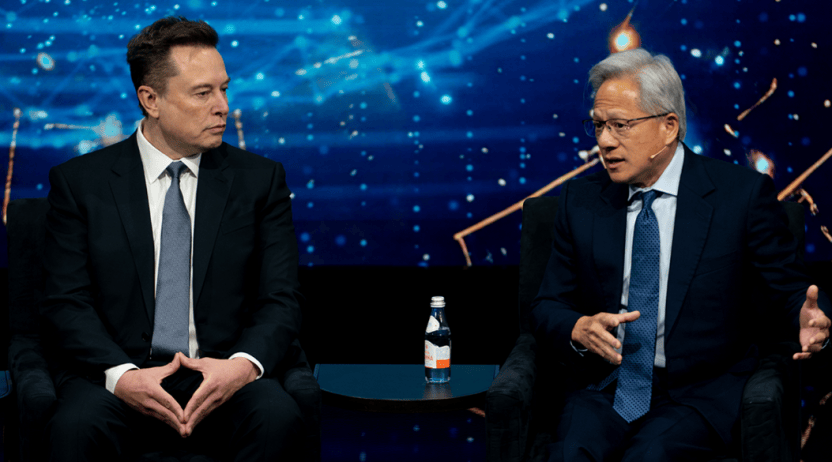
Core Viewpoint - The discussion between Elon Musk and Jensen Huang at the US-China Investment Forum highlights the transformative potential of AI and robotics, predicting a future where work becomes optional and money loses its significance due to extreme material abundance brought about by technological advancements [1][4][8]. Group 1: Future of Work - Musk predicts that in 10 to 20 years, work will become optional, akin to hobbies like gardening or gaming, as AI and robotics will eliminate poverty and create wealth for everyone [1][8]. - Huang agrees that AI will change job content in the short term, enhancing productivity by simplifying previously difficult tasks, as seen in the case of radiologists who now have more time for patient care due to AI [3][4]. Group 2: AI as Infrastructure - Both Musk and Huang view AI as a foundational infrastructure that will permeate every company, industry, and country, transitioning from retrieval-based computing to generative AI that requires real-time content generation [3][4]. - Huang emphasizes the need for "AI factories" to meet the demand for real-time content generation, indicating a shift in computational paradigms [3]. Group 3: AI in Space - Musk proposes that the most cost-effective way to conduct AI computations in the next four to five years will be through solar-powered AI satellites, overcoming the limitations of power generation and cooling on Earth [4]. - He estimates an annual AI computation demand of 300 gigawatts, which is two-thirds of the annual electricity consumption of the US, suggesting that space offers a viable solution to these challenges [4]. Group 4: Concerns and Philosophical Views - Huang dismisses concerns about an "AI bubble," asserting that the shift from general to accelerated computing justifies investments in revolutionary AI technologies [5]. - Musk concludes with a philosophical reminder that civilization's progress is not guaranteed, urging the need for effort to ensure a positive trajectory towards a better future [5].

马斯克不是在开玩笑,而是当成了此生最大使命在执行
虎嗅APP· 2025-11-22 13:08
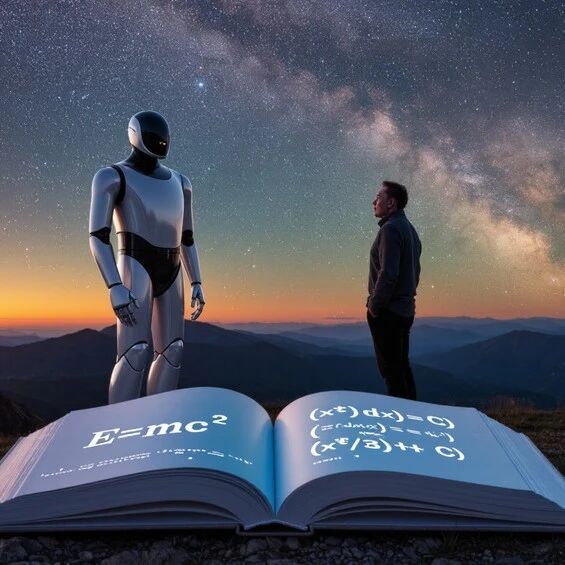
Core Viewpoint - The discussion between Elon Musk and Jensen Huang at the US-Saudi Investment Forum highlights the transformative potential of AI and robotics, suggesting that work may become optional in the future, with money losing its relevance as AI and robots create extreme material abundance [4][10][13]. Group 1: Future of Work - Musk predicts that in 10 to 20 years, work will become a choice, akin to hobbies like gardening or gaming, due to the advancements in AI and robotics [4][10]. - Huang agrees that while AI will change job content, it will enhance productivity by simplifying previously difficult tasks, as seen in the case of radiologists who now have more time for patient interaction due to AI [5][6]. Group 2: AI as Infrastructure - Both Musk and Huang view AI as a foundational infrastructure that will permeate every industry and country, transitioning from retrieval-based computing to generative AI [5][6]. - Huang emphasizes the need for "AI factories" to meet the demand for real-time content generation, indicating a shift in computational needs [5]. Group 3: Space and AI Computing - Musk proposes that the future of AI computing may shift to space, where solar energy can be harnessed without the limitations of Earth, estimating an annual demand of up to 300 gigawatts for AI computing [6][10]. - He envisions that space-based AI computing could alleviate the energy generation and cooling constraints faced on Earth [6]. Group 4: Philosophical Perspectives - Musk warns against taking civilization's progress for granted, suggesting that continuous effort is needed to ensure a positive trajectory for humanity [7]. - Huang dismisses concerns about an "AI bubble," asserting that the current shift in computing science justifies investments in revolutionary AI technologies [7]. Group 5: Cultural References - Musk frequently references Iain Banks' "Culture" series, viewing it as a blueprint for a future where abundance renders money obsolete and work becomes a leisure activity [9][10][13]. - The discussion reflects Musk's belief that achieving a post-scarcity society, as depicted in Banks' works, is a feasible goal, contrasting with the more skeptical view of the potential challenges in reaching such a state [12][14].
为什么马斯克又一次谈到班克斯?
Sou Hu Cai Jing· 2025-11-21 13:05
Core Insights - The discussion at the US-China Investment Forum highlighted the transformative potential of AI and robotics on future employment and economic structures, with Musk predicting that work will become optional in 10 to 20 years due to advancements in technology [1][4][9] - Huang Renxun emphasized that while AI will change job content in the short term, it will enhance productivity rather than lead to mass unemployment, as seen in the example of radiologists [3][4] - Both Musk and Huang view AI as a foundational infrastructure that will permeate every industry and country, necessitating the development of "AI factories" for real-time content generation [3][4] Group 1: Future of Work - Musk predicts that in the long run, work will be akin to hobbies, with money becoming irrelevant as AI and robotics eliminate poverty [1][7] - Huang supports the idea that AI will simplify previously difficult tasks, thus increasing productivity and allowing professionals to focus on more complex aspects of their work [3][4] Group 2: AI as Infrastructure - Huang describes AI as a fundamental infrastructure that will be integrated into all sectors, shifting from retrieval-based computing to generative AI [3][4] - Musk suggests that the future of AI computation may lie in space, powered by solar energy, to overcome terrestrial limitations [4] Group 3: Philosophical Perspectives - Musk draws parallels between his vision of the future and Iain Banks' "Culture" series, suggesting a post-scarcity society where traditional economic structures become obsolete [1][5][9] - Huang expresses confidence in the ongoing evolution of computing science, asserting that investments in revolutionary AI are justified and necessary [4][9]