
咖啡市场供需矛盾

Search documents
咖啡豆价格狂飙,中国咖啡总消费量20年暴增33倍,咖农皮卡换宝马
21世纪经济报道· 2025-10-31 13:17
Core Insights - The article highlights the significant transformation in the coffee farming industry in Yunnan, China, particularly in Pu'er City, where coffee farmers have seen substantial increases in income due to rising coffee prices and demand [1][4][5]. Group 1: Market Dynamics - Yunnan is the only region in China located within the coffee "golden growing belt," making it ideal for high-quality coffee production [1]. - The average purchase price of Yunnan coffee beans rose from 23.94 yuan/kg in 2021 to 31.6 yuan/kg in 2022, marking a 32% increase [5]. - By 2024, coffee bean prices continued to surge, with Arabica coffee futures exceeding 430 cents per pound, a 118.57% increase over the previous year [6]. Group 2: Farmer Experiences - Farmers like Pu Fenghui have transitioned from struggling with low prices to thriving, with some reporting annual incomes of over 200,000 yuan [4][6]. - The rise in coffee prices has led many farmers to upgrade their lifestyles, purchasing luxury vehicles and expanding their coffee plantations [4][7]. - The introduction of brands like Xin Coffee by farmers indicates a shift towards direct consumer engagement [6]. Group 3: Quality and Production Challenges - Despite the price increases, Yunnan's coffee production remains a small fraction of the global market, accounting for less than 1.5% of total coffee production [9]. - Issues such as poor management practices and inadequate quality control have historically hindered Yunnan's coffee industry [9][10]. - The region's coffee planting area has decreased by 37% from its peak in 2014, influenced by fluctuating international prices and environmental factors [9]. Group 4: Support and Growth Potential - Major companies like Nestlé and Starbucks have played a crucial role in supporting Yunnan's coffee industry through technology and market access [10][12]. - China's coffee consumption has skyrocketed from 16,700 bags in 2003/2004 to an estimated 576,500 bags in 2023/2024, indicating a massive growth potential [12]. - The per capita coffee consumption in China is only about 0.24 kg, compared to 5.3 kg in the EU and 4.2 kg in the US, suggesting significant room for growth [12][13]. Group 5: Market Position and Future Outlook - China's coffee imports reached 329,100 tons in 2023/2024, with domestic production unable to meet demand, leading to over 80% dependency on imports [13]. - The pricing dynamics have shifted towards a competitive market where local coffee beans are increasingly valued, with prices surpassing those offered by international traders [13]. - Despite the growth, Yunnan coffee still faces challenges in achieving global market prominence due to quality and production scale issues [14].


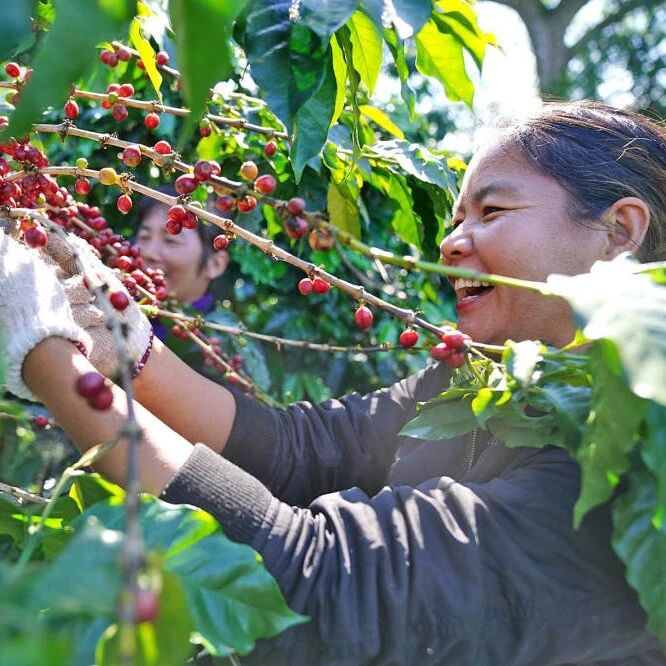
普洱咖农富了:皮卡换奔驰宝马丨咖啡变局
2 1 Shi Ji Jing Ji Bao Dao· 2025-10-31 10:25
Core Insights - The coffee farmers in Yunnan are experiencing significant improvements in their livelihoods, with many upgrading their vehicles and living standards due to rising coffee prices [1][2][10] - Yunnan is the only region in China located within the coffee "golden growing belt," making it a prime area for high-quality coffee production [1][12] - The average purchase price of Yunnan coffee beans increased from 23.94 yuan/kg in 2021 to 31.6 yuan/kg in 2022, marking a 32% year-on-year growth [6][12] Industry Overview - Yunnan's coffee production area and output account for over 60% of the province's total, with Pu'er City being the largest production area [1][12] - The global coffee market faced a downturn from 2019 to early 2021 due to oversupply and low international prices, leading to a decline in local farmers' production enthusiasm [5][12] - A market turnaround began in October 2021, driven by global coffee supply shortages and increased demand, resulting in a surge in coffee prices [6][12] Market Dynamics - By 2024, coffee prices are expected to continue rising, with Arabica coffee futures prices surpassing 430 cents per pound, a 118.57% increase over the past year [6][12] - China's coffee consumption has skyrocketed from 16,700 bags in 2003/2004 to an estimated 576,500 bags in 2023/2024, indicating a growth of over 33 times [18][20] - Despite the growth in domestic consumption, China remains heavily reliant on coffee imports, with over 80% of its coffee consumption being imported [20][21] Quality and Support - The quality of Yunnan coffee has historically been inconsistent, but companies like Nestlé and Starbucks have played a crucial role in improving production techniques and stabilizing quality through support programs [13][15][16] - Government policies have been implemented to enhance the coffee industry's development, including financial support for quality improvement and processing [17][20] Future Prospects - The domestic market for coffee in China presents significant growth potential, with per capita consumption still low compared to mature markets like the EU and the US [19][24] - The competitive landscape is shifting, with local coffee becoming more valuable and sought after, as evidenced by the rising prices and market dynamics [22][23] - However, Yunnan coffee still faces challenges in achieving a dominant position in the global market due to its low production share and quality gaps compared to international standards [24][25]