品牌重整

Search documents
安德玛困局 相比失去库里,价格混乱更麻烦
2 1 Shi Ji Jing Ji Bao Dao· 2025-11-28 23:14
Core Viewpoint - Under Armour is at a critical juncture for transformation, facing declining revenues and market challenges, necessitating a strategic overhaul to regain its competitive edge [1][3][22]. Financial Performance - For the latest fiscal quarter ending September, Under Armour's revenue fell by 4.7% year-on-year to $1.33 billion (approximately 9.41 billion RMB), marking the eighth consecutive quarter of revenue decline [1]. - The revenue breakdown by region shows North America down 8.3%, EMEA up 12.2%, Asia-Pacific down 13.7%, and Latin America up 14.6% [1]. - As of November 27, 2025, Under Armour's stock price was $4.41 per share, with a total market capitalization of $1.869 billion (approximately 13.225 billion RMB), a significant drop from its peak market value of $22 billion (approximately 155.67 billion RMB) in 2015 [2]. Strategic Changes - Under Armour's founder, Kevin Plank, returned to lead the company after the resignation of the third CEO in three years, announcing an 18-month brand restructuring plan [4][5]. - The restructuring plan has incurred $103 million in restructuring and impairment costs as of September 30 [5]. - A key action in the restructuring is the separation from the Curry Brand, which will operate independently starting November 14, 2025 [6][17]. Market Challenges - In the Asia-Pacific region, Under Armour's sales fell by 13.7% to $180 million (approximately 1.274 billion RMB), indicating a struggle to maintain market relevance [19]. - The competitive landscape in China is challenging, with Nike's revenue in the Greater China region at $1.512 billion (approximately 10.775 billion RMB) despite a 10% decline, while Lululemon saw a 24% increase to $441 million (approximately 3.12 billion RMB) [19]. - Under Armour faces issues with pricing inconsistency, leading to brand positioning challenges, as evidenced by significant price discrepancies between online and offline sales channels [23][27]. Leadership and Future Direction - The company has acknowledged its shortcomings in product presentation and market appeal, prompting a leadership change with the appointment of Chen Jianing as Vice President and General Manager for China [28][29].

安德玛困局:相比失去库里,价格混乱更麻烦
2 1 Shi Ji Jing Ji Bao Dao· 2025-11-28 13:09
Core Viewpoint - Under Armour is at a critical juncture for transformation, facing declining revenues and market challenges, particularly in the North American and Asia-Pacific regions [1][16]. Financial Performance - For the latest fiscal quarter ending September, Under Armour's revenue fell by 4.7% year-on-year to $1.33 billion (approximately 9.41 billion RMB), marking eight consecutive quarters of revenue decline [1]. - Revenue breakdown by region shows North America down 8.3% to $790 million, EMEA up 12.2% to $320 million, Asia-Pacific down 13.7% to $180 million, and Latin America up 14.6% to $50 million [1]. - As of November 27, 2025, Under Armour's stock price is $4.41 per share, with a total market capitalization of $1.869 billion (approximately 13.225 billion RMB), a significant drop from its peak market value of $22 billion (approximately 155.67 billion RMB) in 2015 [2]. Strategic Changes - Under Armour is undergoing a restructuring plan initiated by founder Kevin Plank, who returned as CEO in June 2024, with an 18-month timeline focusing on inventory reduction, price discipline, and profit maintenance [4]. - The company announced the separation from the Curry Brand, which will operate independently, as part of its strategy to concentrate on core business lines [4][14]. Market Challenges - In the Asia-Pacific region, Under Armour's sales fell by 13.7% to $180 million (approximately 1.274 billion RMB), indicating a struggle to maintain a strong market presence compared to competitors like Nike and Lululemon [16]. - The competitive landscape is tough, with domestic brands gaining market share and Under Armour facing issues with pricing inconsistencies that affect brand positioning [18][20]. Brand Perception - There are significant discrepancies in pricing between online and offline channels, leading to consumer dissatisfaction and questioning of brand value [20]. - Under Armour's brand image is under scrutiny, with criticisms regarding product quality relative to pricing, impacting its market appeal [20][21]. Leadership Changes - To address ongoing challenges, Under Armour appointed Chen Jianing as the new Vice President and General Manager for the China market, tasked with strategic planning and business operations [21][22].
安德玛困局:相比失去库里,价格混乱更麻烦丨运动变局
2 1 Shi Ji Jing Ji Bao Dao· 2025-11-28 13:06
Core Viewpoint - Under Armour is at a critical juncture in its transformation, facing declining revenues and significant market challenges, particularly in the North American and Asia-Pacific regions [1][2][19]. Financial Performance - For the latest fiscal quarter ending September 30, Under Armour's revenue fell by 4.7% year-over-year to $1.33 billion (approximately 9.41 billion RMB), marking the eighth consecutive quarter of revenue decline [1]. - Revenue breakdown by region shows North America down 8.3%, EMEA up 12.2%, Asia-Pacific down 13.7%, and Latin America up 14.6% [1]. - As of November 27, 2025, Under Armour's stock price was $4.41 per share, with a total market capitalization of $1.869 billion (approximately 13.225 billion RMB), a decline of over 90% from its peak market value of $22 billion (approximately 155.67 billion RMB) in 2015 [2]. Leadership Changes and Strategic Plans - In June 2024, Under Armour's third CEO in three years, Stephanie Linnartz, resigned, and founder Kevin Plank returned to lead the company [3]. - Plank initiated an 18-month brand restructuring plan, which has already incurred $103 million in restructuring and impairment costs as of September 30 [3]. - The core strategy focuses on reducing inventory, maintaining price discipline, and concentrating resources on the most profitable business lines [3]. Brand and Market Challenges - Under Armour announced the separation from the Curry Brand on November 14, 2025, indicating a shift in focus as the brand struggles to maintain its market position [4][16]. - The company faces significant challenges in the Chinese market, with sales in the Asia-Pacific region down 13.7% to $1.8 billion (approximately 12.74 billion RMB), highlighting its struggle to compete with major brands like Nike and Lululemon [19]. - Price discrepancies between online and offline channels have led to confusion and dissatisfaction among consumers, impacting brand perception and positioning [24][26]. Competitive Landscape - The overall market for sports brands is becoming increasingly difficult, with competitors like Nike and Lululemon also experiencing sales declines [20]. - Domestic brands are gaining market share, with Anta and Li Ning reporting positive growth, while Under Armour's market presence continues to weaken [22][21]. - Under Armour's brand image is under scrutiny, with consumers questioning the value proposition of its products compared to competitors [26]. Management Response - In response to market challenges, Under Armour has appointed Chen Jianing as the new Vice President and General Manager for the China region, tasked with strategic planning and business operations [27]. - The company is looking for solutions to its ongoing issues, with expectations for Chen to address the brand's declining performance in the Chinese market [28].
放弃库里,安德玛断臂求生
3 6 Ke· 2025-11-14 11:57
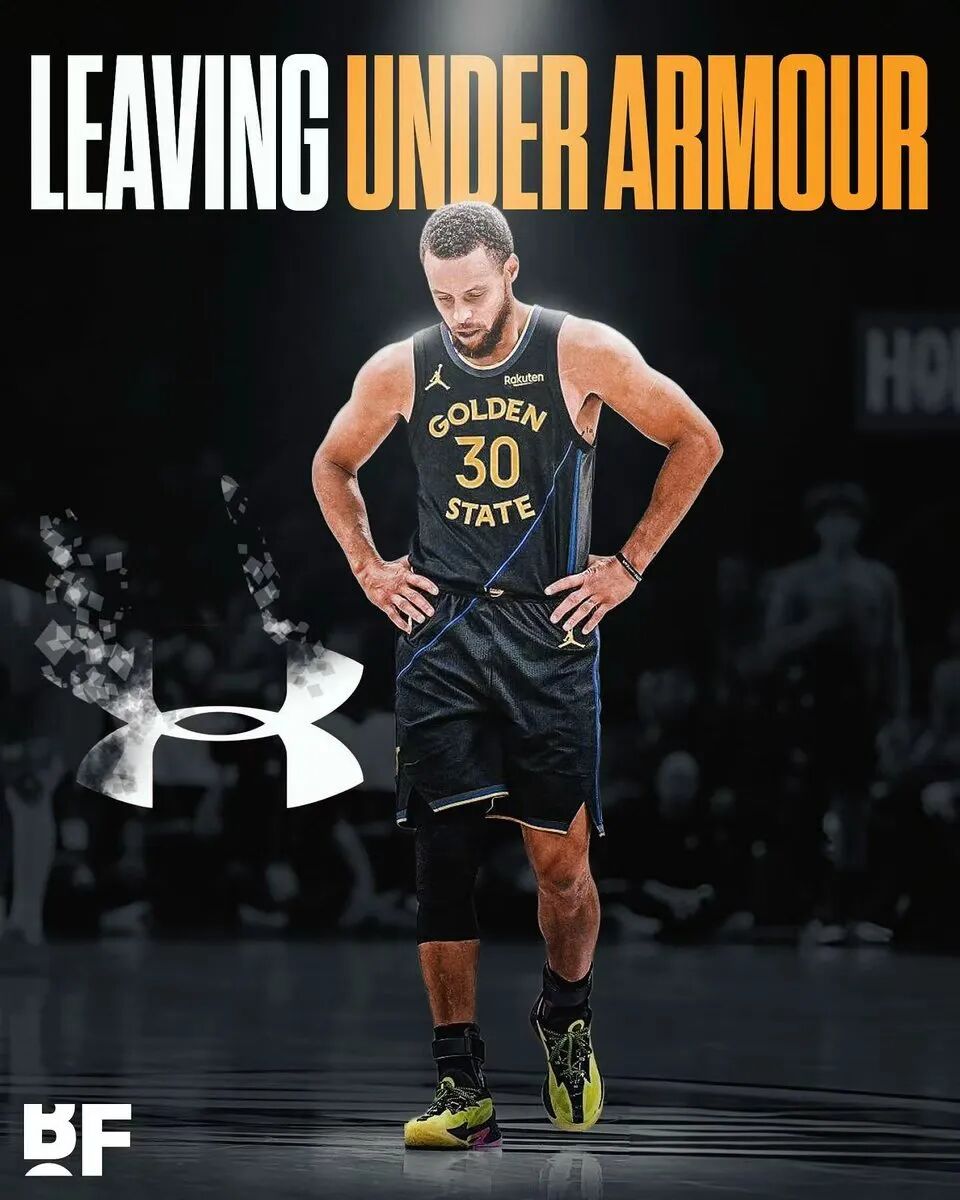
Core Viewpoint - Under Armour has announced the separation from Stephen Curry and the Curry Brand, marking the end of a 12-year partnership that was once considered a model in sports business [1][3]. Group 1: Historical Context - The partnership between Curry and Under Armour began in 2013 when Curry left Nike, which failed to secure his contract renewal, allowing Under Armour to sign him for $4 million annually despite holding only 1% of the basketball shoe market at that time [5]. - The collaboration led to significant successes, including a 350% increase in basketball shoe sales in 2016, with estimates suggesting Curry could generate $14 billion in value for Under Armour [5][7]. Group 2: Current Developments - The separation comes as Under Armour faces financial difficulties, with stock prices plummeting from a peak of $53.78 to $4.66, attributed to overexpansion and strategic missteps [7][10]. - Under Armour's restructuring plan, initiated by founder Kevin Plank after a series of CEO changes, has incurred $103 million in restructuring and impairment costs, with revenues declining by 5% year-over-year [10][11]. Group 3: Strategic Implications - The decision to part ways with Curry is seen as a necessary step for Under Armour to refocus its strategy and resources, as the brand aims to return to its core strengths amid financial pressures [15][20]. - The company plans to maintain its presence in the basketball market, indicating that the Curry Brand's athletes will still be under contract with Under Armour [23]. Group 4: Future Outlook - Under Armour is expected to leverage emerging trends in the fitness industry, such as CrossFit and hybrid training, to regain market relevance and focus on its unique competitive advantages [20][21]. - The brand's long-term strategy will involve reducing inventory and maintaining price discipline while redefining its market positioning to ensure sustainable growth [15][23].