啤酒国际化

Search documents
全球啤酒变革启示:中国的三大战略进阶
Haitong Securities International· 2025-12-22 01:02
Investment Rating - The report assigns an "Outperform" rating to multiple companies in the Chinese staples sector, including Guizhou Moutai, Wuliangye, and Yanjing Beer among others [1]. Core Insights - The global beer industry is undergoing a profound transformation, shifting from cyclical fluctuations to structural changes, driven by health consciousness and generational shifts in consumption [3][10]. - In China, the beer market faces unique challenges, including a transition to value-driven consumption, the failure of traditional distribution models, and intensified cross-industry competition [17][18]. Summary by Sections Global Beer Industry Transformation - Global beer sales are projected to decline by 1% in 2024, remaining below pre-pandemic levels, with significant shifts in consumer behavior noted, particularly among younger generations [10][12]. - Health awareness is leading to a reduction in alcohol consumption, with 49% of American consumers planning to drink less, a trend that is even more pronounced among Generation Z [12][17]. Strategic Directions for Chinese Beer Companies - **Leadership and Efficiency**: Establishing a dominant position in the local market is crucial for global expansion. Companies should focus on high-end product quality, optimizing cost structures, and building strong regional brands before expanding nationally [4][19]. - **Diversification**: Successful diversification should focus on product synergy, channel reuse, and brand extension, with a high success rate in expanding into related categories like low-alcohol and soft drinks [5][37]. - **Internationalization**: Companies should adopt a cautious approach to internationalization, starting with exports and partnerships in Belt and Road countries to mitigate risks [6][7]. Investment Recommendations - The report suggests that Chinese beer companies should enhance operational efficiency, innovate product offerings tailored to local tastes, and pursue diversification and internationalization strategies that are risk-controlled [7][34]. - Key investment lines include operational improvements leading to value reassessment, beneficiaries of structural upgrades, and pioneers in emerging categories [7][34].




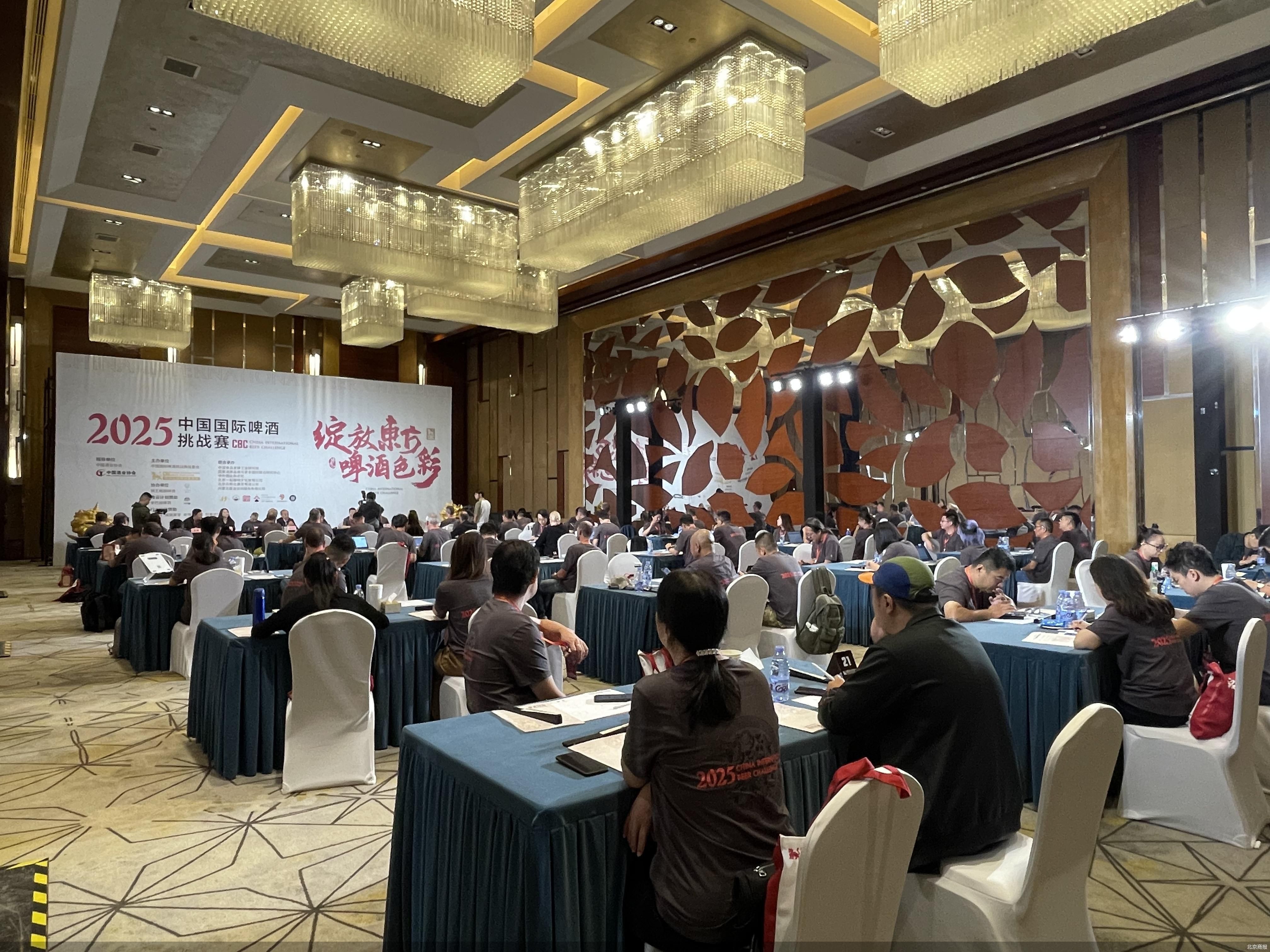
开启啤酒国际对话 2025中国国际啤酒挑战赛开赛
Bei Jing Shang Bao· 2025-09-26 15:42
Core Insights - The 8th China International Beer Challenge is promoting the internationalization of Chinese beer, with a judging panel from 15 countries and regions [1][5] - The competition has seen record participation, with 75 judges evaluating 2709 entries, utilizing a new online scoring system for objective assessments [3][5] - The event serves as a platform for innovation in Chinese brewing, encouraging brewers to explore local ingredients and traditional brewing techniques [4][6] Event Details - The competition is divided into commercial and homebrew categories, with entries classified into 12 major groups and an additional "Qingyun Group," covering 78 specific beer styles [1] - The judging process employs a blind tasting method to ensure impartiality, with all entries identified only by numbers [5] Industry Impact - The event has become a significant driver for the awakening and innovation of Chinese beer styles, showcasing the diversity and cultural richness of Eastern flavors [4][6] - Increased participation from international brands and brewing institutions has enhanced the event's global perspective, responding to rising consumer demand for quality and diverse flavors [6][7] Future Outlook - The focus on internationalization is crucial for the craft beer sector, with the challenge serving as a platform for dialogue and integration into global standards [7] - China's craft beer market has rapidly evolved, becoming the largest producer and consumer globally, indicating a potential for further international engagement [7]