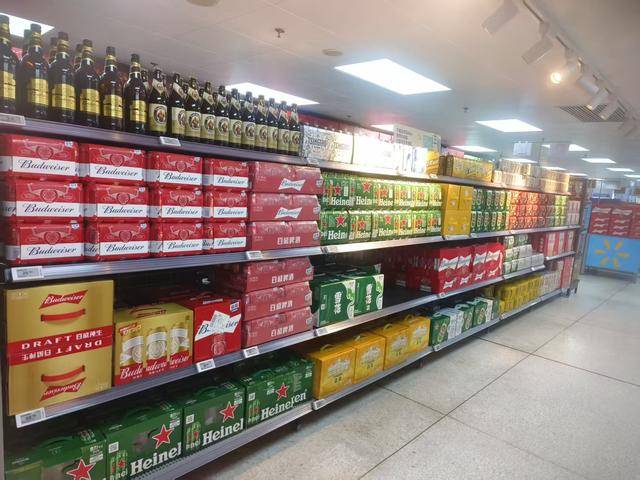
啤酒行业渠道变革

Search documents
珠江啤酒四季度由盈转亏 销量增速连续下滑背后意味着什么?
Xin Lang Cai Jing· 2026-02-27 09:43
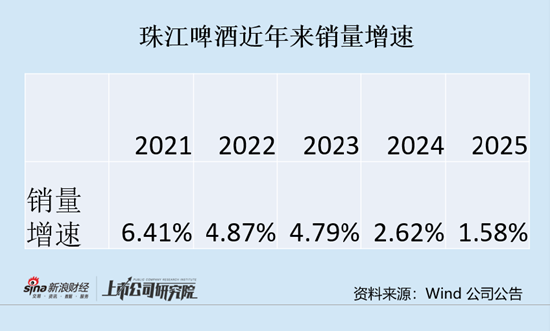
Core Viewpoint - Zhujiang Beer reported a revenue of 5.878 billion yuan for the fiscal year 2025, marking a 2.56% year-on-year increase, while net profit attributable to shareholders reached 903 million yuan, up 11.42% year-on-year. However, the company faced a significant downturn in the fourth quarter, transitioning from profit to loss, indicating a potential risk of stagnation due to over-reliance on the South China market and high-end products [1][9]. Financial Performance - For the first three quarters of 2025, Zhujiang Beer achieved a revenue of 5.073 billion yuan and a net profit of 944 million yuan. The estimated net profit for the fourth quarter was -41.27 million yuan, indicating a substantial loss compared to previous periods [2][10]. - The fourth quarter revenue was 805 million yuan, reflecting a year-on-year decline of 4.69% [2][10]. Sales and Market Dynamics - In 2025, Zhujiang Beer sold 1.4624 million tons of beer, with a modest growth of 1.58% year-on-year. The growth rate has significantly slowed from 6.41% in 2021 [3][11]. - The company heavily relies on the Guangdong province, which contributes to a significant portion of its revenue due to favorable economic conditions and high beer consumption [3][11]. Product Segmentation - Zhujiang Beer's revenue composition in 2024 was 68% from high-end products, 21.62% from mid-range products, and 6.42% from mass-market products. High-end products have been a key growth driver, while mid-range products have seen a decline in revenue from 1.51 billion yuan in 2021 to 1.239 billion yuan in 2024 [5][13]. - The company faces challenges as mid-range products continue to decline, with a 17.47% drop in the first half of 2025 [5][13]. Market Dependency and Risks - Zhujiang Beer is highly dependent on the South China market, which accounted for 95.81% of its revenue in 2024. The gross margin in South China was 47.8%, significantly higher than the 12.06% in other regions, which are experiencing continuous decline [6][14]. - The company has been expanding its production capacity, but with slow sales growth, there are concerns about the impact of depreciation and impairment on future earnings [7][15]. Industry Trends - The beer industry in China has entered a gradual decline phase, with a 0.6% decrease in production among major breweries in 2024. Growth opportunities are emerging from structural upgrades and new retail channels [8][16]. - The rise of craft beer and new retail formats presents both opportunities and challenges for traditional breweries like Zhujiang Beer, which must adapt to changing consumer preferences [8][16].


华润雪花啤酒总部迁至深圳 中国啤酒行业进入“价值竞争”新阶段
Sou Hu Cai Jing· 2026-01-02 08:43
Core Insights - The relocation of China Resources Snow Beer headquarters to Shenzhen is viewed as a strategic move amid a significant industry adjustment, marking a shift from "scale expansion" to "value competition" in the Chinese beer market [1][10] Industry Overview - The Chinese beer industry has entered a prolonged period of declining production, with national beer output in November 2025 at 1.596 million kiloliters, a year-on-year decrease of 5.8%, indicating the end of the "volume growth" era and a shift towards "price growth" as a survival strategy for market participants [2][4] Company Performance - China Resources Snow Beer reported a slight revenue increase of 0.8% to 23.942 billion yuan in the first half of 2025, with a significant profit growth of 23% to 5.789 billion yuan and a record high gross margin of 48.9%, driven primarily by high-end product sales, which grew over 10% year-on-year [4] - Other companies in the industry, such as Qingdao Beer and Yanjing Beer, also reported revenue growth, with Qingdao Beer achieving 29.37 billion yuan in revenue, a 1.4% increase, and Yanjing Beer’s mid-year report showing a 9.32% increase in revenue from mid-range products [4] Market Dynamics - The relocation of the headquarters to Shenzhen is part of a broader strategy to optimize resources and align with national strategies, while also reflecting a changing market landscape, with the eastern region contributing over 40% of revenue and showing the highest profit growth [6] - The South China market is becoming increasingly competitive for high-end beer consumption, with major players like Budweiser and Qingdao Beer making significant investments in the region [6] Channel Transformation - The beer industry is experiencing a profound transformation in distribution channels, with traditional retail and dining channels growing steadily, while online platforms for instant retail are rapidly expanding, becoming a new engine for reaching younger consumers [7][9] - Companies are leveraging consumer data to drive product development, with China Resources Snow Beer launching an exclusive product in collaboration with Meituan, and other brands like Qingdao Beer and Budweiser enhancing their online presence and delivery efficiency [9]