四个创建

Search documents
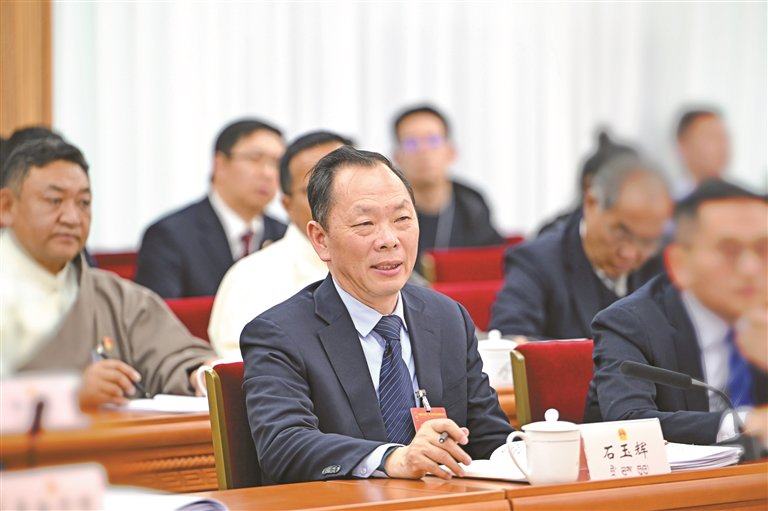
自治区人大代表、阿里地委副书记、行署专员石玉辉
Xin Lang Cai Jing· 2026-02-04 00:57
Economic Development - The GDP of the Ali region is projected to grow by 6.6%, demonstrating strong resilience and vitality in development [2] - The industrial added value for enterprises above designated size increased by 251.3%, highlighting the significant role of the industrial sector [2] - The total output value of agriculture, forestry, animal husbandry, and fishery reached 1.603 billion, with a growth of 10.4%, reinforcing food security [2] Social Welfare - Medical services have improved, with the Ali Regional People's Hospital achieving "three A" comprehensive hospital status, treating over 300 major diseases locally [3] - Employment policies have been effectively implemented, resulting in 2,137 new urban jobs and over 10,000 rural laborers finding employment [3] - The employment rate for recent college graduates stands at 96.89% [3] Infrastructure and Environment - Urban-rural integration is being promoted, with significant infrastructure projects underway, including new roads and bridges [3] - The region has established 43 high-quality living and working villages, benefiting numerous residents [3] - A total of 28,300 acres have been afforested as part of ecological initiatives, contributing to the local economy [4] Strategic Initiatives - The Ali region is focusing on four major tasks: ensuring social stability, promoting economic development, enhancing ecological protection, and strengthening border areas [5] - The region aims to create a highland economic green development demonstration zone and a national model for border prosperity [5]

金融戍边筑根基 深耕主业显担当
Zhong Guo Jing Ying Bao· 2025-08-22 18:54
Core Viewpoint - The financial sector in Tibet has significantly contributed to the region's economic development and stability, aligning with national strategies and local needs, while focusing on high-quality growth and ecological protection [2][6]. Group 1: Economic Growth and Financial Support - Tibet's GDP reached 138.27 billion yuan in the first half of 2025, with a year-on-year growth of 7.2%, and is projected to reach 276.5 billion yuan in 2024, marking a 155-fold increase since 1965 [2]. - Agricultural Bank of China (601288.SH) has provided a total of 717.4 billion yuan in loans to local entities over 30 years, supporting major infrastructure projects like the Sichuan-Tibet Railway [3]. - China Bank (601988.SH) has established 33 branches in Tibet, with deposits exceeding 55 billion yuan and loans surpassing 75 billion yuan, playing a crucial role in the region's financial landscape [3]. Group 2: Inclusive Financial Services - The Agricultural Development Bank of China has issued 126.4 billion yuan in loans over 13 years, covering over 90% of counties in Tibet, significantly contributing to rural revitalization [4]. - China Life Insurance (601628.SH) has launched 28 inclusive insurance products, covering over 1.51 million people, and aims to build a multi-layered protection network in Tibet [5]. Group 3: Environmental and Innovative Financial Solutions - Industrial and Commercial Bank of China (601398.SH) has issued 18.07 billion yuan in green loans since the 14th Five-Year Plan, with a balance of 22.48 billion yuan, reflecting a growth rate of over 20% [5]. - China Life Property & Casualty Insurance has introduced insurance for ancient trees, providing 1 million yuan in risk coverage for five ancient trees in Tibet, marking the region's first such insurance [5]. Group 4: Policy and Strategic Initiatives - The Tibet Financial Regulatory Bureau has implemented the "Financial Strong Border and Enriching People Three-Year Action Plan (2025-2027)" to enhance financial services in border areas, aiming for 70% coverage of township financial institutions by 2027 [6][7]. - The Postal Savings Bank (601658.SH) plans to provide at least 200 billion yuan in financing over the next five years, focusing on various integration initiatives to support Tibet's economic development [8][9].