
四链协同

Search documents
禾信仪器董事长周振,呼吁四链协同破解“卡脖子”
仪器信息网· 2026-01-26 09:02
Group 1 - The core viewpoint of the article emphasizes the need for modifications to the "Regulations on Promoting the Transformation of Scientific and Technological Achievements in Guangdong Province" to address the issue of over 90% reliance on imports for high-end scientific instruments, which is a critical bottleneck for the industry [2] - The chairman of HeXin Instruments, Zhou Zhen, advocates for strengthening the construction of the technology manager team and promoting the collaboration of talent, funding, technology, and industry to support the localization of high-end instruments [2]



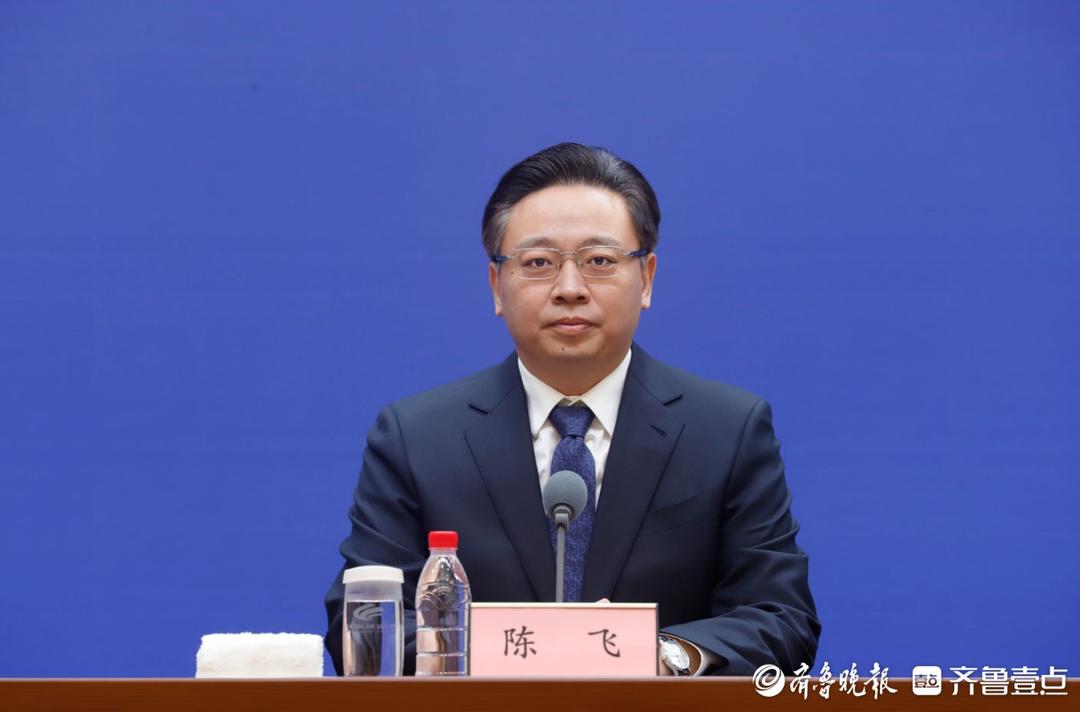
山东创新“链长制”机制,筑牢现代化产业体系根基
Qi Lu Wan Bao· 2025-12-08 09:24
Core Viewpoint - The Shandong provincial government is focusing on enhancing its manufacturing industry through the "chain leader system" during the 14th Five-Year Plan period, aiming to build a modern industrial system supported by advanced manufacturing [1] Group 1: Implementation of the "Chain Leader System" - Shandong is one of the first provinces to explore the "chain leader system," which was strategically upgraded to include a new work system of "total chain leader + chain leader + chain master" [3] - The provincial leadership has expanded the number of key industrial chains from 11 to 19, with 17 provincial leaders assigned as chain leaders to oversee the development of these chains [3] - The system promotes a collaborative approach where government drives initiatives while enterprises take the lead, enhancing efficiency in industrial development [3] Group 2: Targeted Work Methodology - Shandong has implemented a "1+5+N" checklist work method to ensure precise and targeted strategies for each industrial chain [4] - This method includes creating a comprehensive industrial chain map, establishing five core lists of support policies, and allowing for dynamic self-selected lists for each chain [4] - The approach aims to enhance the precision and effectiveness of policy and resource allocation [4] Group 3: Integration of Resources - The "chain leader system" emphasizes the integration of innovation, industry, finance, and talent, creating a collaborative ecosystem [5] - A "chief expert" system has been introduced to guide technological advancements, and 14 banks have been selected as financial chain leaders to develop tailored financial products [5] - The province has implemented over 3,000 provincial-level technology innovation projects annually, with a nearly 90% self-research rate [5] Group 4: Achievements and Future Directions - The innovative system has led to significant improvements in the core competitiveness of key industrial chains, with the information technology sector experiencing double-digit revenue growth [6] - The artificial intelligence industry has surpassed 100 billion yuan in scale, and the robotics sector has seen an annual compound growth rate exceeding 15% [6] - The provincial government plans to continue optimizing the "chain leader system" to strengthen the resilience and security of industrial supply chains [6]
强化高职院校“四链协同”产教融合
Xin Hua Ri Bao· 2025-12-01 21:09
Core Viewpoint - The integration of vocational education with industry is essential for addressing the challenges posed by the mismatch between talent cultivation and technological changes in new industries, as highlighted in the report from the 20th National Congress of the Communist Party of China [1] Group 1: Education-Industry Integration - The deep integration of industry and education is a key strategy for promoting mutual progress in education and industry, especially in the context of China's ongoing industrial transformation and upgrading [1] - A structured and in-depth integration of education and industry is necessary for cultivating a large number of high-quality technical and skilled talents, which are essential for maintaining competitiveness in industries and enterprises [1] - The "four-chain collaboration" model, which focuses on the education chain, talent chain, industry chain, and innovation chain, is crucial for building a modern vocational education system [1] Group 2: Talent Development - Vocational colleges should implement "enterprise-in-school" reforms and develop joint training programs with enterprises to cultivate high-quality, versatile skilled talents that meet modern industry demands [3] - Schools need to create personalized career guidance and skill assessment systems, integrating individual interests with future career goals, to ensure effective alignment between talent and industry needs [3] - The implementation of a vocational ability assessment system and dynamic growth records will help in tailoring training programs and adjusting learning paths flexibly [3] Group 3: Industry Chain Development - Vocational education must deeply integrate into the economic and social development system to enhance local industry quality and development [4] - High vocational colleges should explore new pathways for education-industry integration, forming collaborative groups that go beyond simple project cooperation to achieve deep synergy [4] - Collaboration with local governments and participation in government-led integration projects will strengthen the coupling of education, talent, and industry chains [4] Group 4: Innovation Chain Enhancement - High vocational colleges should collaborate with research institutions and industry enterprises to create a closed-loop innovation chain that effectively transforms research results into market applications [5] - Establishing a systematic innovation and entrepreneurship education framework will enhance students' innovative thinking and practical entrepreneurial skills [5] - Government support is crucial for facilitating the transformation of innovative outcomes from universities into market applications, thereby providing a solid foundation for industrial upgrades [5] Group 5: Overall Integration and Quality Improvement - Continuous improvement in curriculum reform, faculty development, and innovative integration pathways is necessary to enhance the quality and effectiveness of education-industry integration [6] - The "four-chain collaboration" not only supports the optimization of industrial structure and the supply-side reform of technical and skilled talents but also provides a stable support system for individual career development and lifelong learning [6]
武汉首次发布“未来之星”,国家专精特新“小巨人”企业占比超四分之一
Chang Jiang Ri Bao· 2025-11-17 12:20
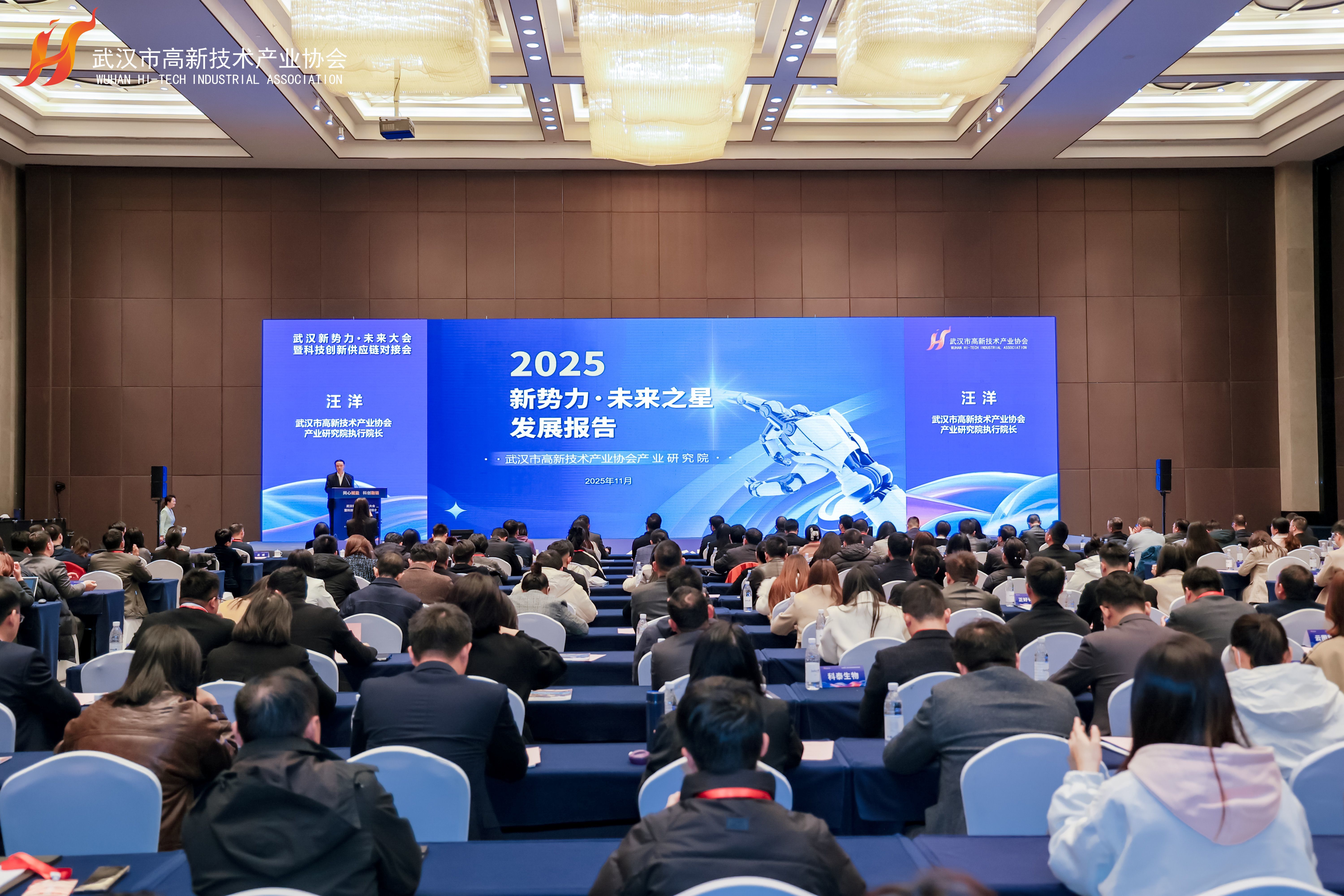
Core Insights - The "Future Stars" report highlights the strength and pioneering role of Wuhan's future industries, with over 25% of the selected 100 companies being recognized as national specialized and innovative "little giant" enterprises [1][4]. Group 1: Report Overview - The report was compiled by the Wuhan High-tech Industry Association's Industrial Research Institute based on self-reported data and field research, resulting in the selection of 100 "Future Stars" and 10 "New Rising Stars" [4]. - The total asset scale of the "Future Stars" companies is approximately 21.7 billion, with projected total revenue of about 13.1 billion for 2024, reflecting an average revenue growth rate of 67.85% [4]. Group 2: Innovation and R&D - High-tech enterprises constitute 80% of the "Future Stars," with an average R&D investment intensity of 52.96%, which is six times the national average for high-tech enterprises, indicating strong innovation momentum [4]. - Among the founders of these "New Forces" companies, 32% hold doctoral degrees, many of whom have backgrounds in prestigious universities or medical institutions, combining deep technical expertise with industry insight [4]. Group 3: Industry Coverage - The "Future Stars" span nine industrial chains, including optoelectronic information, health care, high-end equipment, artificial intelligence, and Beidou, with a focus on future manufacturing, materials, energy, and health [4]. - The report emphasizes that these "New Forces" are addressing market challenges through technological innovation and model breakthroughs, positioning themselves as core drivers of new productive forces [4]. Group 4: Event and Collaboration - The event was co-hosted by the Wuhan Municipal Committee of the Communist Party of China and the Wuhan Federation of Industry and Commerce, attracting over a hundred key enterprises, universities, research institutions, and financial investment organizations [5].
海州“四链协同”打造全方位公证服务体系
Jiang Nan Shi Bao· 2025-07-16 03:30
Group 1 - The core idea is to enhance notary service efficiency by focusing on public needs and building a comprehensive notary service system [1][2][3][4] Group 2 - The "Convenient Service Chain" aims to create a satisfactory "People's Notary" by promoting remote notary service points and establishing a dynamic ledger for business data tracking [1] - A "Three Hearts Service" mechanism is established for special groups, providing tailored services for the elderly, disabled, and minors [1] - The integration of "Notary + Mediation" has led to the resolution of 12 disputes through legal aid notary services [1] Group 3 - The "Enterprise Assurance Chain" focuses on building a trustworthy "Legal Notary" for businesses by offering customized services throughout different business stages [2] - The introduction of a "One Enterprise, One File" system allows for dynamic tracking of enterprise needs, particularly in intellectual property protection and dispute resolution [2] - The "135" service standard system enables expedited notary services, with a 30% reduction in overall processing time [2] Group 4 - The "Law Enforcement Collaboration Chain" aims to create a standardized process for evidence preservation in law enforcement activities, having participated in 68 enforcement activities this year [3] - The application of blockchain and electronic signatures is being explored to innovate "online notarization + trusted storage" services [3] - A mechanism for "Notary Mediation + Judicial Confirmation" has been established, achieving a mediation success rate of over 95% [3] Group 5 - The "Quality Control Chain" focuses on building a professional and reliable "Brand Notary" through a three-level quality control system and random inspections [4] - A comprehensive upgrade of hardware and service processes is being implemented to ensure a 100% qualification rate for notary documents [4] - A three-dimensional training system is being developed to enhance the political quality, professional skills, and service awareness of notary personnel [4]