
智慧校园建设

Search documents
正元智慧与芯位教育签署战略合作协议
Zheng Quan Shi Bao Wang· 2025-12-25 06:05
Core Viewpoint - Zhengyuan Wisdom has signed a strategic cooperation agreement with Geely Talent Development Group's Hainan Chip Education Technology Co., Ltd. to enhance educational quality through collaboration in various fields [1] Group 1: Strategic Cooperation - The partnership will leverage the core strengths of both companies in areas such as smart campus construction and AI teaching scenarios [1] - The collaboration aims to deepen the integration of industry and education, as well as expand cross-border educational resources [1] Group 2: Focus Areas - Key focus areas include practical cooperation in smart campus development and the implementation of AI in educational settings [1] - The initiative is expected to contribute to the high-quality development of education [1]
强化高职院校“四链协同”产教融合
Xin Hua Ri Bao· 2025-12-01 21:09
Core Viewpoint - The integration of vocational education with industry is essential for addressing the challenges posed by the mismatch between talent cultivation and technological changes in new industries, as highlighted in the report from the 20th National Congress of the Communist Party of China [1] Group 1: Education-Industry Integration - The deep integration of industry and education is a key strategy for promoting mutual progress in education and industry, especially in the context of China's ongoing industrial transformation and upgrading [1] - A structured and in-depth integration of education and industry is necessary for cultivating a large number of high-quality technical and skilled talents, which are essential for maintaining competitiveness in industries and enterprises [1] - The "four-chain collaboration" model, which focuses on the education chain, talent chain, industry chain, and innovation chain, is crucial for building a modern vocational education system [1] Group 2: Talent Development - Vocational colleges should implement "enterprise-in-school" reforms and develop joint training programs with enterprises to cultivate high-quality, versatile skilled talents that meet modern industry demands [3] - Schools need to create personalized career guidance and skill assessment systems, integrating individual interests with future career goals, to ensure effective alignment between talent and industry needs [3] - The implementation of a vocational ability assessment system and dynamic growth records will help in tailoring training programs and adjusting learning paths flexibly [3] Group 3: Industry Chain Development - Vocational education must deeply integrate into the economic and social development system to enhance local industry quality and development [4] - High vocational colleges should explore new pathways for education-industry integration, forming collaborative groups that go beyond simple project cooperation to achieve deep synergy [4] - Collaboration with local governments and participation in government-led integration projects will strengthen the coupling of education, talent, and industry chains [4] Group 4: Innovation Chain Enhancement - High vocational colleges should collaborate with research institutions and industry enterprises to create a closed-loop innovation chain that effectively transforms research results into market applications [5] - Establishing a systematic innovation and entrepreneurship education framework will enhance students' innovative thinking and practical entrepreneurial skills [5] - Government support is crucial for facilitating the transformation of innovative outcomes from universities into market applications, thereby providing a solid foundation for industrial upgrades [5] Group 5: Overall Integration and Quality Improvement - Continuous improvement in curriculum reform, faculty development, and innovative integration pathways is necessary to enhance the quality and effectiveness of education-industry integration [6] - The "four-chain collaboration" not only supports the optimization of industrial structure and the supply-side reform of technical and skilled talents but also provides a stable support system for individual career development and lifelong learning [6]
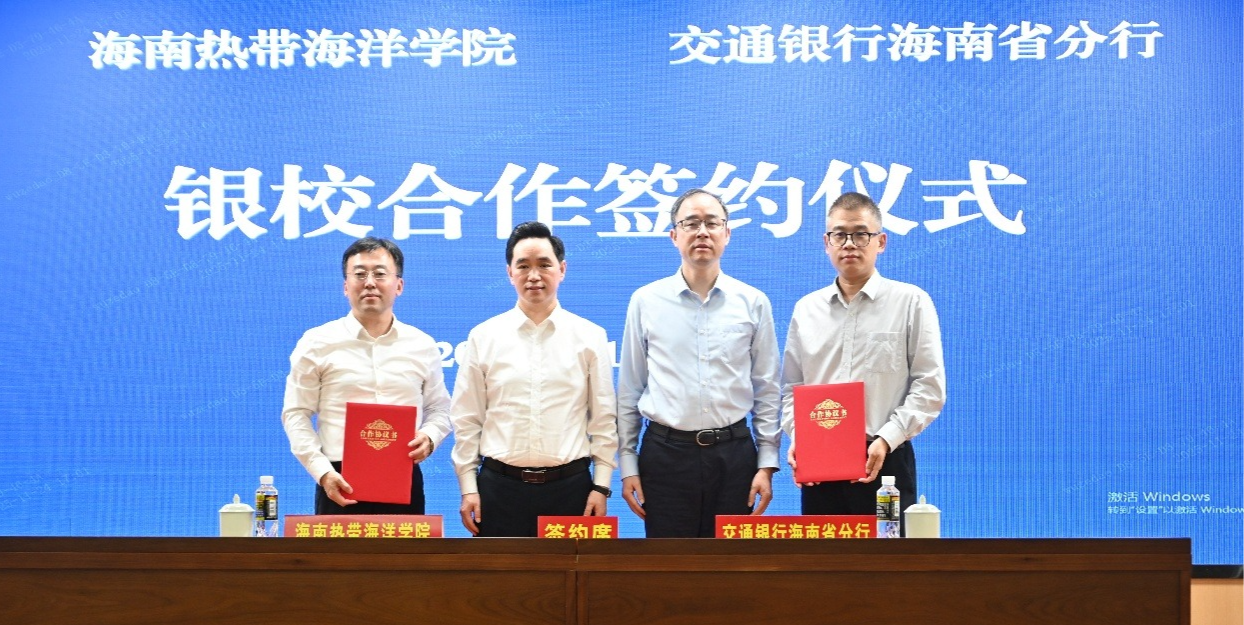
交通银行海南省分行与海南热带海洋学院签署银校合作协议
Zhong Guo Jin Rong Xin Xi Wang· 2025-11-26 03:23
Group 1 - The core viewpoint of the article is the collaboration between Bank of Communications Hainan Branch and Hainan Tropical Ocean University, focusing on financial support for educational and technological development [1][3] Group 2 - The agreement aims to leverage the bank's financial and digital service advantages to provide comprehensive financial support to the university [3] - The collaboration will emphasize the construction of a smart campus, integrating education, technology, and talent development [3] - Both parties will deepen cooperation in areas such as campus payment systems, financial support for marine industry innovation, and talent cultivation [3]


中信银行济南分行构建“金融+教育”银校协同新生态
Qi Lu Wan Bao· 2025-10-21 06:50
Core Viewpoint - The article highlights the efforts of China CITIC Bank's Jinan branch in enhancing financial services for universities during the back-to-school season through a "finance + education" ecosystem approach [1] Group 1: Payment Efficiency - The bank has upgraded its all-payment collection system to improve the efficiency of tuition fee collection, allowing payments to be processed in seconds through multiple channels such as WeChat, Alipay, and bank cards, addressing previous issues of system congestion and delayed transactions during peak payment periods [2] Group 2: Service Diversification - The bank is transitioning from a "single service" model to a "multi-ecosystem" approach by extending its service offerings to include comprehensive fund management for schools, wealth management and investment recommendations for faculty, and group insurance for students, positioning itself as a "comprehensive financial partner" for educational institutions [3] - Future plans include deepening collaboration with educational institutions in areas such as smart campus construction and fund management optimization, with tailored financial solutions aimed at supporting the stable and healthy development of educational organizations [3]


信息化背景下建设高校公文管理体系
Xin Hua Ri Bao· 2025-10-15 23:03
Core Viewpoint - The article emphasizes the importance of optimizing document management in higher education institutions to enhance governance efficiency and align with national educational policies [2][5]. Group 1: Importance of Document Management - Document management is a key carrier for administrative management in universities, reflecting governance service effectiveness and internal management quality [1] - Optimizing document management is crucial for implementing national educational policies and ensuring alignment with national development strategies [2] Group 2: Strategies for Improvement - Establish a specialized learning and discussion mechanism to accurately interpret and convey the essence of documents, involving relevant departments and experts [2] - Implement closed-loop management for documents, including monitoring execution processes and establishing feedback systems to ensure compliance with national strategies [2] Group 3: Information Platform Development - Build a unified resource-sharing platform leveraging information technology for integrated document management, enhancing governance capabilities [3] - Invest in hardware and software resources, ensuring the security and stability of document management systems [3][4] Group 4: Process Optimization - Optimize document management processes to ensure efficient circulation, including automated import of electronic documents and standardized online templates for drafting [5][6] - Establish strict timelines for document processing, with reminders for overdue tasks and performance assessments based on processing efficiency [6] Group 5: Talent Development - Strengthen the training of administrative personnel in information system operations to enhance document management effectiveness [7] - Create a systematic training mechanism and optimize evaluation and incentive systems to motivate staff and improve document processing rates [7]
以数字基建助推大学治理现代化
Xin Hua Ri Bao· 2025-09-18 02:53
Core Insights - The report emphasizes the importance of digital transformation in education as a key driver for modernizing China's education system and governance capabilities [1] - Universities are positioned as leaders in adopting new technologies to enhance educational practices and governance models [1] Group 1: Digital Transformation in Education - Digital transformation is recognized as a crucial direction for global educational reform, serving as a strong engine for modernizing educational governance [1] - The integration of digital infrastructure is essential for enabling the application of digital technologies in higher education [1] Group 2: Computing Power as a Core Engine - Computing power is identified as a critical driver for profound changes in the education sector, supporting modern governance and smart campus initiatives [2] - Enhanced computing capabilities facilitate real-time processing and deep analysis of diverse educational data, transforming it into valuable knowledge assets [2] - The shift from experience-based decision-making to data-driven governance is enabled by constructing a comprehensive governance platform powered by computing resources [2] Group 3: Smart Campus Development - Computing power is foundational for creating a collaborative educational ecosystem within smart campuses, integrating teaching, research, and campus life [3] - The development of virtual simulation teaching platforms and IoT systems relies heavily on robust computing infrastructure [3] Group 4: Education Cloud as a Governance Accelerator - The education cloud is a vital infrastructure for integrating new technologies like big data and AI, facilitating the reorganization of educational resources and governance models [4] - It acts as a "glue" for smart campus ecosystems, promoting collaborative efforts across various educational infrastructures [4] Group 5: Data Value Release - The education cloud serves as a "converter" for managing the entire lifecycle of educational data, enabling its transformation into actionable insights [5] - By facilitating data sharing across teaching, research, and management, the education cloud turns previously unused data into valuable assets [5] Group 6: Enhancing Governance Efficiency - The education cloud is a driving force for reengineering processes and enhancing collaboration within educational governance [6] - It supports the restructuring of management frameworks to promote proactive inter-departmental collaboration [6] Group 7: Building Data Centers - University data centers are essential for the stable operation of digital campus platforms and applications [7] - The construction of cloud-based data centers must adapt to evolving business needs and data growth [7] Group 8: Cloud Data Centers as a Governance Foundation - Cloud data centers are reshaping traditional educational management models by enabling real-time data integration and sharing [8] - The implementation of a unified data platform significantly improves the efficiency of administrative services and resource utilization [8] Group 9: Information Management Transformation - Cloud data centers facilitate the transition of university management teams from technical support to operational centers [9] - This transformation requires teams to possess both technical expertise and a deep understanding of educational needs [9] Group 10: Cultivating Digital Capabilities - Cloud data centers play a crucial role in enhancing digital literacy and organizational capabilities within universities [10] - The promotion of cloud-based tools encourages widespread participation in digital transformation efforts among faculty and students [10]