国产操作系统自主可控

Search documents
风格切换,红利迎来配置窗口?
Sou Hu Cai Jing· 2025-10-16 11:29
Core Viewpoint - The A-share market is experiencing a mixed trading pattern characterized by "traditional defensive sectors outperforming while technology growth sectors are undergoing a pullback" [1] Market Performance - A-share market showed a slight increase with the Shanghai Composite Index closing at 3916.23 points, up 0.1%, while the Shenzhen Component and ChiNext Index fell by 0.25% and rose by 0.38% respectively [2] - The Hang Seng Index closed down 0.09% at 25888.51 points, with the Hang Seng Tech Index dropping 1.18% to 6003.56 points, indicating pressure on tech leaders [2] Industry Highlights and Driving Logic - The coal sector led gains with a 2.35% increase, driven by winter demand and valuation recovery of state-owned enterprises [3] - The banking sector rose by 1.35%, with regional banks performing well due to their low valuation and high dividend appeal [3] - The insurance sector increased by 1.8%, supported by positive third-quarter earnings expectations [3] - The technology growth sector faced a collective pullback, with the humanoid robot index down 2.04% due to clarifications from a leading company regarding order rumors [3] - The artificial intelligence index fell by 1.3%, reflecting profit-taking pressures [3] Investment Strategy Recommendations - The market is in a "high valuation digestion + low valuation rebound" phase, with policy expectations and industry prosperity set to guide market direction [4] - Suggested investment lines include focusing on the technology growth sector for recovery opportunities, particularly in the AI industry chain [4] - Emphasis on cyclical and resource sectors driven by "policy + supply-demand" dynamics, with copper and aluminum expected to benefit from global easing and policy support [4] Policy-Driven Opportunities - Focus on high-end manufacturing sectors such as industrial robots and semiconductor equipment, which are expected to benefit from self-sufficiency policies [5] - The consumer sector is advised to target leading brands for low-position recovery, with e-commerce logistics indices indicating a continuation of consumption recovery trends [5]
国产操作系统银河麒麟部署量已超1600万套
Zheng Quan Ri Bao· 2025-08-26 16:44
Core Viewpoint - The launch of the new generation of the Chinese operating system, Galaxy Kirin V11, marks a significant advancement in the domestic operating system sector, showcasing China's progress in foundational software [1][2]. Group 1: Product Development - Galaxy Kirin V11 is developed by Kirin Software, a subsidiary of China Electronics Corporation, based on the Linux kernel, and has evolved into a diversified product matrix including desktop, server, and industrial operating systems [2]. - The new version employs a self-developed architecture that enhances security, performance, and ecosystem compatibility, supporting various chip architectures and computing platforms [2]. - As of now, Galaxy Kirin has been deployed over 16 million times, demonstrating its extensive adoption [1]. Group 2: Market Position and Impact - Galaxy Kirin V11 supports major national projects such as the Chang'e lunar exploration and Tianwen Mars mission, achieving over 70% market coverage in the government sector [2]. - The operating system is positioned as a "digital foundation" for China's digital infrastructure, contributing to the country's information technology development and security [3][6]. - The market for domestic operating systems is projected to reach 58.6 billion yuan by 2025, driven by policy and market forces [5]. Group 3: Ecosystem and Industry Collaboration - The ecosystem surrounding Galaxy Kirin has expanded significantly, with over 1 million compatible applications and partnerships with more than 20 leading brands [5]. - The release of Galaxy Kirin V11 has prompted rapid responses from upstream and downstream companies in the industry, accelerating ecosystem development [5]. - The successful establishment of a self-controlled operating system ecosystem is crucial for national cybersecurity and information technology infrastructure [6].
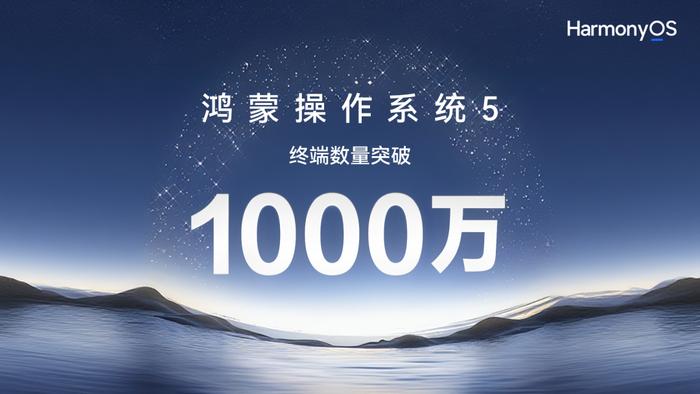
鸿蒙5,1000万台!
Shang Hai Zheng Quan Bao· 2025-07-30 11:42
Core Insights - Huawei's HarmonyOS 5 has surpassed 10 million terminal devices as of July 30, 2025, indicating significant user adoption and ecosystem growth [1][6][11] - The operating system has been adapted for over 40 Huawei terminal products, with more than 5,000 mainstream applications available, covering 99.9% of user usage time [1][6] - The ecosystem is experiencing a positive feedback loop of user growth, developer engagement, and enriched application scenarios, marking a transition from the initial "breaking the ice" phase to a sustainable growth cycle [6][11] Product and Market Performance - HarmonyOS 5 has seen a rapid increase in terminal numbers, with over 28,000 developer submissions and more than 260 new system features since its launch [6][11] - Huawei's smartphone market share has rebounded to 18.1% in Q2 2025, reclaiming the top position in the domestic market after more than four years [9] - Major applications like WeChat and Alipay have quickly adapted to the HarmonyOS environment, enhancing user experience and functionality [9][10] Developer and Application Ecosystem - The ecosystem now includes over 1,000 financial and service applications, catering to diverse user needs in banking, securities, and insurance [11][12] - The "one development, multi-terminal deployment" capability of HarmonyOS allows developers to create applications that run seamlessly across different devices, enhancing user experience [11][12] - Companies like Dazhihui have actively engaged in developing native HarmonyOS applications, contributing to the ecosystem's growth and user engagement [12] User Engagement and Community Support - Huawei's leadership has expressed gratitude towards partners, developers, and users for their support, emphasizing community involvement in the ecosystem's success [3][4] - The company is committed to continuously improving system experiences and sharing development benefits with ecosystem partners [12]

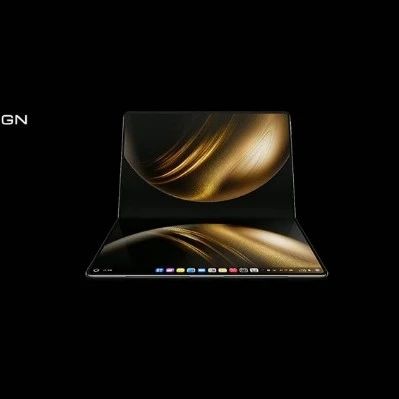
“给世界多一个选择!”鸿蒙电脑售价7999元起,余承东最新发声
券商中国· 2025-05-19 09:43
Core Viewpoint - Huawei's HarmonyOS computer launch represents a significant step in providing an alternative to established operating systems like Windows and macOS, emphasizing the importance of self-developed technology in the PC sector [1][4]. Group 1: Product Launch - Huawei officially launched two HarmonyOS computers: the HUAWEI MateBook Fold and the HUAWEI MateBook Pro on May 19 [2][5]. - The HUAWEI MateBook Fold is the world's largest commercial foldable computer, priced starting at 23,999 yuan, while the MateBook Pro starts at 7,999 yuan [1][2]. Group 2: Technological Integration - HarmonyOS computers feature deep integration of software and hardware, allowing for new interaction modes such as multi-screen collaboration and touch control [2][6]. - The operating system is fully self-developed from the kernel to the application layer, enabling developers to create applications across multiple devices with a single tool, thus reducing development time and costs [2][4]. Group 3: Ecosystem Development - The development of HarmonyOS computers has been supported by over 2,700 patents and a team of more than 10,000 engineers, collaborating with over 20 research institutes [6][7]. - Since the release of HarmonyOS 5, the system has undergone over 30 updates, adding more than 150 new features, with an average of 400 application updates daily [8]. Group 4: Market Positioning - The launch of HarmonyOS computers marks a critical milestone in achieving a self-controlled operating system in the PC field, positioning Huawei to respond strategically to the expiration of Microsoft's Windows licenses [4][7]. - The HarmonyOS ecosystem is rapidly expanding, with over 1,100 peripheral devices already compatible and more than 1,000 applications available, with expectations to exceed 2,000 by year-end [8].