
国家主权平等

Search documents
大会发言人:任何国家都没有主宰他国命运的权力
21世纪经济报道· 2026-03-04 06:48
Group 1 - The Chinese government expresses high concern over the situation in Iran, emphasizing the need to respect Iran's national sovereignty, security, and territorial integrity [1] - China calls for an immediate cessation of military actions to prevent further escalation of tensions and advocates for the restoration of dialogue and negotiations to maintain peace and stability in the Middle East [1] - The Chinese stance is that mutual respect and equality among countries is a historical requirement and a fundamental principle of the United Nations Charter, asserting that no country has the right to dominate international affairs or dictate the fate of others [1]

“任何国家都没有控制国际事务、主宰他国命运、垄断发展优势的权力,更不能在世界上我行我素”
中国能源报· 2026-03-04 06:44
Core Viewpoint - The article emphasizes China's stance on the Iranian situation, advocating for respect of Iran's sovereignty, security, and territorial integrity, while calling for an immediate cessation of military actions and a return to dialogue to maintain peace and stability in the Middle East [1]. Group 1 - China expresses high concern regarding the situation in Iran and urges for the respect of its national sovereignty and territorial integrity [1]. - The Chinese government calls for an immediate halt to military actions to prevent further escalation of tensions [1]. - China is willing to play a responsible role as a major power in facilitating dialogue and negotiations to restore peace in the region [1]. Group 2 - The article reiterates China's belief in mutual respect and equality among nations as a historical requirement and a fundamental principle of the United Nations Charter [1]. - It asserts that no country has the right to dominate international affairs or dictate the fate of other nations [1]. - The article highlights the importance of avoiding unilateral actions that disrupt global order [1].
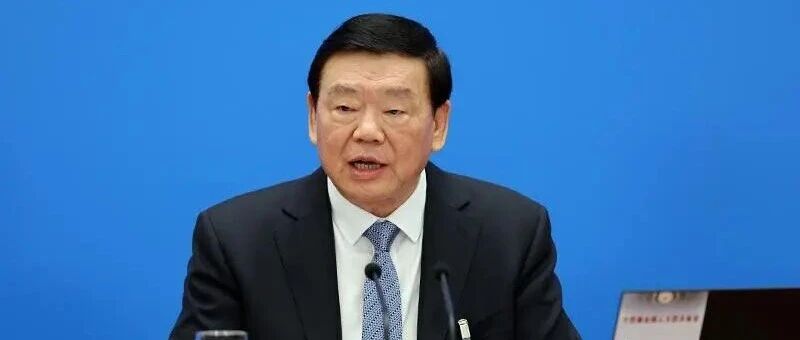
大会发言人:任何国家都没有控制国际事务、主宰他国命运的权力
第一财经· 2026-03-04 05:46
Core Viewpoint - The Chinese government emphasizes the importance of respecting Iran's sovereignty, security, and territorial integrity, calling for an immediate cessation of military actions and a return to dialogue to maintain peace and stability in the Middle East [1]. Group 1 - The Chinese government expresses high concern regarding the situation in Iran, advocating for the respect of its national sovereignty and territorial integrity [1]. - The call for an immediate halt to military actions aims to prevent further escalation of tensions in the region [1]. - China positions itself as a responsible major power willing to contribute to the peace and stability of the Middle East [1]. Group 2 - The Chinese stance is rooted in the belief that mutual respect and equality among countries are essential for historical progress and are fundamental principles of the United Nations Charter [1]. - The assertion that no country has the right to dominate international affairs or dictate the fate of others reflects China's commitment to a multipolar world order [1].
如果主权能标价谈判,那么人类文明早已破产
Xin Lang Cai Jing· 2026-01-24 13:24
Core Viewpoint - The article emphasizes that territorial sovereignty should not be treated as a commodity, and any attempts to buy or sell land are fundamentally against modern civilization principles [1] Group 1 - The article criticizes the fluctuating tariff policies and the insistence on "purchasing" Greenland, arguing that such actions should be abandoned [1] - It asserts that national sovereignty and territorial integrity are non-negotiable and cannot be traded [1] - The piece highlights that any actions that price people and land are a fundamental departure from modern civilization [1]
乌拉圭总统:反对任何形式的外来干涉
Yang Shi Xin Wen Ke Hu Duan· 2026-01-05 09:55
Core Viewpoint - The Uruguayan government, led by President Luis Lacalle Pou, firmly opposes any form of foreign intervention, particularly in the context of the U.S. attack on Venezuela, emphasizing the importance of national sovereignty and international law [1] Group 1: Uruguayan Government's Position - The Uruguayan government maintains a four-point stance against foreign interference in domestic affairs, particularly through military means [1] - The government advocates for peaceful resolution of disputes as a fundamental principle of international relations [1] - It emphasizes the principle of equal sovereignty among nations, ensuring that both strong and weak countries are treated equally in international matters [1] Group 2: International Cooperation - Uruguay plans to collaborate with multiple countries to promote a multilateral approach in addressing the Venezuelan issue [1] - The government aims to seek a peaceful resolution to the current situation in Latin America, particularly concerning Venezuela [1]
(国际观察)美国“危险先例”背后的资源觊觎与政治野心
Zhong Guo Xin Wen Wang· 2026-01-04 15:34
Group 1 - The core viewpoint of the articles highlights the significant geopolitical implications of the U.S. military action against Venezuelan President Maduro, which is seen as a move to assert U.S. dominance in Latin America and address domestic political challenges for President Trump [1][2] - The U.S. military operation is characterized as a culmination of escalating actions in the Caribbean over the past six months, driven by Trump's need for a notable personal achievement and a strong interest in Venezuela's oil resources [1] - Analysts predict that the U.S. aims to force the current Venezuelan government to surrender, subsequently supporting a pro-U.S. government, and involving certain individuals in the management of Venezuela [1] Group 2 - The military action has sparked strong backlash from Latin American countries, with the resistance within Venezuela remaining firm despite Maduro's capture, particularly among leftist factions [2] - The international community, including the UN Secretary-General, has expressed alarm over the potential precedent set by this action, which is viewed as a violation of principles of national sovereignty and equality [2] - In the long term, this operation is expected to create a "chilling effect" on other Latin American nations, raising concerns about U.S. military intimidation and the stability of their own governments, especially among leftist regimes [2]
俄外交部:任何与俄资产相关的非法行为都将受到惩罚
Xin Lang Cai Jing· 2025-12-20 02:38
Core Viewpoint - The Russian Foreign Ministry spokesperson, Zakharova, asserts that any attempts by the EU to freeze, confiscate, or utilize Russian assets lack legal basis and will face consequences [1] Group 1: Legal Implications - Zakharova emphasizes that freezing Russian sovereign assets and any attempts to utilize their proceeds violate international law, including principles of state sovereignty and non-interference [1] - The Russian Central Bank is prepared to use all available legal mechanisms to protect its interests [1] Group 2: EU Actions and Responses - The EU Council announced on December 12 that it has decided to indefinitely freeze Russian assets within the EU [1] - Zakharova criticizes the EU's decision to continue funding Ukraine, claiming it will prolong the crisis [1] - Russian media reported that the Central Bank has filed a lawsuit in the Moscow Arbitration Court seeking compensation of over 18 trillion rubles from the European Clearing Bank, which holds a significant amount of frozen Russian assets [1]
墨西哥总统:不接受美方任何形式的军事干预!美方可以在情报交流等方面提供支持,但墨境内的行动必须由墨方自行开展
Ge Long Hui· 2025-11-19 09:56
Core Viewpoint - The Mexican President, Sinbloom, stated that Mexico does not accept any form of military intervention from any country, particularly in response to comments made by U.S. President Trump regarding assistance in combating crime groups in Mexico [1] Group 1: U.S.-Mexico Relations - Sinbloom emphasized that cooperation between the U.S. and Mexico should be based on mutual respect and equality of sovereignty [1] - The current framework of cooperation between the U.S. and Mexico defines their bilateral relationship as one of "cooperation and coordination," with a core focus on respecting Mexico's sovereignty and territorial integrity [1] Group 2: Military Assistance - Sinbloom mentioned that while the U.S. has expressed willingness to send troops to assist Mexico in fighting crime, any actions within Mexico must be conducted by Mexican authorities [1] - The U.S. can provide support in areas such as intelligence sharing, but the operational control remains with Mexico [1]

挥舞签证大棒挡不住中国同中美洲国家关系发展的时代大势
Ren Min Ri Bao· 2025-10-21 09:20
Core Viewpoint - The Chinese government strongly criticizes the recent U.S. visa restrictions targeting Central American citizens and their families, asserting that these actions represent unilateral sanctions and a violation of international law, undermining the sovereignty of affected nations [1] Group 1: U.S. Actions and Responses - The U.S. has announced visa restrictions against Central American citizens collaborating with the Chinese Communist Party, threatening local business figures against engaging with Chinese state-owned enterprises [1] - The Chinese government has previously articulated its firm stance against these U.S. measures and has engaged in serious diplomatic discussions with the U.S. regarding this issue [1] Group 2: Chinese Government's Position - The Chinese government accuses the U.S. of using "law and order" as a pretext for illegal actions, claiming that such unilateral sanctions constitute political oppression and economic coercion [1] - The Chinese government emphasizes that these actions violate the principles of national sovereignty and non-interference in domestic affairs, characterizing them as typical hegemonic behavior [1] Group 3: Future Relations - The Chinese government asserts that the U.S. attempts to interfere in the normal exchanges between Central American countries and China are unfounded and disrespectful [1] - The Chinese government reaffirms its commitment to being a good friend and partner to Central American nations, aiming for mutual development and the establishment of a China-Latin America community of shared destiny [1]